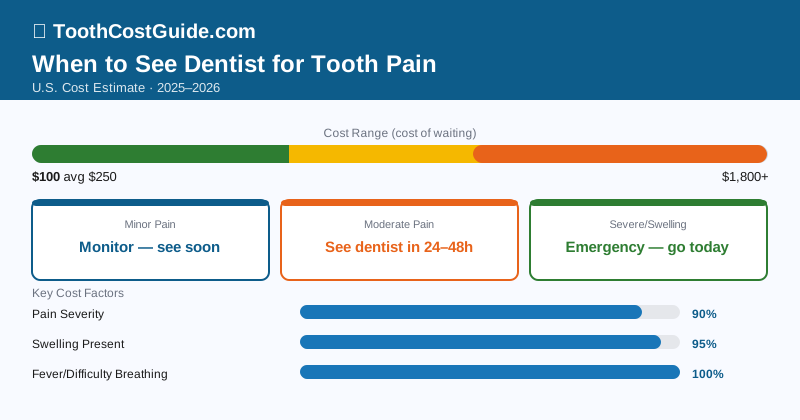
Not all tooth pain is a dental emergency — but some is life-threatening. The right response depends on your specific symptoms. Mild sensitivity to hot and cold may be watchful waiting. Throbbing pain with swelling and fever is a same-day emergency. This guide helps you determine urgency, associated costs, and what to expect at each level of care.
| Symptom Level | Urgency | Likely Treatment | Cost Range |
|---|---|---|---|
| Brief cold sensitivity, no pain at rest | Low — schedule within 2 weeks | Filling or desensitizing treatment | $100–$300 |
| Dull ache, localized, no swelling | Moderate — see dentist within 3 days | Filling or crown | $200–$1,800 |
| Sharp pain when biting | Moderate — see dentist within 2–3 days | Crown or root canal | $700–$3,300 |
| Spontaneous throbbing pain | High — see dentist same day | Root canal or extraction | $800–$3,300 |
| Pain with visible swelling, no fever | High — same day | Root canal + drainage | $800–$2,000 |
| Pain + swelling + fever | Emergency — today | Root canal or extraction + antibiotics | $800–$2,500 |
| Swelling in neck/trouble swallowing | Medical emergency — ER now | Hospital treatment | $5,000–$50,000 |
Decision Guide: What Your Pain Tells You
Level 1: Watch and Wait (Days to 2 Weeks)
Symptoms: Tooth feels briefly sensitive when you eat or drink something very cold, but the sensation passes within 5–10 seconds. No spontaneous pain. No pain at rest. No swelling.
What it might mean: Early dentin sensitivity, a tiny cavity in enamel, gum recession exposing sensitive root surfaces, or a recent dental procedure causing temporary sensitivity.
What to do: Schedule a routine dental appointment within 1–2 weeks for an examination. In the meantime, use a sensitive toothpaste (Sensodyne, Colgate Sensitive) to manage mild symptoms. OTC ibuprofen if needed.
Cost range if treated: $0–$300 (exam + X-ray + possibly desensitizing treatment or small filling)
Level 2: Urgent but Not Emergency (1–3 Days)
Symptoms: A dull, persistent ache in a specific tooth. Pain may increase when you bite down or chew. Lingers more than a few minutes after temperature exposure. No significant swelling. No fever. Manageable with OTC pain medication.
What it might mean: A cavity that has progressed into dentin (the layer beneath enamel), a cracked tooth, or a failing old filling. The nerve is irritated but not yet infected.
What to do: Call your dentist first thing next morning. Request an urgent appointment within 1–3 days — describe the symptom clearly. Take ibuprofen 400–600 mg every 6 hours for pain management.
Cost range if treated promptly: $150–$1,800 (filling, crown, or bonding)
Level 3: Same-Day Dental Care (Today)
Symptoms: Moderate to severe throbbing pain. Pain that wakes you at night. Pain present without any trigger. Tooth or gum has visible swelling (puffiness) but is localized — not spreading to the jaw or neck. No fever, or very low-grade fever.
What it might mean: Pulpitis (inflamed or dying pulp) or a developing periapical abscess. The infection is contained to the tooth and immediate surrounding tissue.
What to do: Call your dentist’s office when it opens and request a same-day emergency appointment. Explain: “I have severe tooth pain that woke me at night and I may have an abscess.” Most dentists accommodate these calls. Take ibuprofen + acetaminophen together for maximum OTC pain relief while waiting.
Cost range: $800–$2,500 (emergency exam + root canal or extraction + antibiotics)
Level 4: Urgent Dental or Medical Emergency (Same Day, Consider ER)
Symptoms: Severe pain plus visible facial swelling (cheek or jaw visibly swollen). Fever above 101°F. Pus or bad taste in the mouth. Trismus (difficulty opening your mouth fully).
What it might mean: A dental abscess that has spread beyond the tooth to surrounding soft tissue. This is a spreading infection that can move quickly.
What to do: Call your dentist and describe your symptoms — request to be seen within hours. If your dentist cannot see you that day, go to an urgent care center for antibiotics and a dentist referral, or go directly to the ER. If swelling is significant and growing, go to the ER immediately.
Cost range: $1,500–$5,000 (ER + antibiotics + dental follow-up treatment)
Level 5: Medical Emergency — Call 911 or Go to the ER Now
Symptoms: Swelling extending to the neck or floor of the mouth. Difficulty breathing or swallowing. Swelling around or below the eye. Fever above 103°F with rapid heart rate. Voice changes (“hot potato voice” — muffled speaking). Swelling that is visibly enlarging over hours.
What it might mean: Ludwig’s angina, submandibular space infection, or other deep space neck infection — all life-threatening emergencies.
What to do: Call 911 or go to the nearest emergency room immediately. Do not drive yourself if breathing is compromised. This is no longer a dental problem — it’s an airway emergency.
Cost range: $10,000–$100,000+ (hospital, ICU, surgical drainage)
With vs. Without Insurance
With insurance, approximate out-of-pocket costs:
- Level 1 (exam + filling): $20–$80
- Level 2 (crown or root canal): $400–$1,000
- Level 3 (root canal + antibiotics): $500–$1,200
- Level 4 (ER + dental): $500–$2,500
- Level 5 (hospitalization): $2,000–$10,000+ (most plans have an out-of-pocket maximum)
Without insurance:
- Level 1: $100–$250
- Level 2: $200–$1,800
- Level 3: $800–$2,500
- Dental schools and FQHCs reduce all costs by 40–70%
What To Do While Waiting
For mild to moderate pain:
- Take ibuprofen (400–600 mg every 6 hours) — reduces pain AND inflammation
- Add acetaminophen (500–1,000 mg) alternating with ibuprofen for stronger relief
- Apply a cold compress to the outside of the cheek (15 minutes on, 15 minutes off)
- Avoid very hot or cold foods and drinks
- Use OTC dental cement (Dentemp) for a lost filling or crown
For severe pain:
- Maximize OTC medication: ibuprofen + acetaminophen together is safe for adults and nearly as effective as prescription pain medication for most dental pain
- Apply clove oil topically with a cotton swab for temporary nerve pain relief
- Do NOT apply heat — heat can accelerate bacterial spread
- Do NOT put aspirin directly on the tooth — it causes chemical burns to gum tissue
How to Save Money
Act at Level 2, not Level 3. A dull ache treated the next day with a filling ($200–$300) costs a fraction of the same tooth treated at Level 3 with a root canal ($1,000–$1,500). The difference is weeks of delay.
Get to a dentist before needing the ER. ER visits for dental pain cost $600–$2,500 and don’t treat the dental problem. Urgent dental care is almost always available the same or next day for patients who describe severe symptoms clearly.
Use FQHCs and dental schools. For uninsured patients at any pain level, FQHCs and dental schools provide the same quality of emergency care at dramatically lower cost.
Tooth pain that spreads to the ear, jaw, or neck — combined with swelling, fever, or difficulty swallowing — is a warning sign of serious infection. Do not use pain medication to mask these symptoms and delay care. Dental infections that spread to the airway can become fatal within 24–48 hours without surgical intervention.
Bottom Line
Tooth pain urgency ranges from “schedule in 2 weeks” to “call 911 now” — and the cost range is equally wide: $100 to $100,000+. Use the five levels above to honestly assess your symptoms. When in doubt, call your dentist and describe what you’re experiencing — they can triage over the phone. Never ignore fever + swelling: that combination requires same-day care regardless of cost.