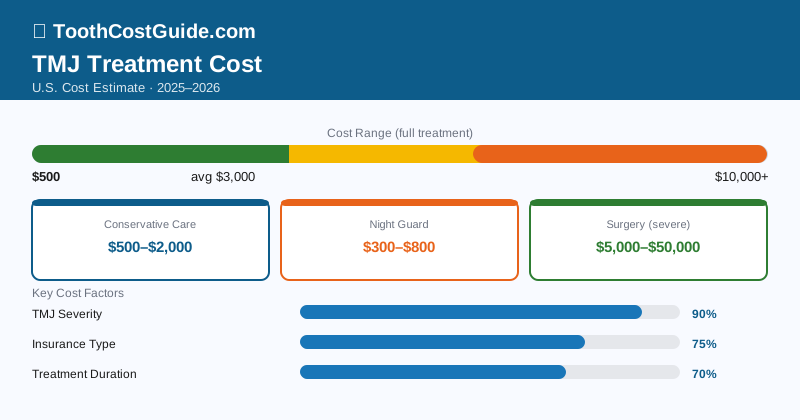
TMJ disorder (temporomandibular joint dysfunction) treatment costs $500–$10,000+ depending on the severity of the condition and treatments required. Most TMJ cases are successfully managed with conservative measures costing $500–$2,500 — custom night guards, physical therapy, and anti-inflammatory treatment. Severe cases requiring surgery are rare and expensive, running $5,000–$50,000+ for joint replacement procedures. The key to affordable TMJ management is accurate diagnosis and a step-wise conservative approach before considering invasive intervention.
| TMJ Treatment Option | Cost Range |
|---|---|
| Custom occlusal splint / night guard | $300–$800 |
| Physical therapy (per session) | $75–$200 |
| Physical therapy course (6–12 sessions) | $500–$2,400 |
| Dental evaluation and X-rays | $150–$400 |
| MRI of TMJ (diagnostic) | $500–$2,500 |
| Botox for TMJ/jaw clenching (per treatment) | $300–$800 |
| Arthrocentesis (joint lavage, minor procedure) | $500–$3,000 |
| Arthroscopy (surgical) | $2,000–$5,000 |
| Open joint surgery (arthroplasty) | $5,000–$15,000 |
| Total joint replacement (both joints) | $20,000–$50,000 |
What Affects TMJ Treatment Cost
Severity and type of TMJ disorder. TMJ disorders include muscle-related pain (myofascial pain), disc displacement (the cartilage disc in the joint slips out of position), joint degeneration (arthritis), and structural abnormalities. Muscle-related cases often resolve with night guards, physical therapy, and stress management at $500–$2,500. Disc displacement may require additional imaging and possibly arthroscopy. Degenerative joint disease and structural abnormalities are the most expensive to treat.
Whether conservative treatment is tried first. Clinical guidelines recommend a conservative, reversible approach before any surgical intervention. The American Association of Oral and Maxillofacial Surgeons recommends exhausting all conservative options (splint, PT, medications, behavioral changes) for at least 3–6 months before considering surgery. Most TMJ cases resolve with conservative care.
How many providers are involved. Complex TMJ cases often require coordination between a dentist (or prosthodontist), an oral surgeon, a physical therapist, and sometimes a neurologist or pain specialist. Each adds professional fees.
Imaging requirements. Standard dental X-rays don’t adequately image the TMJ. A cone-beam CT or MRI of the joint is often needed for proper diagnosis. MRI ($500–$2,500) and CBCT ($300–$800) add diagnostic costs.
Conservative TMJ Treatments (First-Line)
Custom Occlusal Splint (Night Guard) — $300–$800: A custom-fitted hard acrylic appliance worn during sleep. Prevents tooth grinding and clenching that aggravates TMJ pain, stabilizes the bite, and allows jaw muscles to relax. The most commonly prescribed and most evidence-supported conservative TMJ treatment. See our detailed guide on night guard costs.
Physical Therapy — $75–$200/session ($500–$2,400 for a course): Jaw-focused physical therapy addresses muscle tightness, posture, and joint mobility. Techniques include manual therapy, ultrasound, TENS (transcutaneous electrical nerve stimulation), trigger point release, and jaw exercises. A typical course is 6–12 sessions. Very effective for muscle-related TMJ pain.
Anti-inflammatory medications: Prescription NSAIDs or short-course muscle relaxants prescribed by your physician or dentist. Medication cost: $20–$100/month. Not a standalone treatment but reduces acute pain during conservative management.
Heat and cold therapy, dietary changes: Switching to soft foods, avoiding wide jaw opening, and alternating heat and cold packs. Cost: minimal. Surprisingly effective for reducing acute TMJ flare-ups.
Over 80% of TMJ disorder cases improve with conservative, reversible treatment — night guards, physical therapy, dietary modification, and stress management. Do not pursue permanent, irreversible dental changes (occlusal equilibration, crowns, orthodontic treatment) for TMJ management without exhausting conservative options first and getting multiple specialist opinions.
Intermediate TMJ Treatments
Botox Injections for TMJ/Jaw Clenching — $300–$800 per treatment: Botulinum toxin injected into the masseter and temporalis muscles reduces the force of jaw clenching. Not FDA-approved specifically for TMJ treatment but widely used off-label. Effects last 3–6 months and require repeat treatment. Effective for patients with muscle-related TMJ pain and hypertrophy (enlarged masseter). Usually not covered by insurance.
Trigger Point Injections — $200–$600 per session: Local anesthetic (with or without corticosteroid) injected directly into jaw muscle trigger points. Provides short-term pain relief and muscle relaxation. Usually part of a multidisciplinary pain management approach.
Intra-articular steroid injection — $200–$800: Corticosteroid injected directly into the TMJ. Reduces joint inflammation for 2–6 months. Best for acute inflammatory TMJ arthritis flare-ups. Typically performed by an oral surgeon.
TENS therapy — included in PT or $50–$200/session: Transcutaneous electrical nerve stimulation provides temporary muscle relaxation and pain relief. Sometimes used in dental offices as a diagnostic tool. Included in physical therapy costs when performed by a PT.
Surgical TMJ Treatments
Arthrocentesis — $500–$3,000: The least invasive surgical option. Two needles are inserted into the TMJ under local anesthesia; sterile saline flushes the joint, removing inflammatory byproducts and adhesions. Performed in a dental or oral surgery office. Significant pain relief for many patients with disc displacement without perforation.
Arthroscopy — $2,000–$5,000: Minimally invasive surgery using a small camera (arthroscope) inserted into the joint. Allows visualization of the disc and joint surfaces; adhesions can be released and the disc can be repositioned. Performed under general anesthesia or IV sedation. Requires an oral and maxillofacial surgeon (OMFS) with arthroscopy training.
Open joint surgery (arthroplasty) — $5,000–$15,000: Direct surgical access to the joint to repair or reposition the disc, remove arthritic tissue, or reconstruct joint components. More invasive than arthroscopy; longer recovery (4–8 weeks). Used for more advanced disc pathology or joint degeneration.
Total joint replacement — $20,000–$50,000: Replacement of the TMJ with a prosthetic joint. Reserved for severe end-stage TMJ disease with significant structural destruction. Two major systems (TMJ Concepts, Biomet W. Lorenz/Zimmer Biomet) are FDA-cleared for total TMJ replacement. Both jaws require separate procedures. Typically performed at major academic medical centers.
Be very cautious of providers who recommend complex bite adjustment procedures (occlusal equilibration involving irreversible tooth reshaping), extensive dental restorations, or orthodontic treatment specifically to “correct” your TMJ. Strong evidence supports conservative, reversible approaches. Irreversible dental changes to treat TMJ disorder should only be pursued after a comprehensive evaluation by multiple specialists and exhaustion of conservative care.
Insurance Coverage for TMJ Treatment
Dental insurance: Custom splints/night guards for TMJ are sometimes covered as a basic or major service (50–80% of cost). Coverage varies significantly by plan — many plans exclude TMJ-specific treatment. Check your plan’s TMJ/splint coverage language.
Medical insurance: When TMJ is treated as a musculoskeletal disorder (the joint is a musculoskeletal structure), medical insurance may cover:
- Physical therapy (covered as PT benefit, usually requires referral)
- MRI and imaging (covered as diagnostic imaging)
- Surgical procedures (arthrocentesis, arthroscopy, open surgery) — covered as surgical benefits when medically necessary
- Hospital and anesthesia fees for surgical procedures
Billing TMJ treatment through medical insurance often achieves better coverage than billing through dental insurance, since medical plans have higher benefits for musculoskeletal conditions. This requires appropriate medical diagnosis codes.
Botox for TMJ: Generally not covered by insurance as it’s considered off-label treatment for this indication.
Financing Options
For conservative treatment ($500–$2,500): In-office payment plans, CareCredit, and FSA/HSA are appropriate. FSA/HSA eligibility is confirmed for TMJ night guards and physical therapy.
For surgical treatment ($5,000–$50,000): Medical insurance coordination is essential. After insurance, remaining balances can be financed through hospital payment plans, CareCredit (for dental/oral surgery portions), and medical loans.
How to Save on TMJ Treatment
Start with conservative care. A custom night guard ($300–$800) and 6–8 sessions of physical therapy ($600–$1,600) should be the starting point for all TMJ cases. Most cases improve.
Seek physical therapy through a physician referral. PT is more affordable through medical insurance than through dental insurance. Ask your primary care physician for a TMJ physical therapy referral.
Use FSA/HSA. Custom night guards, physical therapy, MRI, and all TMJ professional services are FSA/HSA eligible.
Academic medical centers for surgical cases. Major academic medical centers with oral surgery and craniofacial programs often have multidisciplinary TMJ clinics where complex cases are managed by teams at lower total cost.
Bottom Line
TMJ disorder treatment costs $500–$2,500 for the 80%+ of cases that respond to conservative management. Surgical intervention is reserved for cases that fail conservative care and runs $2,000–$50,000 depending on the procedure. Insurance coverage is split between dental and medical plans, with medical insurance often providing better coverage for PT and surgical procedures. Always exhaust reversible, conservative options before any irreversible dental or surgical treatment for TMJ.
Start TMJ treatment conservatively: a custom night guard plus physical therapy resolves most cases for under $2,500. Avoid irreversible treatments (occlusal adjustment, crowns, orthodontics) until conservative approaches fail. For surgical cases, pursue academic medical center evaluation to ensure the most qualified care at the lowest cost.