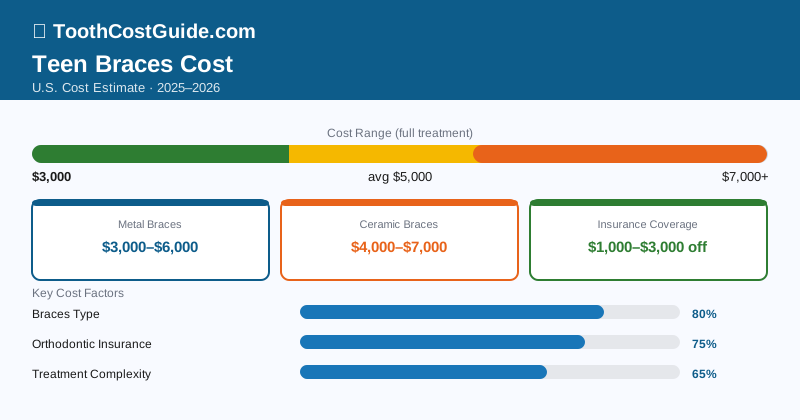
Teen braces cost $3,000–$7,000 for a full course of treatment, with the most common treatment range falling between $4,000–$6,000. Traditional metal braces for teenagers average $3,000–$5,500; ceramic (tooth-colored) braces run $4,000–$7,000; and Invisalign Teen costs $3,000–$8,000. Most families pay significantly less than the sticker price because orthodontic insurance benefits and in-house payment plans are widely available for teenage patients.
| Teen Orthodontic Treatment | Cost Without Insurance |
|---|---|
| Metal braces (teen) | $3,000–$5,500 |
| Ceramic (tooth-colored) braces | $4,000–$7,000 |
| Invisalign Teen | $3,000–$8,000 |
| Self-ligating metal braces (Damon) | $3,500–$7,000 |
| Lingual braces (rarely for teens) | $8,000–$13,000 |
| Limited/Phase 2 braces after Phase 1 | $2,500–$5,000 |
What Affects Teen Braces Cost
Complexity of the case. Mild crowding in a teen with good jaw development and minimal bite issues will be treated in 12–18 months for $3,000–$4,500. A complex case with a significant overbite, crowding, and spacing requiring 24–30 months of treatment can reach $6,000–$7,000.
Appliance choice. Metal braces remain the most popular option for teens because they’re the most affordable and most effective for complex cases. Many teens personalize them with colored elastics. Ceramic or Invisalign Teen add $500–$2,000 to the cost, reflecting aesthetics preferences that teenagers and their parents often prioritize.
Phase 1 history. If a teen received Phase 1 early orthodontic treatment (ages 7–10), the comprehensive Phase 2 treatment (when permanent teeth are in, typically ages 11–14) is often shorter and less expensive. Some orthodontists discount Phase 2 for Phase 1 patients of their practice.
Retention planning. Most teen braces packages include retainers in the treatment fee, but some practices charge separately ($250–$600 for a set of retainers). Confirm what’s included in the quoted fee.
Geographic market. Fees in major metropolitan areas average 20–35% higher than in rural or suburban markets. An $5,000 teen braces case in a large city might cost $3,500–$4,000 in a smaller market.
Optimal Timing for Teen Orthodontic Treatment
The ideal age for comprehensive braces in most teens is 11–14 years, when the majority of permanent teeth have erupted but jaw growth is still active. Active growth is an advantage — moving teeth into correct alignment while the jaw is still developing is faster, less resistant, and often produces better long-term stability.
Key orthodontic milestones:
- Age 7: First orthodontic evaluation recommended by the AAO
- Ages 7–10: Phase 1 (early interceptive) treatment if needed
- Ages 11–14: Ideal window for comprehensive treatment
- Ages 16–18: Late comprehensive treatment, slightly longer than ideal timing
Starting comprehensive braces between ages 11–14 typically results in shorter treatment times, better outcomes, and lower total cost than waiting until the late teens. The optimal window is when most permanent teeth are in but some jaw growth remains to work with.
Invisalign Teen vs. Traditional Braces
Invisalign Teen is Align Technology’s product specifically designed for teenagers. It includes up to 6 free replacement aligners (teens lose them), has blue compliance indicators that fade with wear (parents and orthodontists can verify proper wearing), and accommodates erupting teeth.
| Feature | Metal Braces | Invisalign Teen |
|---|---|---|
| Average cost | $3,000–$5,500 | $3,000–$8,000 |
| Compliance required | Built-in (fixed) | 22 hrs/day (removable) |
| Visible? | Yes (silver) | Barely |
| Effectiveness | Gold standard | Comparable for most cases |
| Dietary restrictions | Yes (hard/sticky foods) | None |
| Sports/activities | Requires mouthguard | Removed for sports |
| Suitable for complex cases | Yes | Moderate |
For teens who play contact sports or instruments, Invisalign Teen’s removability is a significant advantage. For teens with compliance concerns (forgetting to wear aligners), fixed braces guarantee treatment progress.
Insurance Coverage for Teen Braces
Teen orthodontic treatment is the most commonly covered orthodontic scenario in dental insurance. Almost all dental plans with orthodontic benefits cover treatment for patients under 18–19.
Standard insurance terms:
- Lifetime orthodontic maximum: $1,000–$3,000 per patient
- Coverage: 50% of treatment cost up to the lifetime maximum
- Age limit: Usually 18–19 (dependents through age 26 on family plans may qualify if the plan includes orthodontic coverage at that age)
- Waiting period: Some plans have a 12-month waiting period before orthodontic benefits begin
Example calculation (metal braces, $4,500):
- Insurance lifetime maximum: $1,500
- Insurance pays: $1,500 (50% up to the maximum)
- Family pays: $3,000
Important: If your plan has a $2,000 lifetime maximum and the child received Phase 1 orthodontic treatment at age 9, that used some of the lifetime maximum. Check your remaining benefit before starting Phase 2.
The lifetime orthodontic maximum does NOT reset annually. Once used, it’s gone — even if you change plans. Keep records of all orthodontic insurance claims so you know the remaining balance before starting treatment with any provider or plan.
Financing Options for Teen Braces
In-house payment plans: Standard across most orthodontic practices. Total treatment cost is divided over the treatment period (typically 18–30 months) with 0% interest. Monthly payments for a $5,000 case over 24 months = ~$208/month.
CareCredit: 0% APR promotional periods of 12–24 months for qualified applicants. Useful if the orthodontist’s in-house plan isn’t available or if longer terms are needed.
Medicaid and CHIP: Children and teens who qualify for Medicaid or the Children’s Health Insurance Program (CHIP) may have orthodontic coverage when treatment is “medically necessary.” Qualifications vary by state. Medically necessary cases include severe malocclusion causing functional impairment. Cosmetic orthodontic treatment is generally excluded. Contact your state Medicaid office for specific criteria.
FSA: If a family has an FSA, orthodontic expenses are eligible. Using pre-tax FSA dollars saves 22–37% on the amount paid. FSA elections can be directed specifically toward anticipated orthodontic installment payments.
How Families Save on Teen Braces
Get two to three consultations. The American Association of Orthodontists reports that fees vary 15–40% for equivalent cases within the same market. Most initial consultations are free and include X-rays and case assessment.
Dental school orthodontic programs. Treatment by supervised orthodontic residents at dental schools costs 30–50% less than private practice. Wait times to start may be longer. Find programs through aaoinfo.org.
Choose metal over ceramic or Invisalign. Metal braces are 20–30% less expensive than ceramic or Invisalign Teen for equivalent cases. Teens often become proud of their braces within a few months and the aesthetic difference matters less than anticipated.
Enroll in FSA during open enrollment. If braces are planned for the next calendar year, increasing FSA contributions before year-end allows pre-tax payment of monthly installments.
Ask about sibling discounts. Many orthodontic practices offer 10–15% discounts for siblings of existing patients. Ask explicitly — this is rarely advertised.
Bottom Line
Teen braces cost $3,000–$7,000, with most families paying $3,000–$5,000 after insurance. Metal braces remain the most cost-effective option. Insurance typically covers 50% up to the lifetime maximum ($1,000–$3,000), and in-house payment plans make monthly costs manageable for most families. Starting treatment in the 11–14 age window, using available insurance benefits, and comparing 2–3 orthodontists are the most effective strategies for minimizing total cost.
Teen orthodontic treatment is the most insurance-supported orthodontic scenario in the US. Maximize insurance benefits, start at the optimal 11–14 age window, and use in-house payment plans to spread costs. Dental school programs are the deepest discount available for families who need to reduce cost significantly.