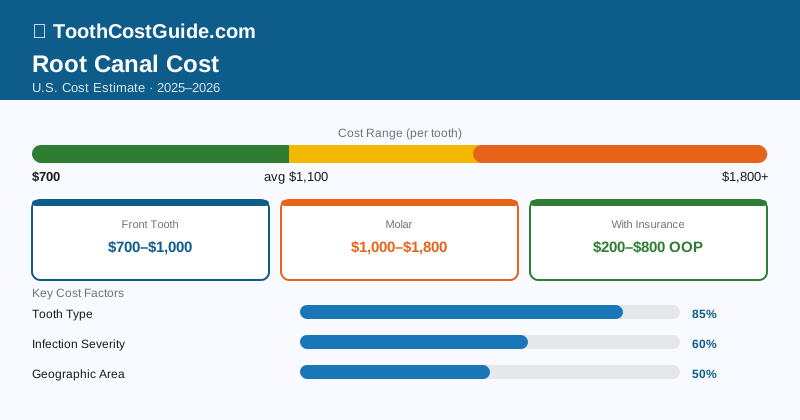
A root canal costs $700–$1,800 without dental insurance, with the final price depending almost entirely on which tooth needs treatment. Front teeth have one canal and cost less; molars have three or four canals and cost significantly more. With dental insurance that covers endodontic treatment, you’ll typically pay $350–$900 out of pocket after the plan pays its 50–80% share.
Keep in mind: the root canal fee itself is rarely your only expense. Most treated teeth need a crown afterward, adding another $800–$1,800 to the total.
| Tooth Type | Root Canal Cost (No Insurance) |
|---|---|
| Front tooth (incisors, canines) — 1–2 canals | $700–$1,000 |
| Premolar (bicuspid) — 1–2 canals | $800–$1,100 |
| Molar (back teeth) — 3–4 canals | $1,000–$1,800 |
| Root canal retreatment (failed previous RCT) | $900–$1,800 |
| Apicoectomy (root tip surgery) | $900–$1,800 |
| Post and core buildup (after root canal) | $150–$400 |
| Crown after root canal (required) | $800–$1,800 |
What Affects the Cost of a Root Canal
Tooth location and number of canals. This is the dominant cost factor. An upper incisor typically has one canal; a lower molar can have four. Each canal requires individual cleaning and shaping, so more canals = more time = higher fee. Dentists and endodontists set fees per-tooth based on whether the tooth is an anterior (front), premolar, or molar.
General dentist vs. endodontist. General dentists can perform root canals, often charging less. Endodontists are specialists who handle complex or difficult cases. An endodontist typically charges 20–40% more than a general dentist for the same tooth, but they use more advanced equipment (like CBCT imaging and dental microscopes) and handle challenging anatomy better.
Severity and complexity. Calcified canals, curved roots, a previously treated tooth, or the presence of a separated instrument inside the canal all complicate treatment and raise costs. A straightforward front-tooth root canal takes 30–60 minutes; a complex molar case with an endodontist might take 90 minutes and cost at the high end.
Geographic market. Root canal fees in major metro areas like New York, Boston, or Los Angeles run 25–40% higher than in smaller cities or rural areas. Urban endodontists in particular charge premium rates.
The total cost of saving a molar often runs $1,800–$3,600 when you add a post, core buildup, and crown to the root canal fee. Before agreeing, ask for the complete treatment plan cost — not just the root canal portion.
Cost by Tooth Type
Front teeth (incisors and canines): These single-rooted teeth have one or two canals and are the easiest to access. Root canals here are the fastest and least expensive. Average cost from a general dentist: $700–$950. From an endodontist: $900–$1,200. A crown may not always be required on a front tooth if the remaining tooth structure is adequate; a buildup and bonding may suffice.
Premolars (bicuspids): Upper premolars often have two roots and two canals. More complex than incisors, less complex than molars. Average cost from a general dentist: $800–$1,100. From an endodontist: $900–$1,300.
Molars (first and second): The most expensive root canals. Upper first molars typically have three roots and three to four canals. Lower molars usually have two roots. High complexity and difficult access drives up both time and cost. Average cost from a general dentist: $1,000–$1,500. From an endodontist: $1,200–$1,800. Nearly always requires a crown afterward.
Root canal retreatment: If a previous root canal fails (persistent infection, missed canals, new decay), the tooth may need retreatment. The endodontist must remove existing filling material and redo the procedure — labor-intensive and priced at $900–$1,800 depending on tooth type.
With vs. Without Dental Insurance
Dental insurance typically classifies root canals as “basic” or “major” restorative treatment, covered at 50–80% after your deductible.
Typical coverage scenario for a $1,200 molar root canal:
- Annual deductible: $50 (assumed already met)
- Insurance pays 50% = $600
- Patient out-of-pocket: $600
- Plus crown: $1,000, insurance pays 50% = $500 patient share
- Total patient cost: $1,100 for root canal + crown
What most plans cover:
- Root canal therapy: 50–80% after deductible
- Post and core buildup: 50% under major coverage
- Crown: 50% under major coverage
- Annual maximum: $1,000–$2,000; a root canal plus crown can exhaust most or all of your annual benefit
What to check before treatment: Confirm your plan covers endodontic treatment (some bare-bones plans exclude it). Request a predetermination from your insurer to get a written estimate of coverage before treatment.
How to Save Money on a Root Canal
General dentist vs. endodontist. For a straightforward front-tooth or premolar root canal, a skilled general dentist can do the work for $200–$400 less than an endodontist. For complex molars, calcified canals, or retreatments, the endodontist’s expertise is worth the premium.
Dental school clinics. Dental schools with endodontic graduate programs offer root canals at 40–65% off private practice fees. Expect multiple appointments and longer sessions, but the work is supervised by faculty endodontists. Search “dental school endodontics clinic” + your city.
Ask about payment plans upfront. Don’t wait until treatment is done to discuss cost. Ask before the appointment. Many offices won’t volunteer their payment plan options.
Don’t delay. A tooth that needs a root canal now but is neglected will often abscess, spreading infection that may require hospitalization or oral surgery — far more expensive. The root canal now is always cheaper than an extraction and implant later.
If you’re told you need a root canal on a molar, ask your dentist honestly: “Is the tooth saveable long-term?” Sometimes a tooth is too structurally compromised for a successful root canal and crown, and an extraction followed by an implant is the better long-term investment. Get that honest assessment before committing to $2,000+ in treatment.
Financing Options
Root canals with crowns represent a significant combined expense. Here are the primary financing routes:
CareCredit: Accepted at most dental offices and endodontist practices. Offers 0% promotional periods of 6–24 months depending on the amount. The key warning: pay the full balance before the promotional period ends or retroactive interest applies at approximately 26–29% APR from the original purchase date.
Sunbit and LendingClub Patient Solutions: Alternatives to CareCredit available at some dental practices. Sunbit offers point-of-sale installment loans with clear, non-deferred interest terms. LendingClub offers 24–84 month plans.
HSA and FSA accounts: Root canals and crowns are fully eligible expenses. Using pre-tax HSA/FSA funds provides an effective 22–37% discount based on your marginal tax rate.
Dental schools: Covered above — the most significant actual cost reduction, not a loan.
In-office payment plans: Many practices will split a $1,500+ bill across 3–6 equal monthly payments, often interest-free. Always ask.
Bottom Line
A root canal costs $700–$1,800 without insurance — and that’s before adding the crown most treated teeth require. The total cost to save a molar can run $2,000–$3,600 out of pocket. With insurance, your share typically drops to $700–$1,500 depending on coverage limits and annual maximums.
The alternative — extraction — has a lower upfront cost ($150–$550) but a much higher long-term cost if you want to replace the tooth. A dental implant to fill the gap runs $3,000–$6,000. In most cases, saving the natural tooth with a root canal is still the smarter financial choice.
Always get a written treatment plan before agreeing to any dental work. Ask your dentist or endodontist for the full cost of treatment including the post, buildup, and crown — not just the root canal fee. Submit a predetermination to your insurer before treatment begins.