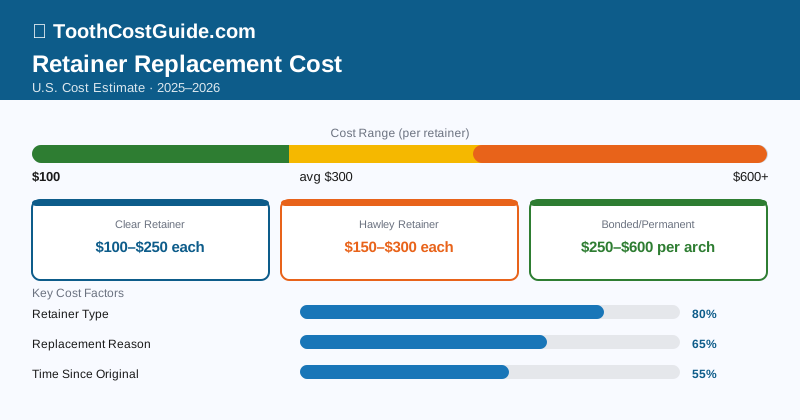
Replacing a lost or broken retainer costs $100–$600 depending on the type of retainer, your provider, and your geographic location. Clear plastic (Essix) retainers are the least expensive to replace at $100–$300 per arch. Hawley retainers (wire and acrylic) run $150–$350 per arch. Bonded (permanent wire) retainer replacement costs $200–$600 including professional placement. Acting quickly when a retainer is lost is important — teeth begin shifting within days to weeks.
| Retainer Type | Replacement Cost |
|---|---|
| Essix (clear plastic) retainer — one arch | $100–$300 |
| Essix retainer — both arches | $200–$500 |
| Hawley (wire and acrylic) retainer — one arch | $150–$350 |
| Hawley retainer — both arches | $250–$600 |
| Bonded (permanent wire) retainer — one arch | $200–$600 |
| Bonded retainer — both arches | $350–$1,000 |
| Retainer from original orthodontist (existing molds) | Often 10–30% less |
| Online retainer replacement (from home scan) | $95–$250 |
What Affects Retainer Replacement Cost
Retainer type. Clear Essix retainers are made from a vacuum-formed plastic tray over a dental model. They’re the least expensive to manufacture. Hawley retainers are acrylic with metal clasps and a wire bow — more durable and more expensive to fabricate. Bonded (lingual wire) retainers are glued directly to the backs of teeth and require professional placement.
Whether your original orthodontist has your molds. If your orthodontist kept digital scans or plaster models from your completed treatment, they can fabricate a replacement retainer from those records — often at a reduced cost. If no records exist, new impressions or digital scans must be taken ($50–$100 additional).
How long since original treatment. Teeth shift over time. If several months have passed since losing a retainer and teeth have shifted, a new retainer may not fit correctly and may cause pain. In some cases, minor orthodontic retreatment is needed before a new retainer can be made — adding significant cost.
Provider type. Your original orthodontist typically charges less than a general dentist for retainers, and significantly less than starting fresh with a new orthodontist who needs new records. Online retainer services (using home impression kits) offer the lowest prices but come with accuracy and safety tradeoffs.
Types of Retainers and What to Know
Essix (Clear Plastic) Retainers: The most common type given after braces or Invisalign. Look similar to Invisalign aligners. Worn at night (or full-time initially after treatment). Typically last 1–3 years before needing replacement due to normal wear. Easy to lose because they’re clear and easy to set down and forget. Most affordable to replace: $100–$300 per arch.
Hawley Retainers: Metal wire embedded in a colored or clear acrylic base. More durable than Essix — can last 5–10+ years with proper care. More visible when worn than clear retainers. Some orthodontists prefer Hawley for long-term retention because durability means fewer replacements. Cost: $150–$350 per arch for replacement.
Bonded (Permanent) Lingual Retainers: A thin metal wire bonded to the tongue side of the front teeth (usually upper and/or lower 6 front teeth). Cannot be removed by the patient. Prevents relapse without requiring nightly compliance. When the wire breaks or debonds, it must be repaired or replaced professionally. Cost: $200–$600 per arch including professional rebonding.
Losing a retainer is not an emergency, but it’s urgent. Teeth begin shifting within days to weeks without retainer support, especially in the first few years after orthodontic treatment. Replace a lost retainer within 1–2 weeks if possible. The longer you wait, the more the teeth will move, and the higher the chance you’ll need orthodontic retreatment before a new retainer fits.
What to Do Immediately After Losing a Retainer
Don’t panic — but act quickly. Most teeth don’t shift dramatically in a few days. Your goal is to have a new retainer within 1–2 weeks.
Call your original orthodontist first. They may have your digital scan or plaster models on file and can make a replacement quickly, often at a lower cost than starting from scratch.
If your original provider isn’t available, any orthodontist or general dentist can take new impressions and fabricate a replacement retainer.
Keep your last aligner (if Invisalign patient). Wearing your last Invisalign tray while waiting for a replacement retainer maintains your tooth position better than nothing.
Don’t try to force an old retainer that no longer fits. If teeth have shifted, a retainer that no longer seats fully can cause pain and unintended tooth movement.
Online Retainer Replacement Options
Several services offer home-impression-based retainer replacement at $95–$250:
- Retainer Club: $95–$135/arch
- Sporting Smiles: $95–$175/arch
- Ez Smile Retainers: $100–$200/set
These services ship home impression kits, you take impressions, mail them back, and receive retainers in 2–3 weeks.
Advantages: Significantly lower cost than in-office replacement.
Disadvantages: Accuracy depends on the quality of your home impressions. Professional intraoral scans (iTero) used by orthodontists produce more accurate models. If teeth have shifted since original treatment, online replacement retainers may not fit properly and provide inadequate retention.
Online retainer services work best when teeth haven’t shifted significantly and you can take accurate impressions. If your teeth have moved noticeably since losing the retainer, online impressions may result in a poorly fitting retainer that either doesn’t hold tooth position or causes discomfort. An in-office scan and professional fabrication is safer when there’s been any noticeable shifting.
Insurance Coverage
Retainer replacement is rarely covered by dental insurance. Retainers are considered maintenance appliances, and most plans explicitly exclude them or limit coverage to the initial retainers provided at the end of orthodontic treatment.
Some plans cover one set of retainers as part of the orthodontic benefit. Check your plan details, but don’t expect routine replacement to be covered.
FSA/HSA: Retainer replacement is an FSA/HSA eligible expense. Paying for replacement retainers from an FSA saves 22–37% in federal taxes. This is one of the more straightforward FSA dental uses — no prescription required at most FSA administrators.
Financing Options
Retainer replacements typically cost $100–$600 — a manageable amount that most patients pay at the time of service. Financing is rarely needed. Options include:
Pay at time of service: Credit card, check, or FSA/HSA card. Most practices don’t offer payment plans for single-appliance fees.
Bundle with future orthodontic treatment: If you need retreatment because teeth have shifted significantly, the orthodontist may bundle replacement retainers into the retreatment plan.
How to Extend Your Retainer’s Life
Store in a case every time. Most retainers are lost when set down on a napkin at a restaurant, wrapped in a napkin at school, or left in a gym bag. A hard-sided case kept in your pocket or bag eliminates most losses.
Don’t boil or dishwash Essix retainers. High heat warps the plastic. Rinse with cool water and use a retainer cleaning tablet.
Wear nightly without fail. The longer retainers are worn consistently, the less movement occurs between wearings, reducing the force needed to reseat them each night — and the longer each retainer lasts.
Consider bonded retainers for high-relapse areas. If you’ve replaced upper or lower retainers multiple times due to frequent loss, a bonded lingual wire is a one-time investment that eliminates compliance issues.
Bottom Line
Replacing a lost or broken retainer costs $100–$600 depending on type. Essix clear retainers are the most affordable replacement ($100–$300/arch). Act quickly — within 1–2 weeks — to prevent teeth from shifting and requiring retreatment before the new retainer fits. Online retainer services at $95–$250 are a cost-effective option when teeth haven’t shifted. Pay with FSA funds to save 22–37%. Retainer compliance after orthodontic treatment is a lifelong commitment — proper storage and consistent nightly wear are the best ways to minimize replacement frequency.
A lost retainer that’s replaced within 1–2 weeks typically costs $100–$300 and fits without issues. A retainer not replaced for months costs the same but may no longer fit, requiring impressions, new records, and potentially minor retreatment. Act quickly, use FSA funds, and consider a bonded retainer if you frequently lose removable ones.