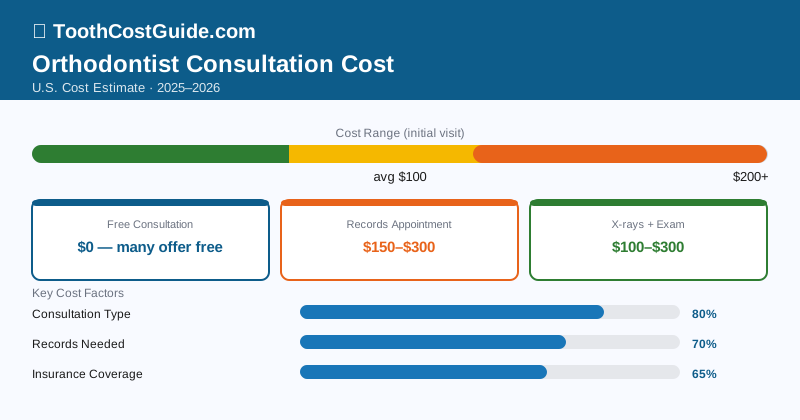
An orthodontist consultation costs $0–$200, with the majority of orthodontic practices in the US offering free initial consultations. If you’re charged at all, it’s typically for diagnostic records — X-rays, photographs, and digital scans — rather than for the orthodontist’s time. These records, when charged separately, cost $150–$350. Some practices include records in the treatment fee if you proceed; others charge separately regardless.
| Consultation Component | Cost |
|---|---|
| Initial consultation (orthodontist exam + discussion) | $0 at most practices |
| Diagnostic X-rays (panoramic + cephalometric) | $100–$250 |
| Digital intraoral photographs | Typically included |
| Digital dental scan (iTero, 3Shape) | Typically included |
| Records fee (X-rays + photos + scan together) | $150–$350 |
| Second opinion consultation | $0–$150 |
| Re-examination after growth pause | $50–$150 |
What Affects the Consultation Cost
Practice model. The overwhelming majority of orthodontic practices offer free consultations as a marketing standard. The initial exam involves the orthodontist reviewing your dental history, examining your teeth and bite, and discussing whether treatment is recommended. No fee is charged for this portion.
Whether diagnostic records are taken. Panoramic X-rays (showing all teeth, roots, and bone) and cephalometric X-rays (side-view of the skull for skeletal assessment) are not always taken at the initial consult. Some orthodontists take a full set of records at the first visit to give a precise treatment plan and fee quote. Others take records only when you’ve decided to proceed. The difference affects whether you pay anything at the first visit.
Insurance for records. Your dental insurance may cover diagnostic X-rays and records under the diagnostic benefit, separate from the orthodontic benefit. Many patients find that the panoramic X-ray taken at the orthodontist is covered by their dental insurance’s regular diagnostic coverage.
Second opinions. Getting a second opinion is strongly recommended for any orthodontic case costing $3,000+. Most orthodontists offer free second-opinion consultations. Occasionally a practice charges $50–$150 for second opinions, which is reasonable given the clinical time involved.
What Happens at a First Orthodontic Consultation
Step 1: Health and dental history review (5–10 minutes) You’ll complete a health history form covering medications, prior dental work, jaw pain, breathing issues, and family history of orthodontic problems. This helps the orthodontist understand your starting point.
Step 2: Clinical examination (10–20 minutes) The orthodontist examines your teeth, gums, jaw joints, bite relationship, and facial proportions. They look for crowding, spacing, overbite, underbite, crossbite, open bite, and skeletal discrepancies.
Step 3: Diagnostic records (if taken at this visit) Panoramic X-ray, cephalometric X-ray, intraoral photographs, and digital scan. These take 15–20 minutes and give the orthodontist all the data needed to create a treatment plan.
Step 4: Treatment discussion (10–20 minutes) The orthodontist explains their findings, recommends a treatment approach, discusses appliance options (braces, Invisalign, etc.), provides a timeline estimate, and presents the total fee with payment options.
Step 5: Financial consultation Most orthodontic offices have a dedicated financial coordinator who explains insurance benefits, the treatment fee, in-house payment plan options, and any financing programs available.
Most orthodontic consultations are free, so there is essentially no financial barrier to getting multiple opinions. Getting consultations at 2–3 practices before committing to a treatment plan is strongly recommended — fees for equivalent cases vary by 15–40% within the same market, and clinical opinions on treatment approach can differ meaningfully.
What to Bring to Your Consultation
- Your dental insurance card (dental and orthodontic benefit information)
- A list of current medications
- Your most recent dental X-rays (if taken in the past 6–12 months — may save you from duplicate X-rays)
- Questions you want answered
- For children: any concerns about jaw pain, mouth breathing, grinding, or difficulty chewing
Questions to Ask at Your Consultation
About treatment:
- What is the primary issue you’re treating — cosmetic, functional, or both?
- How long will treatment take?
- Are there multiple treatment options (braces, Invisalign, etc.) appropriate for my case?
- Do you recommend Phase 1 early treatment or is waiting for comprehensive treatment appropriate?
About cost:
- What is the total treatment fee?
- What is included — adjustments, retainers, emergency appointments?
- What is NOT included and what would those add-ons cost?
- What happens if treatment takes longer than estimated — is there a fee adjustment?
- What is your payment plan structure and interest rate?
About your credentials:
- Are you a board-certified orthodontist?
- How many years have you been in practice?
- How many cases similar to mine have you treated?
When You’ll Likely Pay Nothing
If you visit an orthodontic practice with a standard free consultation policy and choose not to take diagnostic records at that visit, you will pay $0. Many orthodontists are happy to give you a preliminary assessment and fee estimate without taking a full set of records, understanding that you may be comparison shopping.
If you proceed with diagnostic records at the consultation, expect to pay $150–$350 unless your dental insurance covers the X-rays under the diagnostic benefit. Some practices credit the records fee toward your treatment if you start — ask explicitly.
If a practice charges more than $200 for an initial consultation and does not credit it toward treatment, this is above market and worth noting when comparing providers. The norm is either free or free-consultation-with-records-charged-separately.
Insurance Coverage for the Consultation
The consultation itself: Not separately billed as a procedure; no insurance claim is filed for the orthodontist’s exam time.
Diagnostic X-rays: Panoramic X-rays and cephalometric X-rays are dental procedures (CDT codes D0330 and D0340) that may be covered under the diagnostic/preventive benefit of your dental insurance — not under the orthodontic benefit. Coverage is typically 50–80% of the fee up to the annual maximum.
Children’s first evaluation: The American Association of Orthodontists recommends every child have a first orthodontic evaluation by age 7. This evaluation is typically free at most orthodontic practices.
Financing Options
There are no financing needs for the consultation itself since most are free. If diagnostic records are charged, they’re typically paid at the time of service by credit card, check, or FSA/HSA funds.
FSA/HSA for records: Diagnostic X-rays and dental records are FSA/HSA eligible expenses. If charged at the consultation, pay with your FSA/HSA card.
How to Get the Most from Your Consultation
Schedule at 2–3 practices. Free consultations cost nothing. The fee quotes you receive can vary $500–$2,000 for equivalent cases. Even a one-day consultation marathon at multiple offices can save you thousands.
Ask for a written treatment plan. Get the diagnosis, proposed treatment, timeline, total fee, and payment options in writing. This makes it easy to compare between providers.
Don’t commit at the first visit. You’re under no obligation to start treatment the same day. Take the written plan home and compare it with other consultations.
Ask about the orthodontist’s specific experience. A board-certified orthodontist with 15 years of experience has treated thousands of cases. A general dentist offering Invisalign may have less complex-case experience. Ask about credentials upfront.
Bottom Line
Orthodontic consultations cost nothing at most practices. Diagnostic records, if taken at the consultation, run $150–$350 and may be covered by dental insurance. The free consultation model means you can comparison shop at multiple orthodontic offices with no financial commitment — which is exactly what you should do for any treatment plan costing $3,000 or more. The age-7 first evaluation for children is free, important, and routinely available at any orthodontic office.
There is almost no reason not to get multiple free consultations before choosing an orthodontist. Fees for the same treatment vary widely between practices. Use free consultations to compare both the clinical approach and the total cost — then choose based on a combination of clinical experience, price, and comfort with the provider.