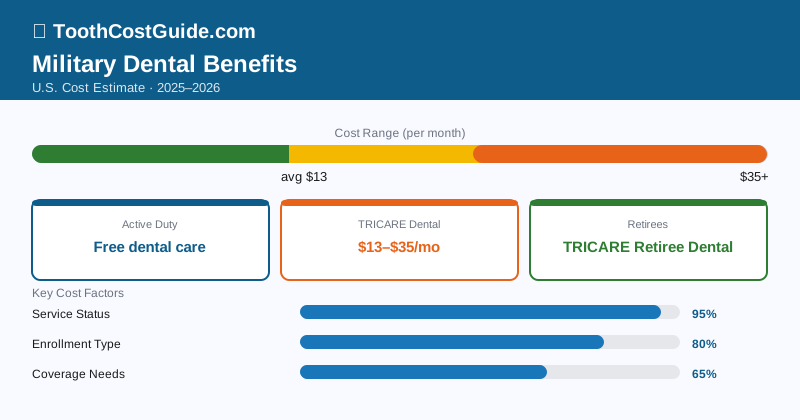
Active duty service members receive comprehensive dental care at no cost through military treatment facilities (MTFs) — a benefit worth $1,500–$4,000+ per year in avoided dental expenses. Dependents and retirees access TRICARE Dental Program (TDP) for affordable coverage, while eligible veterans can receive VA dental care based on their service-connected conditions and priority groups.
| Beneficiary | Program | Premiums | Out-of-Pocket | Annual Value |
|---|---|---|---|---|
| Active duty service members | Military MTF / TRICARE | $0 | $0 (covered procedures) | $1,500–$4,000 |
| Dependents of active duty | TRICARE Dental Program | $17.39/mo (1 dependent) | 20% after deductible | $500–$2,000 |
| Dependents (2+) active duty | TRICARE Dental Program | $46.60/mo (family) | 20% after deductible | $1,000–$3,500 |
| Retirees (under 65) | TRICARE Dental Program | $35.67/mo (1 person) | 20–50% | Varies |
| Eligible veterans | VA Dental Care | $0 | $0 or copay | Varies by eligibility |
| Guard/Reserve (activated) | TRICARE Dental Program | Military rates | 20% after deductible | Varies |
How It Works
Active Duty Dental: Service members on active duty receive dental care at no cost at military treatment facilities (MTFs) — base dental clinics operated by the Army Dental Corps, Navy Dental Corps, or Air Force Dental Corps. If MTF capacity is limited, active duty members can be referred to network civilian dentists at TRICARE’s expense.
Active duty dental covers: exams, cleanings, X-rays, fillings, root canals, crowns, extractions, oral surgery, periodontics, prosthodontics (dentures, bridges), and emergency dental — all at $0 cost to the service member.
TRICARE Dental Program (TDP): This is the dental insurance program for dependents of active duty members, National Guard/Reserve members (and dependents), and retirees. It is administered by United Concordia Companies. Monthly premiums are subsidized by the government.
TDP coverage highlights (2025):
- Class I (preventive): 100% covered after $25 deductible
- Class II (basic restorative): 80% covered (fillings, extractions, root canals)
- Class III (major restorative): 50% covered (crowns, bridges, dentures)
- Class IV (orthodontia): 50% covered up to $1,750 lifetime maximum
- Annual benefit maximum: $1,500 per person
VA Dental: See the dedicated va-dental-care.md guide for full VA dental eligibility tiers.
Costs & Savings Details
Active duty savings example: A service member needing annual cleanings, one filling, and one crown saves:
- 2 cleanings + exams: $300 value
- 1 composite filling: $200 value
- 1 porcelain crown: $1,400 value
- Total saved: ~$1,900/year at $0 cost
TRICARE Dental dependent savings example: Family of 4 (one sponsor, two dependents):
- Monthly premium: $46.60
- Annual premium: $559
- Annual dental care (2 adults + children): 2 cleanings each, 2 fillings, 1 crown = ~$2,200 value
- TRICARE pays: 80–100% of most services
- Family out-of-pocket: $559 (premiums) + ~$200 (copays) = ~$759
- Value of care without TDP: ~$2,200
- Net savings vs. no coverage: ~$1,441/year
TRICARE vs. civilian dental insurance: TDP premiums are substantially lower than comparable civilian plans because the government subsidizes a significant portion of the premium cost for active duty family members.
Eligibility / Who Qualifies
Active duty dental (free):
- All active duty service members (Army, Navy, Air Force, Marine Corps, Coast Guard, Space Force)
- Officers and enlisted
- Full-time National Guard and Reserve members on orders of 31+ days
TRICARE Dental Program:
- Dependents of active duty service members (spouse and children under 21, or 23 if full-time student)
- Retired service members (under age 65)
- Dependents of retirees
- National Guard and Reserve members (and dependents) — premium rates differ, with less government subsidy
- Surviving spouses and dependents of deceased service members
VA Dental Care:
- Veterans with a service-connected dental condition rated at 100% service-connected disability
- Veterans who are 100% total and permanent disabled (T&P)
- Veterans being treated for a service-connected condition requiring dental care as part of treatment
- Certain other categories (see va-dental-care.md for full tiers)
Pros and Cons
Pros
- Active duty care: truly comprehensive, $0 cost
- TRICARE TDP: very low premiums, no waiting periods for most services
- VA dental: free or very low cost for eligible veterans
- No network anxiety for active duty (MTF provides all care)
- TDP covers orthodontia (50%, up to $1,750 lifetime) — most civilian plans don’t
Cons
- MTF dental clinics can have long waits for non-urgent care
- TDP annual maximum of $1,500 is modest — major reconstructive work may require out-of-pocket costs
- TRICARE Guard/Reserve premiums are higher (less subsidized) than active duty family rates
- VA dental eligibility excludes many veterans who served but don’t have service-connected conditions
TRICARE Dental Program (TDP) has an annual maximum benefit of $1,500 per person. For families needing major dental work (multiple crowns, implants, full dentures), this cap can be exhausted quickly. Supplement TDP with an HSA or FSA to manage costs above the annual maximum.
Step-by-Step Guide
For active duty members:
- Contact your base dental clinic to establish a dental home and schedule a comprehensive exam.
- If your installation’s dental clinic is overloaded, your dental officer can refer you to a network civilian provider at TRICARE’s expense.
- Keep your dental readiness status current — dental readiness is a fitness-for-deployment requirement.
For dependents (TDP enrollment):
- Log into milConnect (milconnect.dmdc.osd.mil) or contact your installation’s TRICARE office.
- Enroll in TDP through United Concordia at tricaredentalprogram.com.
- Coverage starts the following month after enrollment — there are no waiting periods for most services.
- Find a TDP network dentist at the United Concordia provider directory.
For retirees:
- Enroll in TDP at tricaredentalprogram.com.
- Note the higher premium rate for retirees vs. active duty family members.
- Compare TDP against civilian dental insurance options — AARP, Costco/Delta Dental, and other plans may offer competitive rates for retirees.
For veterans:
- Contact your nearest VA medical center and ask about dental eligibility determination.
- If you have a 100% service-connected disability rating, you qualify for comprehensive VA dental care at no cost.
- If your eligibility is uncertain, request a dental eligibility review from your VA primary care team.
Active duty service members who are approaching transition/separation should maximize their MTF dental care in the months before separation. Get a full comprehensive exam, any needed major restorative work, and up-to-date X-rays — all at $0 cost. After separation, the next full dental insurance enrollment may have waiting periods of 6–12 months for major services.
Bottom Line
Military dental benefits are among the most generous in the country. Active duty service members receive fully comprehensive care at zero cost — a benefit worth $1,500–$4,000+ annually that should be fully utilized. TRICARE Dental Program for dependents offers below-market premiums and broad coverage. Veterans with qualifying service-connected conditions are entitled to VA dental care at no or very low cost. The critical step for each group is knowing your specific eligibility, enrolling in the right program, and establishing care with a military or network dental provider.