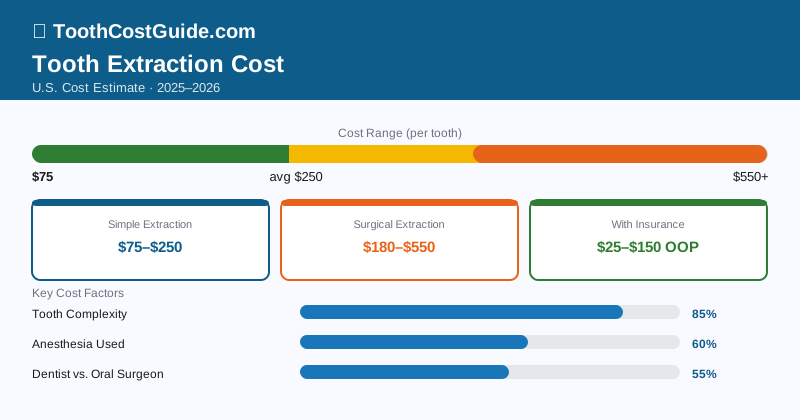
The cheapest thing about a tooth extraction is the extraction itself. Pull a molar for $200, then replace it with an implant for $4,500. The math matters — which is why the first question to ask isn’t “how much is the extraction?” but “can this tooth be saved, and what would that cost?”
That said, sometimes extraction is the right call. Here’s what it costs, what determines simple vs. surgical, and where to get it done for significantly less.
Quick Cost Reference
| Procedure | Cost Without Insurance |
|---|---|
| Simple extraction (erupted tooth) | $75–$250 |
| Surgical extraction (soft tissue) | $180–$400 |
| Surgical extraction (bony impaction) | $280–$550 |
| Wisdom tooth — erupted | $225–$400 |
| Wisdom tooth — impacted | $400–$1,100 |
| Nitrous oxide add-on | $50–$150 |
| IV sedation add-on | $400–$800 |
| Socket preservation graft (for future implant) | $300–$800 |
Simple vs. Surgical: The $300 Difference
Your dentist classifies an extraction before they pick up a tool, and the classification — simple or surgical — is the single biggest cost factor.
Simple extraction: The tooth is fully erupted above the gum. The dentist injects a local anesthetic, loosens the tooth with elevators, removes it with forceps. Takes 5–20 minutes for most teeth, longer for molars. You feel pressure, not pain. Cost: $75–$250.
Surgical extraction: Required when the tooth isn’t accessible with forceps alone. The dentist cuts the gum, may remove surrounding bone, usually sections the tooth into pieces before removing each root separately. Sutures go in afterward. Recovery is 3–5 days of meaningful soreness, compared to 1–2 days for a simple pull. Cost: $180–$550.
When does a tooth need surgical extraction?
- It’s broken off at or below the gumline
- It has curved or deeply anchored roots
- It’s impacted (partially or fully covered by bone or tissue)
- A previous root canal made the root brittle, and it fractured during the attempt to loosen it
You won’t always know which category applies until the appointment — dentists sometimes start simple and convert to surgical when a tooth doesn’t move as expected. Ask beforehand: “Based on my x-ray, do you think this will be simple or surgical?”
Ask one question: “Is this tooth salvageable?” A root canal and crown on a damaged molar costs $2,000–$3,600. An implant to replace an extracted molar costs $3,000–$6,000. If the tooth can be saved, saving it is almost always the cheaper path. If your dentist recommends extraction without discussing this tradeoff, that’s a signal to ask more questions — or get a second opinion.
Cost by Situation
Routine molar extraction (surgical): Back molars frequently require surgical technique due to multiple curved roots. An oral surgeon charges $350–$550 for a single molar extraction. A general dentist comfortable with oral surgery may charge $180–$350. If the molar has had a previous root canal, its roots can be more brittle and prone to fracture — an experienced provider matters here.
Emergency extraction: You come in with a toothache, the tooth is non-restorable, it needs to come out today. Expect an emergency exam fee ($75–$150) plus the extraction ($150–$350), totaling $225–$500 in one visit. Some practices absorb the exam fee into the extraction fee for same-day treatment — ask.
Multiple extractions at once: If several teeth need to come out, doing them in one appointment saves money compared to multiple visits. Practices sometimes apply a per-tooth discount for 3+ extractions. Adding IV sedation becomes more cost-effective when split across 4–6 teeth versus 1–2.
Broken tooth at the gumline: This almost always becomes a surgical extraction. Budget $280–$500. If the tooth had a root canal, consider asking an oral surgeon rather than a general dentist — roots that snap during extraction need specialist experience to retrieve cleanly.
Sedation: Worth It or Not?
For a single simple extraction, local anesthesia handles the pain completely. Most patients who were anxious beforehand describe the procedure as “not that bad” once the numbing kicks in.
Situations where sedation genuinely helps:
- Severely dental-phobic patients
- Multiple extractions in one sitting (4+ teeth)
- Complex surgical cases expected to take 60+ minutes
- Young children or patients with special needs
Nitrous oxide ($50–$150) is mild, works within minutes, and wears off before you leave the office. You can drive yourself home. Good for moderate anxiety.
IV sedation ($400–$800) is appropriate for complex cases or significant anxiety. You’re not unconscious but profoundly relaxed — many patients don’t remember the procedure. Requires a driver. Some oral surgeons include it in their standard surgical extraction fee; most don’t.
Skipping unnecessary sedation is one of the easiest ways to keep costs down. If you’re only getting one tooth out, try local anesthesia first.
With vs. Without Insurance
Extractions fall under “basic” or “oral surgery” coverage in most dental plans.
Typical insurance coverage:
- Simple extraction: 70–80% after deductible
- Surgical extraction: 50–80% (may be classified as “major” in some plans)
- Wisdom teeth: 50–80% under oral surgery benefits
- IV sedation: Sometimes covered when medically justified for complex cases
Example: Surgical molar extraction at $400. Plan covers 70%.
- Insurance pays: $280
- Patient pays: $120 + any remaining deductible
Without insurance:
- Single simple extraction: Manageable for most patients ($75–$250)
- Surgical molar or impacted wisdom teeth: $350–$1,100 — worth exploring a discount plan or community health center
- Multiple extractions with sedation: $1,500–$3,000+ — financing warranted
Where to Pay Less
Community health centers (FQHCs): Federally funded clinics offer extractions on a sliding-scale fee based on household income. For qualifying patients, a surgical extraction might cost $25–$100. Locate one at findahealthcenter.hrsa.gov.
Dental school oral surgery clinics: Supervised residents perform extractions — including complex surgical cases — at 50–70% off private practice rates. Simple: $30–$80. Surgical: $100–$300. Impacted wisdom teeth: $150–$500. Find programs at adea.org.
Cash/self-pay discount: Many dental offices will knock 10–20% off for patients paying at the time of service without insurance billing overhead. Worth asking directly: “Do you have a self-pay rate?”
Dental discount plans: For $80–$120/year, plans like Careington or Aetna Dental Access provide 20–35% off most procedures at participating offices. No waiting period. A single surgical extraction can pay for the annual cost of the plan.
If you’re extracting a tooth you might eventually want to replace with an implant, ask about socket preservation grafting at the same appointment ($300–$800). Packing graft material into the empty socket prevents the bone from resorbing over the next 6–12 months, keeping your implant options open. The alternative — major bone grafting later after significant loss — can cost $1,000–$3,000 and adds surgical complexity.
After the Extraction: What to Watch For
Dry socket occurs in about 2–5% of extractions when the blood clot protecting the socket dislodges, leaving exposed bone. It’s extremely painful, typically starting 3–5 days post-extraction. Treatment is a dental office visit to pack the socket with a medicated dressing — usually a $50–$100 appointment, though many dentists handle it without charging. Smokers and patients on birth control have higher dry socket rates.
Infection after extraction is less common but possible. Signs: increasing pain after day 3, swelling that grows rather than shrinks, fever. Contact your dentist — a course of antibiotics ($15–$30 generic) handles most cases.
Bottom Line
A tooth extraction costs $75–$550 for the procedure itself, with sedation potentially doubling the total. With insurance, most patients pay under $200 out of pocket for a single extraction. Without insurance, simple extractions are affordable; surgical cases and wisdom teeth warrant comparing options.
The real extraction question isn’t the procedure cost — it’s what comes next. Missing teeth cost more than most people budget for: bone loss, shifting teeth, bite problems, and eventual replacement costs that dwarf the initial extraction fee. Go in with a plan for what happens after the tooth is gone.
Before any extraction, get a written estimate that specifies simple vs. surgical classification, includes sedation if requested, and addresses what happens to the socket (particularly if you’re considering a future implant). And genuinely ask whether the tooth can be saved — not just whether it’s easier to pull it.
Frequently Asked Questions
A simple tooth extraction typically costs $75–$250 per tooth, depending on tooth location and complexity. Front teeth are generally cheaper to extract than molars, and costs vary by geographic region and whether you visit a general dentist or specialist.
Most dental insurance plans cover 50–80% of extraction costs after you meet your deductible, though some plans classify extractions as basic care covered at 80%. However, extractions performed for cosmetic reasons are typically not covered, and you should verify your plan's specific exclusions before scheduling.
Simple extractions remove visible teeth with minimal bone removal and cost $75–$250, while surgical extractions remove impacted or broken teeth requiring incisions and bone removal, costing $180–$550. Surgical extractions take longer and require more skill, which is why they cost significantly more.