It’s 11 PM on a Friday. A filling just fell out. Your tongue can’t stop finding the gap, and there’s a dull ache setting in. Your dentist’s office won’t open until Monday. What do you do?
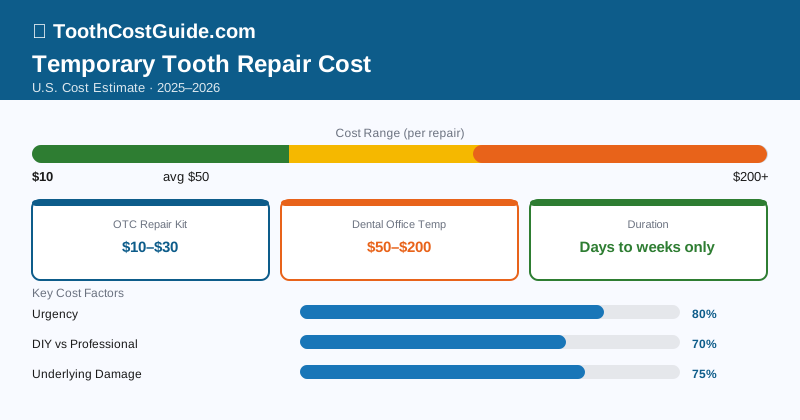
This is exactly what temporary tooth repair is for. A $12 kit from the pharmacy will protect that tooth through the weekend — and that’s the right tool for the job. Temporary repairs cost $10–$20 for OTC pharmacy kits or $75–$300 for chairside treatment from a dentist. They’re not permanent solutions. But they’re genuinely useful bridges to proper care, and knowing which option fits your situation can save you unnecessary money and stress.
| Temporary Fix Option | Cost | Lasts |
|---|---|---|
| OTC temporary filling (Dentemp, Recapit) | $10–$20 | Days to 2 weeks |
| OTC dental wax (for sharp edges) | $5–$10 | Hours to 1 day |
| OTC tooth repair kit (chipped tooth) | $15–$25 | Days |
| Temporary crown kit (OTC) | $15–$25 | Days to 1 week |
| Clove oil for pain relief | $8–$15 | 30–60 minutes per application |
| Chairside temporary filling (dentist) | $50–$100 | 2–8 weeks |
| Chairside temporary crown (dentist) | $100–$300 | 2–8 weeks |
| Prefab temporary crown (dental lab) | $200–$400 | 4–12 weeks |
OTC vs. Professional: What’s the Real Difference?
Products like Dentemp, Recapit, and GC Fuji TEMP are zinc oxide-based cements — the same general material category that dentists use for temporaries. The difference is refinement and precision, not chemistry. OTC versions are softer, bond less predictably, and wear down faster under chewing forces. A professional temporary placed in a dental chair is better-fitting, more durable, and lasts weeks rather than days.
For a 24–72 hour bridge to a scheduled appointment, OTC is entirely appropriate and genuinely effective. For a gap measured in weeks — say, while you save for a crown or wait for dental school availability — a professionally placed temporary is worth the additional cost.
Each Option, Broken Down
OTC temporary filling kits — $10–$20. Available at CVS, Walgreens, Walmart, and most grocery stores. Mix the two components (or press the pre-mixed material) into the cleaned cavity and let it harden. Works well for lost fillings, protecting exposed dentin from temperature and bacterial exposure. Expect it to hold a few days to two weeks with careful eating. Clean and dry the tooth surface before applying — debris prevents adhesion.
Orthodontic wax — $5–$10. Not structural at all. But for a chipped or broken tooth with a sharp edge that’s cutting your tongue or cheek, wax provides immediate relief. Available anywhere and takes seconds to apply. Needs replacing after eating. This is a comfort fix, not a protective one.
OTC crown replacement kits — $15–$25. Specifically designed for re-seating a lost crown temporarily. Contains zinc oxide cement and instructions. Clean the crown’s interior thoroughly, apply the cement, and press the crown back onto the prepared tooth. Can hold for days to a week. A reasonable option before a Monday appointment.
Clove oil — $8–$15. Eugenol — the active compound in clove oil — is a topical anesthetic and the same ingredient in most dental temporary cements. Apply a tiny amount directly to a sensitive area with a cotton swab. Noticeable pain relief within minutes, lasting 30–60 minutes. Not a fix, but a legitimate pain management tool for an exposed nerve while you wait for care.
Chairside temporary filling — $50–$100. A dentist places a formal temporary material such as glass ionomer, zinc oxide eugenol cement, or IRM into the cavity. Better fitting and more durable than OTC options. Appropriate when you need protection for a few weeks, not just a day or two.
Chairside temporary crown — $100–$300. After preparing a tooth for a crown, the dentist makes a temporary acrylic or bis-acryl composite crown to protect the prepared tooth while the permanent crown is being fabricated in a dental lab — typically 2–3 weeks. Many dentists include this fee in their overall crown quote. Confirm before agreeing to pay it separately.
Lab-fabricated temporary crown — $200–$400. A more precise, longer-lasting temporary for cases requiring months of protection. Used in complex restorative cases, implant staging, or when the patient needs treatment phased over time.
When OTC Is Enough and When You Need a Dentist
Use OTC products when:
- The gap to your appointment is 1–5 days
- Pain is mild or moderate and controlled with ibuprofen
- You lost a filling or a crown, and the OTC kit is specifically designed for that situation
- No signs of infection (no swelling, no fever, no throbbing that worsens)
Get professional temporary care when:
- You need protection for more than a week
- You need a crown seated properly while the permanent is being made
- OTC cement keeps falling out after repeated attempts
- You have any signs of infection — temporary cement over an active infection traps bacteria and worsens the problem
Insurance and Coverage
OTC temporary products from a pharmacy aren’t covered by insurance — they’re retail products. They may qualify as FSA or HSA eligible expenses if your plan includes dental care items; check your plan’s guidelines.
Chairside temporary fillings placed in a dental office may be covered at 80% as basic restorative procedures. Temporary crowns placed as part of a crown procedure are typically bundled into the crown fee, which is covered at 40–60% under major restorative benefits.
Emergency exams that lead to temporary treatment are usually covered at 80–100% for the diagnostic component. Palliative treatment (ADA code D9110 — emergency pain relief without definitive treatment) is covered by most plans at 80–100%.
The Money-Saving Logic
Match the tool to the timeline. A $12 OTC kit for a 2-day gap is the right call. Spending $200 on a professional temporary for a 48-hour bridge makes no financial sense.
Always ask if the temporary is included. Many dentists include temporary crown cost in their overall crown fee. Verify before assuming you’ll be billed separately.
Dental schools for longer-duration temporaries. If you need a quality temporary crown for several weeks — say, while waiting for a dental school implant appointment — dental schools provide chairside temporaries at 40–60% of private practice cost.
Clove oil before expensive products. Before buying multiple OTC pain products, try clove oil first. It contains the same active ingredient (eugenol) as most OTC dental pain preparations, works rapidly on exposed nerve pain, and costs $8–$15.
OTC temporary repair products work well for bridge gaps of 1–5 days. For anything longer, a professionally placed temporary from a dentist provides better protection and longevity. Either way, plan your permanent treatment — temporaries are not cures.
If you’re using a temporary fix and develop worsening pain, swelling, fever, or a bad taste (indicating pus), remove the temporary material and seek dental care promptly. Sealing an infected tooth with temporary cement can trap bacteria and worsen the infection.
Bottom Line
Temporary tooth repair costs $10–$20 at the pharmacy or $75–$300 from a dentist for chairside temporaries. OTC kits are appropriate for brief gaps before your dental appointment. Always follow up with definitive professional treatment — temporary materials do not prevent decay, protect the nerve, or address any underlying infection. They simply buy you time.
Frequently Asked Questions
Over-the-counter temporary repair kits from a pharmacy cost $10–$20 and are designed for emergency weekend or after-hours fixes. If you visit a dentist for chairside temporary treatment, expect to pay $75–$200, which provides professional-grade protection and typically lasts longer than DIY options.
Most dental insurance plans do not cover OTC temporary repair kits since they are purchased at a pharmacy rather than through a dental office. Chairside temporary repairs performed by a dentist may be covered under your plan's emergency or restorative benefits, though you'll typically pay a copay or coinsurance of 10–50% after meeting your deductible.
OTC pharmacy kits usually last 1–2 weeks and are meant only to protect the tooth until you can schedule a permanent fix. Chairside temporary repairs from a dentist can last 1–3 months depending on the tooth's location and your bite. You should plan to visit your dentist within a few days to a week for a permanent restoration like a filling or crown.