A 2017 study published in the British Dental Journal sent a mystery shopper to multiple dental offices and found that 30% of the treatment recommendations she received were either unnecessary or could reasonably be delayed. Consumer Reports investigations have documented significant variation in treatment recommendations when identical X-rays were shown to different dentists.
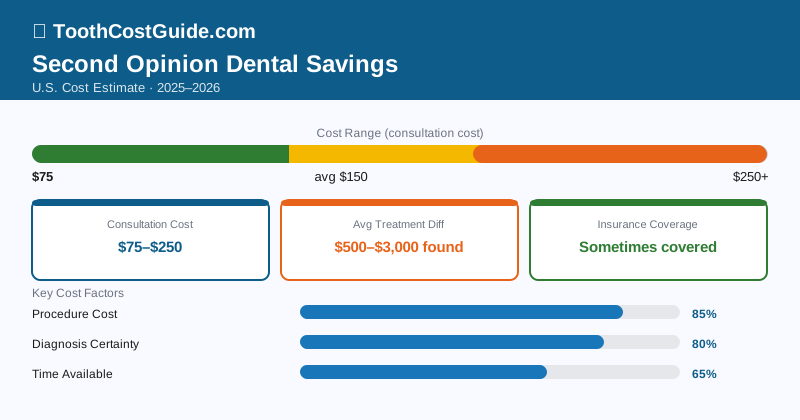
This isn’t a story about dishonest dentists. Dentistry involves clinical gray zones — early cavities, hairline cracks, borderline gum disease — where two qualified providers examining the same evidence can reach genuinely different conclusions. That ambiguity is why a second opinion costs $50–$150 and can save $500–$5,000.
| Situation | Second Opinion Cost | Potential Savings | Risk of Not Getting One |
|---|---|---|---|
| Recommended root canal | $50–$125 | $800–$1,500 | Unnecessary treatment |
| Recommended crown | $50–$125 | $1,200–$1,800 | Could be treated with onlay or filling |
| Multiple crowns (3+) | $75–$150 | $3,000–$5,000+ | Significant over-treatment |
| Full mouth reconstruction quote | $100–$200 | $5,000–$15,000 | Major cost discrepancy |
| Implant recommendation | $75–$150 | $3,000–$5,000 | May not be necessary/timing |
| Periodontal surgery recommendation | $75–$150 | $1,500–$5,000 | Non-surgical alternatives may work |
| Orthodontic treatment plan | $0 (free consult) | $1,000–$4,000 | Wrong approach for your case |
When the Gray Zone Matters Most
Root canals. The line between reversible pulpitis (temporary inflammation — no root canal needed) and irreversible pulpitis (nerve is dying — root canal required) isn’t always obvious on a scan. An endodontist specializes in exactly this diagnosis. A $75–$150 consultation with one before spending $800–$1,500 on a root canal is cheap insurance against treatment you may not need.
Crowns vs. alternatives. Many crowns are legitimately necessary. But a tooth recommended for a crown ($1,200–$1,800) might instead be treatable with a ceramic onlay ($600–$900) or a large filling ($150–$300). A second dentist’s assessment can tell you whether crown preparation is truly the only path, or whether less invasive options weren’t explored.
Multiple crowns in one treatment plan. If you’re looking at a plan for 4–6 crowns totaling $5,000–$8,000, the stakes of getting a second opinion are high. Research consistently shows significant variation in the number of crowns recommended by different dentists reviewing the same patient. A second look costs $150. The potential savings are orders of magnitude larger.
Periodontal surgery recommendations. Non-surgical periodontal treatment — scaling and root planing at $250–$400 per quadrant — resolves many moderate gum disease cases without surgery. A periodontist’s independent assessment tells you whether surgery is genuinely indicated or whether deep cleanings would achieve the same outcome.
What a Second Opinion Visit Actually Looks Like
You’re not accusing anyone of anything. You’re doing due diligence, the same way you’d get a second estimate on a major home repair. Good dentists understand this. If a dentist reacts with offense or pressure when you mention seeking a second opinion, that reaction is itself informative.
Here’s what happens:
- You bring your X-rays and a copy of the written treatment plan (you’re legally entitled to both from any dentist you’ve seen)
- The second dentist examines you and reviews the records
- They give you their independent assessment — verbally or in writing
- You’re not obligated to proceed with either dentist
The consultation fee typically runs $50–$150. Many specialist offices (endodontists, periodontists, prosthodontists) accommodate second opinion visits regularly and will tell you the fee upfront when you call.
When Second Opinions Are Most Worth It
Get a second opinion when:
- The recommended procedure costs $800 or more
- You’ve never had this type of treatment before and aren’t sure what to expect
- The treatment plan felt rushed, or the appointment felt sales-driven
- You’re unsure whether the condition is urgent or can be monitored
- Multiple major procedures are recommended at once
- The total treatment plan cost exceeds $2,000
Skip it when:
- You’re in active dental emergency — infection, abscess, severe pain. Seeking a second opinion while an infection spreads is dangerous. Get treated immediately.
If you have a dental emergency — active infection, abscess, or severe pain — do NOT delay treatment to get a second opinion. Dental infections can become life-threatening. Seek treatment immediately. Second opinions are for non-urgent situations where you have time to evaluate options.
Where Second Opinions Save the Most Money — Procedure by Procedure
Root canals ($800–$1,500): Second opinion from an endodontist, not another general dentist. Endodontists are the specialists for this exact diagnosis and have additional imaging tools to assess pulp vitality accurately.
Crowns ($1,200–$1,800): A general dentist or prosthodontist can assess whether crown preparation is necessary or whether an onlay or build-up filling is appropriate.
Periodontal surgery ($1,500–$5,000): A periodontist — not another general dentist — can best assess whether surgery is indicated versus continued non-surgical maintenance.
Implants ($3,500–$6,000+): An oral surgeon or prosthodontist can review bone density and confirm whether an implant is the appropriate replacement option for your specific clinical situation.
Full mouth reconstruction ($10,000–$50,000+): This is the clearest case for a second opinion. The scope of treatment varies enormously between providers, and a second comprehensive assessment costs $100–$200 against a five-figure treatment plan.
Step-by-Step: How to Get a Useful Second Opinion
Step 1 — Request your X-rays and records before leaving. After receiving any expensive treatment recommendation, ask for copies of all relevant X-rays and a written treatment plan with CDT codes. You are legally entitled to these. Most offices provide digital X-rays via email or on a USB drive.
Step 2 — Choose the right type of second opinion provider. For root canal second opinions: board-certified endodontist. For gum disease: periodontist. For implants or full mouth work: prosthodontist or oral surgeon. Specialists have the training to independently confirm or question a specific type of recommendation.
Step 3 — Call and ask about second opinion fees upfront. When booking, say: “I’m seeking a second opinion on a specific treatment recommendation. Can you tell me your consultation fee?” Typical range: $50–$150.
Step 4 — Bring everything you have. X-rays (digital file is fine), the written treatment plan with CDT codes, notes about your symptoms and history. The more complete your records, the more accurate the second assessment.
Step 5 — Ask specific questions.
- “Is this treatment necessary right now, or can it be monitored?”
- “Is there a less expensive alternative that addresses the same issue?”
- “What happens if I wait 3–6 months?”
- “What is your estimated cost for the treatment you’d recommend?”
Step 6 — Compare both assessments side by side. If both dentists recommend the same treatment, you have high confidence it’s appropriate. If they disagree significantly, you might seek a third opinion, or ask each dentist to explain their reasoning in more detail — ideally in writing.
Step 7 — Choose your provider independently. You’re not locked in with either dentist who gave an opinion. Choose based on cost, clinical approach, your confidence in the provider, or any other factor. You can have the opinion in one office and the treatment in another.
For any treatment plan over $2,000, request a written estimate with CDT procedure codes, then visit Fair Health Consumer (fairhealthconsumer.org) to benchmark each code against your local market. This tells you whether the fees are within the typical range for your area — and gives you informed talking points when seeking a second opinion or negotiating with your dentist.
The Return on Investment
A second opinion costs $50–$150. Before any procedure over $800, that’s a straightforward investment calculation: you’re paying 5–15% of the procedure cost to verify that the procedure is necessary and that you’re not overpaying.
When the second opinion confirms the first, you get something valuable: confidence that the treatment is right. When it doesn’t match, you’ve potentially avoided $500–$5,000 in unnecessary or overpriced treatment.
Either way, the $50–$150 was well spent.
Frequently Asked Questions
A dental second opinion typically costs $50–$150, depending on whether the dentist charges a consultation fee or includes it with an exam. Many dentists offer free or low-cost second opinions, especially if you're a new patient, making it an affordable way to avoid unnecessary treatment that could cost $500–$5,000 or more.
Most dental insurance plans cover diagnostic services like exams and X-rays at 100% under preventive benefits, which typically applies to second opinion consultations. However, if the second opinion dentist charges a separate consultation fee, your out-of-pocket cost may be $50–$150 depending on your plan and whether that dentist is in-network.
You should get a second opinion before any major treatment recommendation, such as root canals, crowns, extractions, or extensive restorative work, since studies show 30% of treatment recommendations may be unnecessary or could be delayed. A second opinion is especially important if the recommended treatment costs more than $1,000 or if you're uncomfortable with your dentist's explanation.