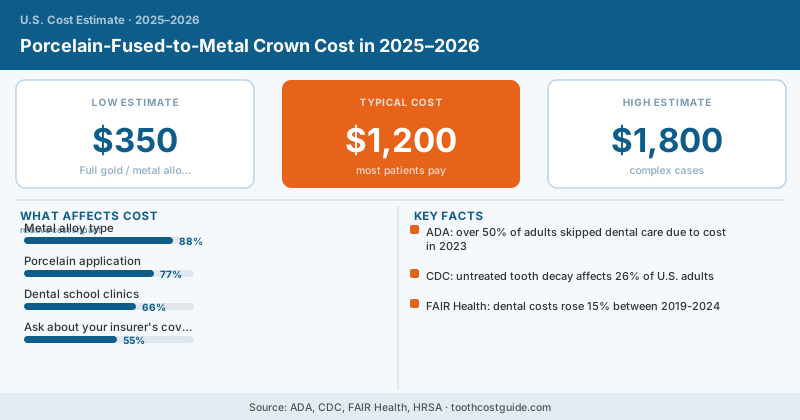
Most patients assume newer is better when it comes to dental crowns. Zirconia gets the marketing buzz, and all-ceramic options look stunning in before-and-after photos. But PFM crowns — porcelain fused to metal — have been placed millions of times over 50 years of clinical use, and they’re not going away. At $800–$1,700 per tooth, they cost less than the alternatives for most people, and on the right tooth, they’re still an excellent long-term choice.
Here’s exactly what you’re getting, when it makes sense, and when it doesn’t.
What PFM Is
A porcelain fused to metal crown has two layers. The inner core is a metal substructure — usually cobalt-chromium or a high-noble alloy — cast or milled to fit your prepared tooth precisely. Over that, a dental ceramist layers and fires tooth-colored porcelain to create the visible outer shell.
The metal provides fracture strength. The porcelain provides aesthetics. The combination is what made PFM the dominant crown material from the 1960s through the 2000s — and what still makes it viable today on specific teeth.
| Crown Type | Cost per Tooth (No Insurance) | Key Advantage |
|---|---|---|
| Porcelain fused to metal (PFM) | $800–$1,700 | Lower cost, proven longevity |
| Monolithic zirconia | $1,000–$1,800 | Fracture-resistant, no dark line |
| All-ceramic (e.max / lithium disilicate) | $900–$1,600 | Best aesthetics, front teeth |
| Full gold / metal | $800–$1,600 | Maximum durability, hidden molars |
| PFM at dental school | $350–$700 | Best value, longer appointments |
When Dentists Still Recommend PFM
Zirconia’s rise hasn’t made PFM obsolete. Here’s where it still makes clinical sense:
Back molars under heavy bite load. The metal substructure in a PFM crown is rigid and strong. On second or third molars that absorb maximum chewing force and are completely invisible in your smile, PFM remains a reliable, cost-effective choice. Many experienced dentists still prefer it here over monolithic zirconia for its long, proven track record.
Patients with thin enamel or limited occlusal space. PFM crowns can be fabricated with thinner margins than some all-ceramic options, preserving more natural tooth structure. In situations where the space between upper and lower teeth is tight, PFM’s thin metal coping fits where bulkier ceramic might not.
Budget constraints with multiple crowns. If you need three or four crowns and you’re working against an insurance annual maximum, the $200–$400 per-crown savings with PFM adds up. Three crowns at PFM pricing vs. zirconia pricing could save $600–$1,200 — enough to cover another procedure entirely.
Existing PFM crowns. Mixing materials across adjacent teeth can cause optical inconsistencies. If you already have PFM crowns on neighboring teeth and need a replacement, matching the material often looks better than introducing a different crown type next to it.
The Dark Line Issue
The primary aesthetic drawback of PFM is what happens at the gum margin over time. The metal substructure extends to the crown’s edge, and as gums naturally recede with age — even a millimeter or two — that metal edge becomes visible as a dark gray or black line at the base of the tooth.
This is a cosmetic issue, not a structural problem. But it’s real, and it’s why PFM has largely been replaced by zirconia and all-ceramic options for front teeth and visible premolars.
On a lower second molar? You’d need to hold a mirror at a specific angle to see it even if your gums recede. The dark line argument is essentially irrelevant for teeth at the back of your mouth.
PFM crowns differ by the metal alloy used in the substructure. Base metal alloys (cobalt-chromium, nickel-chromium) are standard and least expensive. High-noble alloys (gold, palladium) cost $100–$300 more per crown but are required if you have a documented nickel or chromium allergy. If you have metal sensitivity, tell your dentist before crown selection — base metal crowns can cause chronic gum inflammation in sensitive patients.
Insurance Coverage Details
Most dental plans classify crowns as major restorative benefits, covered at 50% after the deductible, up to the annual maximum. The detail that matters for PFM specifically is the Least Expensive Alternative Treatment (LEAT) clause.
Many insurers designate PFM as the “standard” crown for posterior teeth. If you choose zirconia on a back molar, your insurer pays at the PFM rate and you pay the material difference out of pocket. If you choose PFM, you’re choosing the standard — no shortfall.
For a $1,300 PFM crown with 50% coverage and a $100 unmet deductible:
- Insurance pays: $600
- You pay: $700
Compare to a $1,600 zirconia crown on the same plan with LEAT applied at the PFM rate:
- Insurance pays: $600 (PFM-equivalent)
- You pay: $1,000
That $300 difference per tooth is real. If your dentist recommends either option clinically, PFM can be the financially smarter choice.
A 2024 survey cited by the CDC found 56% of American adults visited a dentist in the past year. Among those who had restorative work, cost remained the top factor in material selection — making PFM’s price advantage meaningful for a large segment of patients.
Don’t let “newer is better” marketing drive a decision your dentist hasn’t specifically recommended. PFM on a visible front tooth, particularly in a younger patient likely to experience decades of gum recession, is a legitimate aesthetic concern. PFM on a hidden molar in a patient with a tight budget is a perfectly reasonable clinical choice. Ask your dentist: “For this specific tooth, is there any clinical reason NOT to use PFM?” If the answer is no, you’re fine saving the money.
Reducing Your Cost
Dental school clinics are the most effective option for cost reduction. Accredited dental school programs place PFM crowns at $350–$700, supervised by faculty. Treatment takes more appointments and more time per appointment, but outcomes are clinically comparable for routine cases.
Pre-authorization before treatment. Submit a pre-treatment estimate to your insurer before committing to the crown. This gives you a written estimate of coverage that the insurer is bound to honor at treatment time. Takes 1–2 weeks and eliminates billing surprises.
Split treatment across calendar years. If you need multiple crowns and have an annual maximum, placing one crown in late December and another in early January applies two separate annual maximums. On a $1,500 annual max at 50% coverage, this doubles your insurance contribution.
Dental savings plans. Careington, Aetna Dental Access, and similar plans cost $80–$200/year and provide 15–40% discounts at participating dentists — no waiting periods. If you’re uninsured, these plans pay for themselves with a single crown.
Frequently Asked Questions
A PFM crown costs $800–$1,700 per tooth in 2026, depending on location and the dental lab used. This is typically $100–$400 less than zirconia and $50–$300 less than all-ceramic crowns. At dental school clinics, PFM crowns run $350–$700.
Yes. Most PPO dental plans cover all crown types — including PFM — at 50% after your deductible as a major restorative benefit. Some insurers apply a 'least expensive alternative treatment' clause on back teeth, meaning they'll pay at the PFM rate even if you choose zirconia, leaving you to cover the difference. Getting a pre-authorization before treatment confirms your exact coverage.
PFM crowns have a well-documented clinical track record of 10–15 years on average, with many lasting 20+ years in patients with good oral hygiene and low bruxism (grinding). The main failure modes are porcelain chipping on the biting surface and, over time, a dark line appearing at the gum margin as gums naturally recede. Zirconia has lower chipping risk; all-ceramic has similar aesthetic longevity on low-stress teeth.