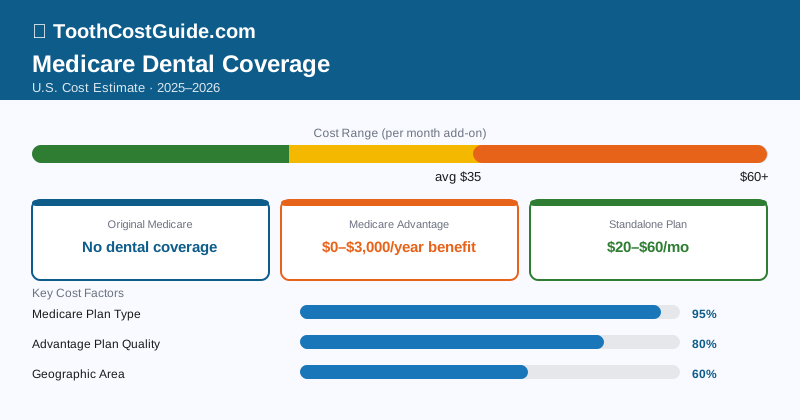
When Medicare was signed into law in 1965, routine dental care was deliberately left out. Not an oversight — a choice. Sixty years later, that gap hasn’t closed. Original Medicare (Parts A and B) pays for almost nothing in your mouth, leaving beneficiaries responsible for 100% of dental bills that average $685 per year for routine care and can spike to $5,000–$10,000 when implants, bridges, or full dentures enter the picture.
The workarounds exist — Medicare Advantage dental plans, standalone dental policies, dental discount memberships — but they require active shopping. Nobody enrolls you automatically.
| Coverage Type | Monthly Cost | What’s Covered | Annual Dental Benefit |
|---|---|---|---|
| Original Medicare (Parts A & B) | Varies (Part B ~$185) | Almost nothing routine | ~$0 |
| Medicare Advantage with dental | $0–$100 above Part B | Preventive + some major | $1,000–$3,000 |
| Standalone Medicare dental plan | $20–$50 | Varies by plan | $1,000–$2,000 |
| Medicare Supplement (Medigap) | $100–$300 | Does NOT include dental | $0 |
| Dental discount plan (add-on) | $10–$20 | Discounts, not insurance | N/A (10–60% off) |
What Original Medicare Will — and Won’t — Pay For
Parts A and B cover dental care only when it’s incidental to another covered medical procedure. Extracting teeth before radiation therapy for jaw cancer. A dental exam required before a kidney transplant. The exam has to be part of a covered medical treatment — Medicare isn’t paying for dentistry, it’s paying for the medical procedure that happens to involve teeth.
Outside those narrow scenarios, the exclusions are total. Cleanings, X-rays, fillings, crowns, bridges, dentures, implants, extractions for dental disease — none of it. Medigap plans (Parts A–N) help with Medicare’s medical cost-sharing but add exactly zero dental coverage. People often assume a supplemental plan fills this gap. It doesn’t.
Where the Real Coverage Lives: Medicare Advantage
About 60% of Medicare Advantage (Part C) plans include some dental benefit in 2025. The operative word is “some.” There’s a large difference between a plan that offers two free cleanings per year and one that covers crowns, bridges, and dentures up to $3,000 annually. Both advertise dental benefits. Only one meaningfully offsets real costs.
When comparing Medicare Advantage plans, look for three things in the dental section:
- Does it cover comprehensive dental (preventive + basic + major) or only preventive dental (cleanings and exams)?
- What’s the annual dental maximum — $1,000, $2,000, $3,000?
- Does it cover crowns, dentures, and implants, or only basic fillings?
If you’re on Original Medicare and have no dental coverage, you’re paying 100% of all routine dental costs. Even a basic standalone dental plan at $30/month can save you significantly on cleanings, fillings, and major work. Check your Medicare Advantage plan’s dental benefit — it may be better than you think.
Breaking Down the Numbers
Medicare Advantage dental — typical 2025 coverage:
- Preventive (cleanings, exams, X-rays): 100%, no cost-sharing
- Basic (fillings, extractions): 50–80% after small copay
- Major (crowns, bridges, dentures): 50% after deductible
- Annual dental maximum: $1,000–$3,000
- Orthodontics for adults: Rarely included
Standalone individual dental plans for Medicare beneficiaries:
- Basic preventive-only: $20–$35/month
- Mid-tier (includes fillings): $35–$50/month
- Comprehensive (crowns, dentures): $50–$80/month
- Annual maximums: $1,000–$2,000
- Waiting periods of 6–12 months often apply for major work
Part B premium for reference: The standard 2025 Part B premium is approximately $185/month — none of which goes toward dental.
One advantage of standalone plans: you buy them independently of Medicare’s enrollment calendar. If you realize mid-year that your Advantage plan only covers cleanings, you can add a standalone dental plan any time.
The Medicare Advantage Trade-Off
The appeal of Medicare Advantage dental is convenience — one plan, one ID card, potentially $0 added premium above Part B. The risk is instability. MA plans redesign benefits each year. A plan with $2,000 in dental coverage this year may cut that to $1,000 or eliminate major coverage entirely next fall. This is why October 15 – December 7 matters.
Open enrollment lets you switch MA plans annually. Use the Plan Finder at medicare.gov each fall, filter for plans with comprehensive dental, and don’t assume last year’s dental benefit is the same this year.
Do not assume your Medicare Advantage plan covers comprehensive dental without verifying the specific benefit. Many plans advertise “dental benefits” but only cover two cleanings per year. Request the Summary of Benefits and look for the dental coverage section, specifically noting whether fillings and crowns are included.
Smart Moves for Medicare-Age Dental Costs
Shop MA plans every October. The Plan Finder at medicare.gov lets you filter for comprehensive dental benefits and compare the dollar value each plan offers. Switching to a plan with $2,000 in dental coverage could easily offset any premium difference.
Use dental schools. For seniors facing a $4,000 implant or $3,000 denture cost, accredited dental school clinics cut that by 40–70%. Faculty supervise all work. The trade-off is longer chair time, not quality.
Layer a discount plan for over-maximum costs. Dental discount memberships ($10–$20/month from Careington or similar) provide 20–60% off at participating dentists. When combined with a basic insurance plan, the discount kicks in for costs above your annual maximum.
Look for senior-specific plans. Carriers like Humana, Aetna, AARP/Delta Dental, and Cigna offer plans built for Medicare-age beneficiaries — sometimes with reduced waiting periods and higher annual maximums than standard individual plans.
Original Medicare covers virtually no dental care. Medicare Advantage plans with comprehensive dental benefits — available for $0–$100/month above your Part B premium — offer $1,000–$3,000 in annual dental benefits and are the best way for most Medicare beneficiaries to get dental coverage. Shop plans every fall during open enrollment to ensure you have meaningful dental benefits.
Bottom Line
The Medicare dental gap is real and largely unchanged from 1965. Original Medicare covers almost nothing routine. Medicare Advantage fills that gap for many seniors — but only if you choose a plan with comprehensive dental coverage rather than the preventive-only variety. Standalone dental plans are available year-round for $20–$80/month and don’t require you to change your medical coverage. The action item: look at your current Medicare Advantage plan’s dental section right now, and use the next open enrollment to upgrade if all you’re getting is two free cleanings a year.
Frequently Asked Questions
Routine dental care averages $685 per year for Medicare beneficiaries, but costs can spike significantly when major work is needed. Full mouth restoration with implants, bridges, or dentures can range from $5,000 to $10,000 or more, depending on the extent of treatment and your location.
Original Medicare (Parts A and B) covers almost no dental care—you pay 100% out-of-pocket for routine cleanings, fillings, crowns, and extractions. However, many Medicare Advantage plans include dental benefits worth $1,000 to $3,000 per year, making them a better option if dental care is a priority.
You have three main options: switch to a Medicare Advantage plan with dental coverage during the annual enrollment period, purchase a standalone dental discount plan (typically $80–$200/year for 10–15% savings), or explore low-cost dental schools and community health centers that offer reduced-fee services. Acting before you need emergency care gives you more time to find an affordable solution.