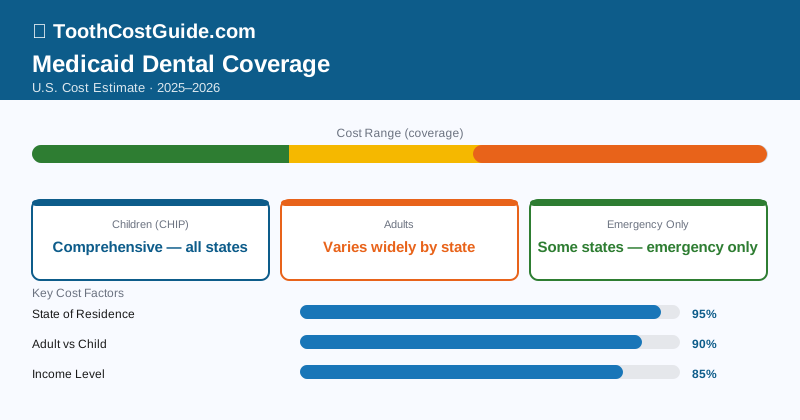
Here’s the split nobody talks about: if your kid is on Medicaid, dental coverage is comprehensive, essentially free, and required by federal law in all 50 states. If you’re the adult on Medicaid, you might get dentures covered — or you might only get a tooth yanked when it’s infected. Same program. Wildly different deal.
About 18 states offer adults full restorative dental coverage. Another 16 cover emergencies and some basics. Twelve cover extractions only. And four cover almost nothing for adult teeth at all. Your zip code is the biggest factor determining your dental health under this program.
| Coverage Level | States (approx.) | What’s Covered |
|---|---|---|
| Comprehensive adult coverage | ~18 states | Preventive, basic, major, often dentures |
| Limited adult coverage | ~16 states | Preventive + some basic (emergencies, extractions) |
| Emergency-only adult coverage | ~12 states | Extractions and pain relief only |
| No adult dental coverage | ~4 states | Nothing (except federally mandated emergencies) |
| Children/CHIP (all states) | 50 states | Full preventive + restorative dental |
The Federal Rules — and the Massive Gap They Leave
The federal government mandates emergency dental services for adults. Severe pain, an active infection, a tooth that needs pulling — Medicaid must cover that nationwide. That’s the floor. Everything above it is up to your state.
Children are a completely different story. Federal law requires kids on Medicaid to receive “Early and Periodic Screening, Diagnostic, and Treatment” (EPSDT) services. In plain English: any dental care medically necessary for a child must be covered. Cleanings, fluoride, sealants, fillings, braces when orthodontics is medically warranted — all of it. Copays max out at $3.40. Premiums are zero.
Most adults enrolled in Medicaid get coverage through managed care plans — HMO-style arrangements where the state contracts with a private insurer. Dental benefits are often “carved out” to a separate dental administrator, so you might get a completely different ID card for dental than for medical. That’s not a glitch. That’s how it’s designed.
If your children are on Medicaid or CHIP, dental care should be nearly free and comprehensive. For adults, check your specific state’s Medicaid dental coverage level before assuming you’re covered — many states provide little more than emergency extractions.
What States Actually Cover
Comprehensive adult coverage states — California, New York, Massachusetts, Minnesota, Oregon, Washington, Vermont, Connecticut, and roughly ten others — let enrolled adults get cleanings, X-rays, fillings, crowns, extractions, and often dentures for $0–$5 copays with no premiums. A full set of dentures for a $10 copay is very real in these states.
Limited coverage states like Texas, Ohio, and Michigan cover preventive care and medically necessary procedures. Tooth causing pain? They’ll probably pull it. A crown to save it? Probably not. This is why adults in these states lose teeth that could have been preserved with a $150 filling.
Emergency-only states — Alabama, Tennessee, and Mississippi among them — will extract an infected tooth. They won’t fill it first. The gap between “covered extraction” and “not-covered filling” is exactly why tooth loss rates are higher among lower-income adults in these states.
Typical copays for covered adults in comprehensive states:
- Exam: $0–$3
- Cleaning: $0–$5
- Filling: $0–$5
- Extraction: $0–$5
- Complete denture: $0–$10
Children’s coverage in all states:
- Two cleanings and exams per year — free
- Fluoride treatments and sealants — free
- Fillings and extractions — free
- X-rays — free
- Orthodontics when medically necessary — free (based on handicapping malocclusion index scoring)
The Provider Access Problem
Coverage on paper isn’t the same as care in practice. Nationally, only about 40–45% of dentists accept Medicaid — because reimbursement rates run 30–50% below what private insurance pays. Even in comprehensive-coverage states, wait lists stretch months at many Medicaid-accepting practices.
Before you assume a nearby dentist takes Medicaid: call. Provider directories are notoriously outdated. A dentist listed as “Medicaid-accepting” in the state portal may have stopped taking new Medicaid patients six months ago.
Medicaid reimbursement rates for dentists are typically 30–50% below private insurance rates. This means many dentists don’t accept Medicaid patients, and those who do may have long wait times. Call ahead to confirm a dentist accepts your specific Medicaid plan before making an appointment.
Filling the Gaps When Medicaid Falls Short
Federally Qualified Health Centers (FQHCs) are your best backup. These federally funded community health clinics must serve everyone regardless of ability to pay, accept Medicaid, and charge sliding-scale fees for services Medicaid won’t cover. Find the nearest one at findahealthcenter.hrsa.gov.
Dental schools routinely accept Medicaid and often have shorter wait lists than private practices. Faculty oversee all procedures — quality is solid, appointments just take longer.
Prior authorization timing matters. If you or your child needs a procedure requiring pre-authorization — crowns, orthodontics, complex work — submit the request well ahead of your appointment. Delays are common and can push back treatment by weeks.
Know your appeal rights. Medicaid coverage denials aren’t final. For children specifically, EPSDT is a powerful tool: if a licensed dentist documents that orthodontics or another procedure is medically necessary, Medicaid must cover it. Document thoroughly. Appeal denials.
Check your eligibility status. In states that expanded Medicaid under the ACA, adults earning up to 138% of the federal poverty level (roughly $20,120 for a single adult in 2025) qualify. Non-expansion states set much lower income thresholds and often fund fewer adult services overall.
Medicaid dental is excellent for children in every state and for adults lucky enough to live in the 18 or so states with comprehensive adult coverage. For the majority of adult Medicaid recipients, coverage is limited at best. Know your state’s specific benefits, and use FQHCs and dental schools to fill the gaps.
Bottom Line
Two completely different programs share the Medicaid name. Children get comprehensive dental coverage in all 50 states — full preventive and restorative care at near-zero cost. Adults get whatever their state decided to fund, ranging from complete care in California and New York to almost nothing in several southern states. If you’re an adult on Medicaid, call your plan before assuming coverage, locate a Medicaid-accepting dentist in advance (they’re genuinely hard to find in many areas), and treat Federally Qualified Health Centers as a reliable fallback for care your state’s program won’t touch.
Frequently Asked Questions
Emergency dental care like tooth extraction typically costs $150–$300 out-of-pocket for uninsured adults, though costs vary by state and dentist. If your state's Medicaid plan covers emergency services, you may pay $0–$50 after copay, but about 16 states limit coverage to emergencies only, meaning routine care like fillings or cleanings fall on you.
Only about 18 states offer full restorative dental coverage (fillings, crowns, root canals) under adult Medicaid with minimal out-of-pocket costs. The remaining states either cover emergencies only or nothing at all for adults, even though all 50 states must provide comprehensive dental coverage to children on Medicaid or CHIP.
Wait times for Medicaid dental appointments range from 2–8 weeks depending on your state and whether dentists in your area accept Medicaid—many do not due to low reimbursement rates. Emergency extractions are usually prioritized and may be available within days, but routine procedures like cleanings or fillings often have longer delays.