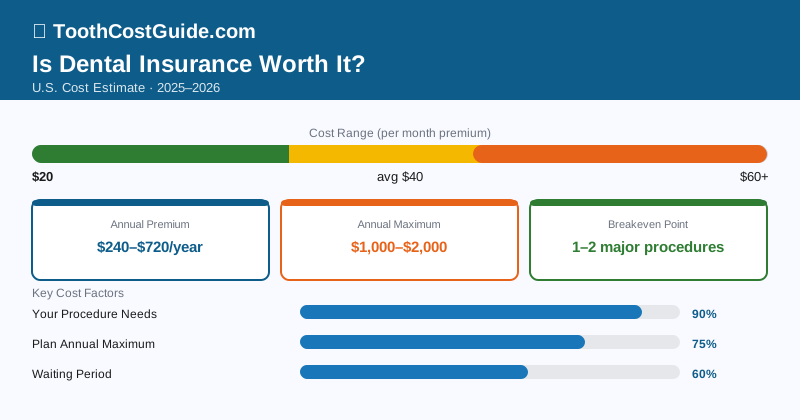
The honest answer to “is dental insurance worth it” is: sometimes yes, sometimes no, and the math is simpler than the insurance companies make it look. The $1,000 annual maximum that most plans haven’t updated since the 1970s is a good starting point for understanding how limited the coverage actually is.
Here’s how to run the numbers for your specific situation.
The Basic Math
Individual dental insurance premiums average $20–$60/month ($240–$720/year) on the open market. Employer-subsidized plans are cheaper — often $5–$20/month — and change the calculation significantly.
| Your Year in Dental Care | Without Insurance | With $35/mo Plan | Verdict |
|---|---|---|---|
| 2 cleanings + X-rays only | $350–$550 | $420 + $0 | Break-even or slight loss |
| 2 cleanings + 2 fillings | $650–$900 | $420 + $60–$120 | Saves $150–$350 |
| 2 cleanings + 1 crown | $1,500–$2,200 | $420 + $500–$700 | Saves $580–$1,080 |
| 2 cleanings + root canal + crown | $2,200–$3,400 | $420 + $800–$1,200 | Saves $1,000–$1,800 |
| No dental care at all | $0 | $420 | Loses $420 |
The pattern is clear: insurance pays off when you actually use it for more than cleanings. For a perfectly healthy adult who never needs a filling, paying $420/year for cleanings that would cost $300 out of pocket is a modest net loss. For anyone who needs restorative work, insurance usually delivers positive returns.
Understanding the 100-80-50 Structure
Every PPO dental plan is built on the same tier system:
100% — Preventive care: Two routine cleanings, periodic exams, standard bitewing x-rays. Fully covered at in-network providers, no deductible. This is the “free” category and the main selling point of dental insurance.
80% — Basic restorative: Fillings, simple extractions. After meeting your deductible ($50–$100), you pay 20%.
50% — Major restorative: Crowns, bridges, root canals, dentures, oral surgery. After deductible, you pay 50%.
Then there’s the annual maximum — typically $1,000–$2,000 — that caps everything. Here’s where the 50% promise falls apart in practice:
A crown costs $1,200. At 50% coverage, insurance theoretically owes $600. But if you’ve already used $500 of your $1,000 annual max for earlier cleanings and a filling, insurance only has $500 left to pay — leaving you $700 out of pocket, not the $600 the “50% coverage” led you to expect.
This is the most common dental insurance disappointment. The 50% coverage percentage is real; it just applies only up to a cap that many patients hit with a single major procedure.
The average dental insurance annual maximum is $1,000–$1,500. This number has barely changed since the 1970s. A $1,000 cap in 1970 covered meaningful dental work. Today, it barely covers a single molar crown. NADP (National Association of Dental Plans) data shows only about 4% of Americans with dental insurance actually exceed their annual maximum — which means the cap is set low enough to protect the insurer in most years.
When Insurance Clearly Makes Sense
Employer covers the premium. If your employer pays 50–100% of the premium and your personal cost is $5–$15/month, dental insurance is almost always worth it. At $120–$180/year personal cost, even two cleanings alone justify it.
You have kids. Children need more dental touchpoints: fluoride, sealants, more frequent cleanings, bitewings. A family plan at $80–$150/month typically covers $1,500–$3,000 in preventive services annually — positive ROI on most family plans with regular use.
You know you need major work. A crown coming up soon means insurance saves $500–$900 on that procedure. The caveat — critical enough to repeat — is waiting periods. Most individual-market plans impose a 6–12 month waiting period on major restorative work. If you need a crown in 6 weeks, enrolling in insurance this week won’t help you.
You’re in a state with comprehensive Medicaid dental. If you qualify for Medicaid, it’s free and covers significant dental services in states like Massachusetts, New York, Oregon, and California. This beats anything you could buy on the individual market.
When Insurance Probably Isn’t Worth It
You’re young, healthy, and cavity-free. Two cleanings at $150 each = $300 without insurance. A decent discount plan at $80–$120/year typically gets you 20–40% off those same cleanings — your cost drops to $180–$240. Compare that to $420+/year in dental insurance premiums. Discount plan wins.
You need a lot of major work immediately. If you need $6,000 in dental work now, an individual plan with a $1,000 annual max and a 12-month major-work waiting period won’t help much. You’d pay $720 in premiums for Year 1, receive $1,000 in benefits (after waiting period), and net -$720 on the arrangement. Paying cash with a discount plan likely saves more.
You can get the same discount without insurance overhead. Many dental offices offer in-house membership plans for $100–$200/year that include two cleanings, x-rays, and 15–20% off everything else. No deductibles, no annual max, no waiting periods. For uninsured patients in cities with these plans available, they often beat individual dental insurance on pure value.
The Waiting Period Trap — Don’t Get Caught
This is where people get burned. You develop a toothache, learn you need a root canal and crown, panic-buy dental insurance, then discover the plan won’t cover major work for 12 months.
Standard waiting periods on individual-market plans:
- Preventive care: covered immediately
- Basic (fillings): often 3–6 month wait
- Major (crowns, root canals): usually 12-month wait
- Orthodontics: 12–24 months
Before buying any individual dental plan: ask specifically what the waiting period is for major restorative treatment. This single question eliminates most disappointments.
Discount Plans vs. Insurance: Side-by-Side
For the uninsured adult choosing between options:
| Dental Insurance | Dental Discount Plan | |
|---|---|---|
| Cost (individual) | $240–$720/year | $80–$200/year |
| Annual maximum | $1,000–$2,000 | None |
| Waiting periods | Yes — 6–12 months major | None |
| Preventive coverage | 100% at in-network | 20–40% discount |
| Major work | 50% up to max | 20–60% discount |
| Networks | Large, regional | Varies by plan |
| Best for | Families, regular users, employer-subsidized | Healthy individuals, immediate needs, self-employed |
Notable discount plans: Careington 500 ($99/year individual), Aetna Dental Access ($110/year), DentalPlans.com (marketplace for comparing networks). No claims, no reimbursement — just discounted rates when you pay at the time of service.
Getting the Most From Insurance You Already Have
If you have dental insurance through an employer:
Use every preventive benefit. Two cleanings and X-rays per year at 100% coverage is several hundred dollars of free dental care annually. Patients who skip this are effectively donating money to the insurance company.
Time major work across calendar years. Need two crowns? Get one in October, one in February. Two calendar years, two annual maximums. This is completely legitimate and widely done.
Always submit a predetermination. Before any crown, root canal, or bridge, ask your dentist to send the proposed treatment codes to your insurer for a coverage estimate. Takes 5–10 days, is free, and eliminates billing surprises entirely.
Stay in-network. Out-of-network providers can charge above the plan’s allowed fee, leaving you responsible for the “balance” in addition to your copay. The in-network fee schedule is a real financial benefit that disappears the moment you go out-of-network.
Bottom Line
Dental insurance is worth it — with an asterisk. For employer-subsidized plans, families, and patients who use dental care regularly, the math is positive. For perfectly healthy adults paying full individual-market premiums with no history of dental problems, a discount plan often makes more sense at lower annual cost.
Before buying individual dental insurance: run the math on your own dental history, check the waiting period for major work, and compare the total annual premium against the cost of the cleanings and X-rays you’d actually use. For many individuals, the annual maximum of $1,000–$1,500 makes individual dental insurance less valuable than it appears in the marketing.
If you’re purchasing dental insurance because you have a known pending procedure, call the plan directly and ask: (1) What is the waiting period for this specific procedure type? (2) What is the annual maximum? (3) What CDT codes are covered and at what percentage? Get these answers before paying your first premium.
Frequently Asked Questions
A routine prophylaxis (cleaning) typically costs $75–$200 without insurance, depending on your location and whether it's a simple cleaning or includes scaling and root planing. Most dental insurance plans cover two cleanings per year at 100%, making this one of the few procedures where insurance almost always saves money.
Most plans cover preventive care (cleanings, X-rays, exams) at 100%, basic procedures like fillings at 80%, and major work like crowns or root canals at 50%. However, nearly all plans cap annual benefits at $1,000–$1,500, which means a single crown ($1,000–$2,500) will quickly hit your maximum and leave you paying the rest out-of-pocket.
If you have no current dental problems and only need preventive care, self-insuring by skipping coverage and setting aside $300–$500 annually often beats paying $100–$200/month in premiums. However, if you know you need a crown, root canal, or significant work within the next 12 months, insurance becomes worthwhile because even at 50% coverage, you'll save $500–$1,500 compared to the full cost.