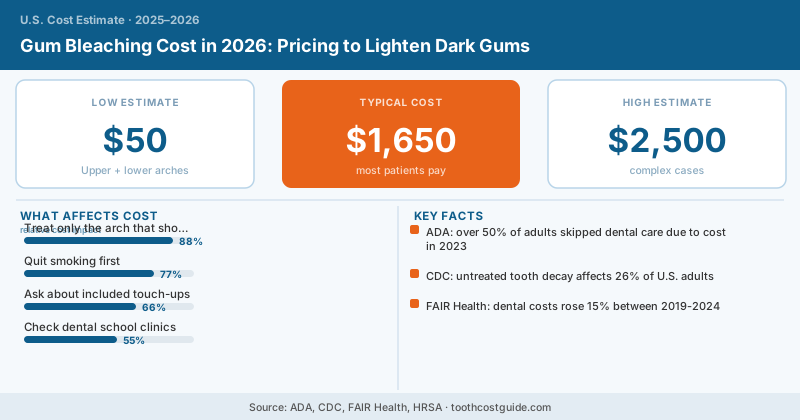
“Gum bleaching” is a slightly misleading name. There’s no actual bleach involved — no peroxide soaking into your gums like a teeth-whitening tray. Instead, a dentist uses a laser or other technique to remove the thin top layer of pigmented gum tissue, revealing lighter pink underneath. The cost runs $400 to $1,500 per arch. The result can be dramatic for people with naturally dark gums, but it’s worth understanding exactly what you’re paying for before you book.
| Gum Bleaching Method | Typical Cost |
|---|---|
| Laser gum bleaching (per arch) | $400–$1,200 |
| Surgical/scalpel technique (per arch) | $300–$800 |
| Bur abrasion technique (per arch) | $300–$700 |
| Upper + lower arches | $800–$2,500 total |
| Touch-up for returning pigment | $200–$500 |
| Initial consultation | $50–$150 |
What’s Actually Happening
The dark color in your gums comes from melanin, the same pigment in your skin and hair. It’s completely natural and healthy — about half the variation in gum color across people comes down to melanin, not any problem. Gum bleaching removes or destroys the pigment-producing surface so new, lighter tissue grows in. Lasers are popular because they’re precise and cause minimal bleeding, but scalpel and abrasion techniques work too and cost less.
The CDC and major dental organizations classify this as a purely cosmetic procedure — there’s no health benefit. That has a direct effect on your wallet.
Gum bleaching is 100% cosmetic, so no dental insurance plan will cover it. Don’t waste time submitting a claim — budget for the full cost upfront, and ask your dentist whether a follow-up touch-up is included in the quoted price.
Does It Last?
This is where expectations need managing. Results vary a lot. Laser gum bleaching tends to hold the longest, often a few years, but melanin can regenerate. Some people see pigment creep back within 1–3 years. Smoking accelerates the return — nicotine stimulates the pigment cells, so smokers tend to need touch-ups sooner. If pigment returns, the touch-up costs less than the original since less tissue needs treatment.
Recovery: What to Expect
Most people compare the healing to a minor burn on the roof of the mouth. Laser cases tend to heal within a week; surgical methods can take up to two weeks. Plan for a few days of tenderness, and avoid spicy, acidic, and crunchy foods while the tissue heals. Over-the-counter pain relief usually does the job.
How It Fits With Other Cosmetic Work
A lot of people pursue gum bleaching as part of a broader look. If bright white teeth sit above dark gums, the contrast makes the pigment more obvious — so some patients do teeth whitening or dental veneers and then notice their gums for the first time. If you’re already reshaping the gumline, combining bleaching with gum contouring means one healing period instead of two. And for a fully coordinated result, it can be one piece of a larger smile makeover.
Saving Money
Treat only the arch that shows. Most people only reveal upper gums when they smile, so paying to bleach the lower arch is often wasted money.
Quit smoking first. It’s free and it’s the single biggest factor in how long your result lasts.
Ask about included touch-ups. Some offices bundle one follow-up into the original fee.
Check dental school clinics. Supervised cosmetic programs sometimes offer gum procedures well below private-practice rates.
Finance only if combining. A single arch is usually an out-of-pocket expense, but if you’re stacking procedures, CareCredit offers 0% promotional periods.
Ask to see before-and-after photos of the dentist’s own gum-bleaching cases at least a year out — not just immediately after treatment. The “after” photo taken the day of looks perfect on everyone. What matters is how the gums looked a year later, which tells you the dentist’s real repigmentation track record.
Dark gum pigmentation is almost always harmless melanin, but in rare cases gum discoloration can signal a medical condition. Before any cosmetic bleaching, have a dentist confirm your gums are healthy. Then get a written treatment plan, ask about the realistic repigmentation rate, and avoid any over-the-counter “gum bleaching” products sold online — they aren’t safe for oral tissue.
Frequently Asked Questions
Gum bleaching (laser gum depigmentation) typically costs between $400 and $1,500 per arch, depending on the size of the treatment area and your dentist's experience level. If you have both upper and lower gums treated, you can expect to pay $800 to $3,000 total for the full mouth.
No, gum bleaching is considered a cosmetic procedure and is never covered by dental insurance plans. You will pay the entire cost out-of-pocket, with no insurance reimbursement or plan adjustments available.
The laser gum depigmentation procedure typically takes 30 minutes to 1 hour per arch, and most patients see results that last 3 to 5 years before repigmentation gradually returns. Some patients may need touch-up treatments after 2 to 3 years if darkening begins to reappear sooner.