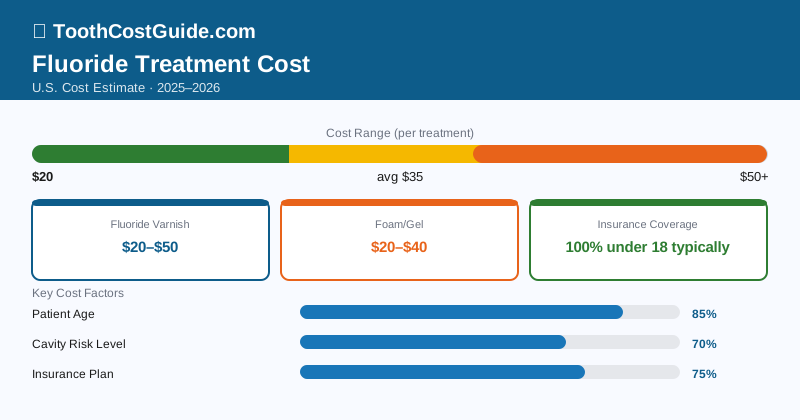
For insured kids, professional fluoride treatment costs nothing. The hygienist brushes on a sticky varnish at the end of the cleaning, the whole thing takes 90 seconds, and the insurance pays the $20–$40 charge at 100%. No copay, doesn’t count against the annual maximum.
For adults, it depends entirely on your plan. Some cover it. Most don’t. And when they don’t, you’re looking at $25–$50 per visit — one of the smaller line items in dentistry, but one that some adults skip because they assume fluoride is only for kids.
That assumption costs money in cavities.
| Treatment Type | Cost (No Insurance) |
|---|---|
| In-office fluoride varnish (children) | $20–$40 |
| In-office fluoride varnish (adults) | $25–$50 |
| In-office fluoride foam/gel tray | $20–$45 |
| Silver diamine fluoride (SDF, per tooth) | $25–$75 |
| Prescription fluoride toothpaste (5,000 ppm) | $10–$30 per tube |
| Prescription fluoride gel (home tray use) | $15–$30 |
What Actually Happens During a Fluoride Treatment
Fluoride varnish — now the dominant form in most dental offices — is a sticky yellowish resin painted directly onto teeth with a small brush. Takes about a minute for a full set of teeth. You’re told not to eat or drink for 30 minutes so it can absorb into the enamel. That’s it. No trays, no suction, no discomfort. It hardens the outer enamel layer and makes it more resistant to acid attacks from bacteria.
Foam and gel trays — the mouthguard-filled-with-gel version many adults remember from childhood — are still used, particularly for high-risk patients who benefit from the higher fluoride concentrations these systems deliver. These take 1–4 minutes to set in the tray.
Silver diamine fluoride (SDF) is different from both. Applied directly to an active cavity — not to prevent one, but to stop one that’s already forming. It turns the treated spot black (permanently), which limits its appeal for visible teeth, but for early cavities in baby teeth, back molars, or elderly patients who can’t tolerate drilling, it’s a legitimate clinical tool. Cost: $25–$75 per tooth.
Who Actually Benefits from Professional Fluoride
Kids, ages 6–16. Strong evidence. The CDC cites community water fluoridation and professional fluoride applications as two of the top public health dental interventions of the past century. Most kids are covered at 100% by insurance. There’s essentially no cost-benefit debate here — get it done.
Adults at high cavity risk. “High risk” covers more people than you’d think: those with dry mouth (xerostomia), often caused by medications; patients undergoing radiation therapy to the head and neck; people with significant gum recession exposing root surfaces (roots decay much faster than enamel); anyone with a history of frequent cavities; patients wearing orthodontic appliances. The ADA recommends professional fluoride for all of these groups regardless of age.
Older adults. Root decay is one of the most common dental problems in people over 65, and it’s significantly underdiagnosed. Receding gums expose root surfaces that have no enamel protection. The CDC’s Oral Health Data shows tooth loss rates climb sharply in older adults — much of this is preventable. Professional fluoride for older adults is evidence-based, not pediatric marketing.
In-office fluoride costs $20–$50 per visit, but for insured children it’s almost always free. For adults, the key question is whether your plan covers adult fluoride — check your Evidence of Coverage or call your insurer before your next cleaning, since the procedure takes only minutes and is easy to add to a routine visit.
The Insurance Question Worth Asking
Most plans cover adult fluoride inconsistently. The procedure code to ask about: D1206 (fluoride varnish) or D1208 (fluoride gel or foam). Call your insurer and ask: “Is D1206 covered for adults on my plan, and what’s the patient copay?”
Some plans that say “fluoride isn’t covered for adults” are using outdated language and do in fact cover these specific codes. Worth 10 minutes on hold to find out.
For children: $0 out of pocket is the norm. Most plans cover one or two fluoride applications per benefit year under preventive benefits that don’t count against the annual maximum.
Professional fluoride applications are billed under ADA codes D1206 (fluoride varnish) or D1208 (fluoride gel or foam). If your insurer says “fluoride isn’t covered,” ask them to check those specific codes — some plans have outdated language but do cover the current procedures.
Practical Ways to Spend Less
Bundle with the cleaning visit. Fluoride added to a routine cleaning costs nothing extra in appointment time and avoids a separate visit fee. Call ahead and ask the front desk to add it to your cleaning appointment before you arrive. If you’re uninsured and scheduling a cleaning anyway, the $25–$50 fluoride charge is the cheapest preventive add-on available.
Drink fluoridated tap water. About 73% of U.S. community water systems are fluoridated. If yours is, you’re getting continuous low-dose fluoride at no cost. The CDC estimates community water fluoridation reduces cavities by about 25% across the population. It doesn’t replace professional treatment for high-risk patients, but it’s free and effective for everyone.
SDF for early decay instead of drilling. If your dentist spots a cavity forming, ask whether silver diamine fluoride is appropriate before scheduling a filling. For early-stage, small cavities in certain locations, SDF at $25–$75 per tooth can arrest decay and avoid a $200–$400 filling. Not appropriate everywhere, but worth the conversation.
OTC fluoride products between visits. ACT fluoride mouthwash ($5–$7) and standard fluoride toothpaste used twice daily provide meaningful between-visit protection. High-risk patients may be prescribed 5,000 ppm fluoride toothpaste (vs. the 1,000–1,450 ppm in standard OTC products) — this runs $10–$30 per tube at a pharmacy and some insurance prescription benefits cover it.
Dental school clinics. Professional fluoride at dental schools costs $10–$20 — roughly half the private-office rate. For adults who need frequent applications and are paying out of pocket, this adds up to real savings over time.
In-house dental membership plans. Many dental practices offer annual memberships ($99–$199/year) that include two cleanings, exams, X-rays, and fluoride treatments. If you’re uninsured and planning to see the dentist twice a year anyway, the fluoride is essentially free as part of the bundled package.
Financing Options
Fluoride treatment at $20–$50 per visit doesn’t warrant formal financing. HSA and FSA funds apply — both professional fluoride treatments and prescription fluoride home products are eligible medical expenses. At a 22–37% effective discount, pre-tax payment is the smartest way to handle out-of-pocket fluoride costs.
Dental cost estimates in this guide reflect U.S. national averages for 2024–2025 and may vary significantly by geographic region, provider type, and individual treatment needs. Always request a written treatment plan with itemized costs before agreeing to any dental work. Confirm coverage details directly with your insurance provider.
Frequently Asked Questions
Professional in-office fluoride treatments typically cost $20–$50 per visit without insurance. The exact price depends on your dentist's location, whether you're seeing a general dentist or specialist, and the type of fluoride application used (varnish, gel, or foam).
Coverage varies significantly by plan. Most dental insurance plans cover professional fluoride treatments at 100% for children as a preventive benefit, but many exclude or do not cover them for adults. When adult fluoride is not covered, you'll pay the full $25–$50 out-of-pocket.
A professional fluoride treatment typically takes about 90 seconds and is usually applied at the end of a regular cleaning appointment. Most dentists recommend fluoride treatments 1–2 times per year for patients at higher risk of cavities, though frequency depends on your individual risk assessment.