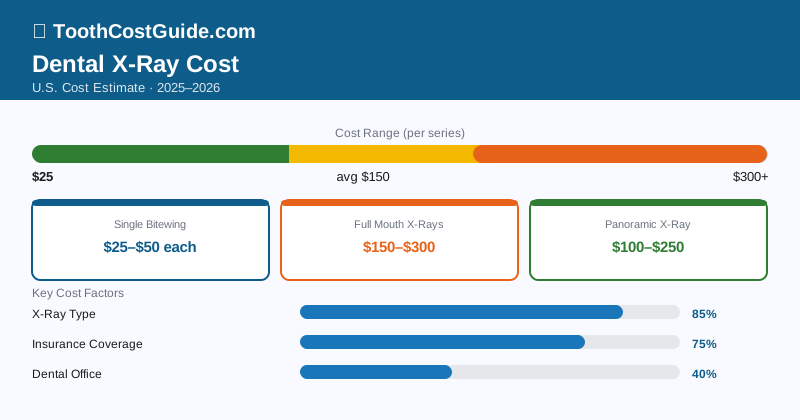
You walk into a new dentist’s office. Before anyone looks in your mouth, they hand you a lead apron. Two scenarios play out. In the first, it’s been less than two years since your last X-rays and you ask your previous dentist to transfer the files — you pay nothing for imaging. In the second, you don’t ask, and you leave with a $150–$300 charge on top of your new-patient exam fee.
That gap is the most important thing to understand about dental X-ray costs. The procedure itself isn’t complicated. Navigating who pays for it — and whether you need it at all — is where the money is.
| X-Ray Type | Cost Without Insurance |
|---|---|
| Single bitewing film | $25–$50 |
| 4-film bitewing series | $75–$150 |
| Full-mouth series (14–18 films) | $150–$300 |
| Panoramic X-ray (OPG) | $100–$250 |
| Periapical film (single tooth) | $25–$50 |
| Cone beam CT scan (CBCT) | $300–$600 |
| Cephalometric X-ray (orthodontics) | $100–$175 |
What Each Type Actually Shows — and What It Costs
Bitewing X-rays ($75–$150 for a 4-film set). The standard cavity-check. Two or four films positioned between your upper and lower back teeth, showing the crowns and upper root sections. Dentists read these to find cavities between teeth, decay hiding under existing fillings, and bone level changes. Most adults get these annually or every other year at recall visits.
Periapical films ($25–$50 each). When something specific hurts or looks suspicious, the dentist takes a periapical — one image showing the entire tooth from crown to root tip, including surrounding bone. Used to evaluate infections, root fractures, bone loss around a tooth, or anatomy before a root canal. Not routine; ordered for a reason.
Full-mouth series ($150–$300). Fourteen to eighteen individual films covering every tooth. New patients typically get this to establish a baseline record. After that, it’s usually repeated only every 3–5 years in healthy adults. The ADA’s evidence-based guidelines don’t support annual full-mouth series for most patients — though some offices push them more frequently.
Panoramic X-ray ($100–$250). One wide image capturing both jaws, all teeth, the jaw joints, and sinuses. Essential for evaluating wisdom teeth, planning implants, and screening for jaw pathology. Many dentists take one on all new patients regardless of symptom status.
Cone beam CT ($300–$600). Three-dimensional imaging. Not routine — ordered for complex implant planning, unusual root anatomy, or jaw conditions requiring 3D detail. Insurance coverage for CBCT varies significantly; some plans cover it, many don’t.
Dental X-rays are diagnostic tools, not automatic add-ons. Ask your dentist what specific clinical question each X-ray is meant to answer. You have the right to request that existing X-rays from a previous dentist be transferred before agreeing to new imaging — this can save $75–$250 and avoid repeat radiation exposure.
What Insurance Actually Covers
Dental insurance almost universally classifies X-rays as preventive or diagnostic care — covered at 80–100%. Bitewing series are typically covered once per year; full-mouth series once every 3–5 years; panoramic periodically for new patients or specific clinical needs.
The catch is frequency limitations. If you got a full-mouth series and then switch dentists within two years, your new insurer may decline a new one because the clock hasn’t reset. Transfer your old X-rays first. Most states require dentists to provide copies, and most offices can send a digital file by email at no charge.
Without insurance, the most common expenses are: bitewing series ($75–$150) at routine visits and an occasional panoramic ($100–$250). A full-mouth series every few years ($150–$300) is the largest routine imaging cost. CBCT for implant workup ($300–$600) is where the real money goes, and it often isn’t covered.
A Scenario Worth Walking Through
Say you’re moving to a new city and find a new dentist. You haven’t been in 18 months. Here’s what typically happens:
The office asks for your dental records from your previous provider. You email a release. Your old dentist emails a DICOM file of your X-rays within a day or two. Your new dentist reviews them and says the bitewing series from 16 months ago is still useful for cavity screening, but they’d like a panoramic because they’ve never seen your jaw structure. That panoramic runs $150, is covered under your insurance’s new-patient benefit, and costs you $0.
Contrast that with showing up without records. You’re now a new patient with no prior imaging — full-mouth series ($250) gets added to the new-patient exam before anyone checks a single tooth.
All dental X-rays are your property. When switching dentists, ask for a copy of your radiographs sent electronically. Most offices can email a JPEG or DICOM file at no charge. This is especially important if you’ve recently had a panoramic or CBCT scan — never pay to have imaging redone unnecessarily.
How to Spend Less on Imaging
Transfer before you schedule. Contact your old dentist before making your first appointment with a new one. Give the new office’s contact info and request that records be forwarded. Do this even if you’re not sure the new dentist will use them — it gives you options.
Question routine add-ons. Some offices add periapical films at every appointment “just to check.” Healthy adults with no symptoms and recent bitewing X-rays generally don’t need additional periapical films. Ask what the film will tell your dentist that the existing X-rays don’t.
Dental school clinics charge half. Bitewing series run $20–$60 at dental school clinics; full-mouth series are $60–$120. For uninsured patients who need comprehensive imaging, this matters.
Dental discount plans cut 20–30%. Membership plans at participating dentists typically discount X-ray fees along with everything else on the fee schedule.
FSA and HSA funds apply. Dental X-rays are eligible expenses. Pre-tax dollars reduce the real cost by 22–37% depending on your bracket.
Bundled new-patient exams. Many practices offer flat-fee new-patient packages — exam, full-mouth X-rays, and cleaning for $150–$350. This is usually cheaper than paying each service separately.
Always get a written treatment plan before agreeing to any dental work. For X-rays, ask your dentist what specific clinical information each image will provide and whether your existing X-rays from a previous provider are sufficient. You are entitled to copies of all your dental radiographs.
Frequently Asked Questions
A full-mouth series typically costs $150–$300 at most US dental practices, though the price varies by location and whether you're a new or established patient. Individual bitewing X-rays cost $25–$50 per film, so a full series with multiple angles will fall in the higher range.
Most dental insurance plans cover routine X-rays at 80–100% after you meet your deductible, since they're considered preventive care. However, if you have recent X-rays from another dentist (typically within 2 years), you can request those files for free instead of paying for new ones at your new dentist.
The American Dental Association recommends X-rays every 1–2 years for most adults with low cavity risk, though new patients often need a full-mouth series as a baseline. If you're cavity-prone or have gum disease, your dentist may recommend them annually.