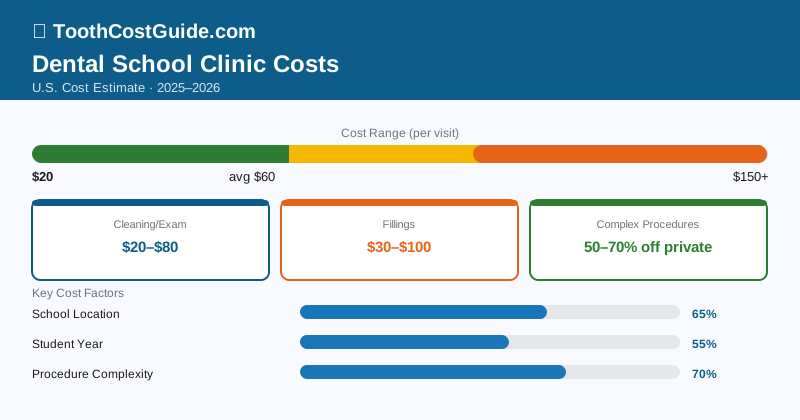
A crown that costs $1,400 at a private dentist costs $450–$750 at a dental school clinic two miles away. Same materials. A faculty-licensed dentist reviewing every step. And you’re still getting a permanent porcelain crown.
Dental school clinics are the single most underutilized source of affordable dental care in the United States. Here’s everything you need to know to actually use one.
The Price Difference, Concretely
| Procedure | Private Practice | Dental School | You Save |
|---|---|---|---|
| Cleaning + exam | $150–$250 | $50–$100 | 55–65% |
| Full-mouth X-rays | $150–$300 | $60–$120 | 55–60% |
| Composite filling | $150–$250 | $60–$120 | 55% |
| Molar root canal | $1,000–$1,800 | $500–$900 | 45–55% |
| Crown (porcelain) | $900–$1,800 | $400–$750 | 50–60% |
| Dental implant (all-in) | $3,000–$6,000 | $1,500–$3,000 | 45–55% |
| Full dentures (per arch) | $1,500–$4,000 | $700–$1,500 | 50–60% |
| Deep cleaning (4 quadrants) | $800–$1,400 | $350–$650 | 45–55% |
For a patient needing a crown and a root canal — $2,200–$3,600 at a private practice — the dental school option runs $900–$1,650 for the same two procedures. That’s a real, meaningful difference.
How the Supervision Actually Works
The concern most people have: “Am I just a practice dummy for a student who doesn’t know what they’re doing?”
Here’s what actually happens:
Dental students treating patients are in their third or fourth year of a four-year DDS or DMD program. They’ve already completed two years of intensive science coursework and a full year of pre-clinical simulation lab training — performing thousands of repetitions on mannequins and models before touching a patient. By the time they’re in the clinic, they’re competent practitioners developing speed and clinical judgment.
The faculty layer is where dental school treatment becomes arguably more careful than private practice: every treatment plan is reviewed by a faculty dentist before it’s presented to you. During procedures, faculty members circulate the clinic constantly and are called to check the student’s work at defined checkpoints. Before a filling is polished, a faculty member examines it. Before a crown impression is sent to the lab, it’s reviewed. Before you’re dismissed, the completed work is inspected.
If something isn’t right, the faculty dentist corrects it or has the student redo the step. Private practices don’t have this structure — your dentist’s work is reviewed only by themselves.
This is why dental school work, while slower, is often more meticulously executed than what you’d get in a 45-minute private appointment.
The Real Tradeoffs
Appointments take longer. A routine cleaning that takes 45 minutes privately takes 90–120 minutes at a dental school. A crown preparation that takes 60 minutes privately takes 2–3 hours. This isn’t inefficiency — it’s methodical documentation and multiple faculty check-in points. If your schedule is flexible, this is a manageable tradeoff. If you need to be out in 60 minutes, it’s not the right setting.
You need more appointments. Procedures are often spread across more visits than a private practice would use. A crown might require a separate consultation, then preparation, then delivery. A root canal might be two extended appointments instead of one.
Same-day emergencies are harder. Dental schools generally don’t have the walk-in flexibility of private offices. If you have a broken tooth or abscess that needs same-day attention, calling a private practice or community health center is faster. Dental schools work better for planned, non-urgent care.
Wait times for initial appointment. New patient wait times vary: some schools can see you within a week; others have several-week waitlists depending on student availability and procedure demand. Call and ask specifically about current wait times for your type of care.
Don’t just ask “do you take patients?” Ask: “I’m looking for a new patient exam and X-rays, and I likely need a crown and a root canal. Do you currently have students who need those procedures? What’s the typical wait time for a new patient appointment?” This framing helps the patient coordinator match you to the right student and gives you an accurate timeline.
The Specialty Clinic Advantage
Most large dental schools have graduate specialty programs with their own separate clinics — and these are where you find the biggest savings on expensive procedures.
Endodontics clinics: Endodontic residents perform root canals — including complex calcified cases and retreatments — under faculty endodontists who are specialists. Equipment is often better than in many private practices (dental microscopes, CBCT 3D imaging). Molar root canals: $500–$900 vs. $1,200–$1,800 at a private endodontist.
Periodontics clinics: Graduate periodontics residents handle deep cleanings, periodontal surgery, and soft tissue grafts. Supervised by periodontal faculty. Full-mouth SRP: $350–$650 vs. $800–$1,400 at a periodontist.
Orthodontics clinics: Comprehensive braces or Invisalign treatment performed by orthodontic residents. 30–50% below private orthodontist fees. Treatment duration is the same regardless of provider type.
Prosthodontics clinics: Complex restorations — crowns, implant crowns, fixed bridges, dentures — under prosthodontic faculty. For multi-tooth cases involving crowns and implants, the savings at prosthodontic clinics can be $3,000–$6,000 or more.
Oral surgery clinics: Extractions including complex surgical wisdom teeth, and in many schools, implant placement.
What Procedures to Get There vs. Privately
Best choices for dental school:
- Any routine maintenance (cleanings, exams, X-rays) — lower cost, same outcome
- Fillings and basic restorations — no complexity concern
- Root canals at endodontic residency clinics
- Crowns on posterior teeth where aesthetics are less critical
- Implants (the planning and surgical precision is actually more carefully managed)
- Full or partial dentures (inherently multi-appointment anyway)
- Deep cleaning / SRP at periodontics clinics
- Orthodontic treatment at ortho residency programs
Better handled privately:
- Same-day dental emergencies
- Front tooth crown requiring high-aesthetic precision under time pressure
- Anything requiring immediate specialist availability
Finding a Dental School Near You
The ADEA (American Dental Education Association) maintains a complete directory of accredited dental schools at adea.org — searchable by state. There are 67 accredited dental schools in the U.S. and several in Canada.
When you find a school near you, call the patient care office (usually listed as “Patient Clinic” or “Patient Services” on the school’s website) and ask:
- “Are you accepting new patients?”
- “What procedures do you currently have student demand for?”
- “What is the wait time for a new patient comprehensive exam?”
- “Do you have specialty clinics for [root canals / gum treatment / orthodontics]?”
Payment at most dental schools: cash, check, credit card, CareCredit, FSA/HSA. Since fees are already 50–65% reduced, many patients who would have needed financing privately can pay out of pocket at a dental school.
Bottom Line
Dental school clinics are one of the best-kept secrets in personal finance — specifically for people who need expensive dental work and don’t have full dental insurance coverage. The quality is faculty-supervised and carefully documented. The savings are 50–70% off private practice prices. The main cost is time: longer appointments and more of them.
For a patient facing $4,000+ in needed dental work, dental school clinics can cut that to $1,500–$2,000. For ongoing maintenance in a city with a dental school nearby, the twice-yearly visit is genuinely worth doing there.
Dental school treatment is fully legitimate, accredited dental care — not a compromise. But confirm before your first appointment that your specific procedures (not just “dental care” generically) are currently being offered in the clinic program. Student procedure requirements change by semester, and a school that’s actively needing crown cases this fall may have fewer slots for them next spring.
Frequently Asked Questions
A porcelain crown at a dental school clinic typically costs $450–$750, compared to $1,400 or more at a private dental practice. The price difference reflects the teaching environment, though the materials and faculty oversight remain the same quality.
Most dental insurance plans cover procedures at accredited dental school clinics the same way they cover private dentists, though you should verify with your insurance provider first. Your out-of-pocket cost will be significantly lower due to the clinic's reduced fees, even after insurance applies your copay or coinsurance.
Expect the process to take 2–4 weeks or longer, as dental students work under faculty supervision and may have fewer appointment slots available than private practices. While slower than a private dentist, you save 50–70% on the final cost and receive the same permanent restoration.