Picture this: your dentist tells you that you need a crown. You sign up for dental insurance that same week. A month later you go in for the crown — and the claim comes back denied. The plan has a 12-month waiting period for major restorative work. You owe $1,200 out of pocket.
This is one of the most common and expensive surprises in dental insurance. Waiting periods aren’t buried in fine print — they’re a core feature of most plans, and knowing how they work before you buy can save you hundreds to thousands of dollars.
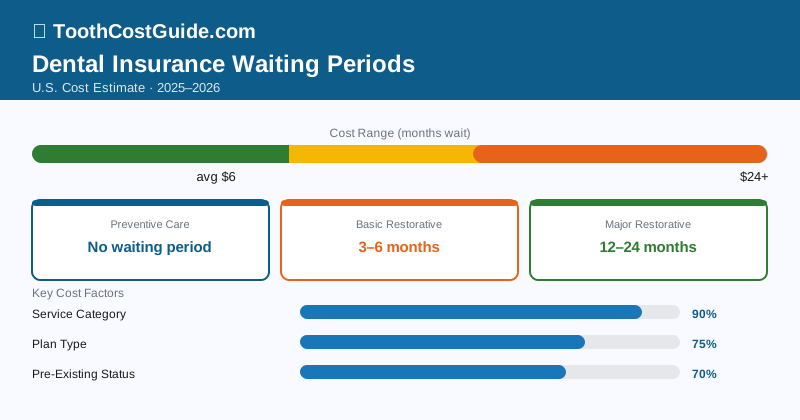
| Procedure Category | Typical Waiting Period | Example Procedures |
|---|---|---|
| Preventive care | None (most plans) | Cleanings, X-rays, exams |
| Basic restorative | 3–6 months | Fillings, simple extractions |
| Major restorative | 6–12 months | Crowns, bridges, dentures |
| Oral surgery | 6–12 months | Implants, complex extractions |
| Orthodontics | 12–24 months | Braces, Invisalign |
| No-waiting-period plans | 0 months | All categories (higher premium) |
Why Waiting Periods Exist
Insurers impose waiting periods for the same reason health insurance restricts coverage of pre-existing conditions: to prevent people from buying insurance only when they know they need expensive treatment, getting the work done, and then canceling. If that were possible at scale, the entire risk pool would collapse.
Plans typically divide dental procedures into three or four tiers — preventive, basic, major, and sometimes orthodontics — with different waiting periods at each level. The clock starts on your policy’s effective date. That means if you enroll on March 1, the six-month wait for fillings runs until September 1, regardless of when you first visit the dentist.
The one universal exception: preventive care. Cleanings, routine exams, and X-rays are covered from day one on virtually every plan — HMO, PPO, and indemnity alike.
Always ask about waiting periods before enrolling. If you need a crown soon, look specifically for plans that waive waiting periods for new enrollees with prior coverage — or buy a no-waiting-period plan even if the premium is higher.
What the Waits Look Like in Practice
Preventive services — no wait. Two cleanings, annual X-rays, two exams per year. Covered from the first day on essentially every plan. Some plans also cover fluoride treatments and sealants for children with zero wait.
Basic services — 3 to 6 months. Fillings, simple extractions, periodontal maintenance. After the wait, these typically come in at 70–80% coverage. A $200 filling at 80% coverage means you’re paying $40 after the wait, not $200.
Major services — 6 to 12 months. Crowns, inlays, onlays, bridges, dentures, complex oral surgery. Coverage after the wait is typically 50% of the allowable amount. On a $1,500 crown, you’d get $750 from insurance — but only after waiting up to a year.
Orthodontics — 12 to 24 months. The longest waits in dental insurance. Plans that include ortho benefits often require 12–24 months before paying anything. Lifetime maximums of $1,000–$2,000 apply, and coverage typically targets children under 19. A child turning 13 when you enroll might lose coverage before the wait is even over.
No-waiting-period plans. Carriers including Spirit Dental, Ameritas, and certain Cigna and Humana plans offer policies with no waits. Premiums run $10–$30 more per month than comparable plans with waits. If you need a crown that costs $1,500 out of pocket, paying an extra $480/year for no-wait coverage is an easy trade.
The Prior Coverage Workaround
Many insurers will waive waiting periods if you had continuous dental coverage elsewhere with no significant gap — usually no more than 30–63 days. You’ll need a certificate of prior coverage from your previous insurer.
This is the most underused tool in dental insurance transitions. Switch jobs? Get the certificate from your old employer’s insurer before coverage ends. The moment you present it to your new plan, waiting periods for basic and major services may be waived entirely. Ask about this before you assume you’re stuck waiting.
Who Gets Hurt Most by Waiting Periods
People with known upcoming dental needs face the sharpest risk. If your dentist has flagged a tooth that needs a crown in the next six months, any plan with a 12-month wait is essentially useless for that specific procedure — you’ll pay full price.
People switching jobs need to watch for coverage gaps. If your new employer’s dental plan starts 90 days after your old one ended, that gap may count as a break in continuous coverage — potentially triggering new waiting periods even if prior coverage documentation is available.
Seniors newly shopping for individual coverage often find their dental needs are immediate. Waiting periods make this especially important to get right. No-waiting-period plans deserve serious consideration for anyone who’s been without coverage and has deferred dental care.
Children approaching orthodontic age: A 24-month ortho waiting period can mean your 13-year-old starts treatment but isn’t covered for the first two years. Check ortho wait periods before enrolling if this is on the near-term plan.
How to Protect Yourself
Get a certificate of prior coverage immediately when coverage ends. Not when you decide to use it — immediately. Request it from your old insurer the day your coverage ends. This document waives waiting periods at your new plan if you present it during enrollment.
Calculate whether a no-wait plan pays off. If you need a crown costing $1,500, a plan with a $40/month higher premium costs $480 extra per year. Compared to paying the full $1,500, the no-wait plan breaks even in under four months. The math often clearly favors paying more.
Schedule preventive visits as soon as coverage starts. Since preventive care has no wait, use those visits to catch small problems early — before they become major issues that fall into the 6–12 month waiting period category.
Ask your dentist about phasing treatment. Sometimes procedures can be timed so that major work begins after your waiting period ends. A dentist who knows your insurance timeline can help schedule accordingly.
Use dental schools for immediate major work. If you need a crown right now and face a waiting period, accredited dental school clinics provide the same procedure at 40–70% below private practice prices. Faculty supervise all work.
Waiting periods are one of the most important — and most overlooked — features of dental insurance. Always check waiting periods before enrolling, obtain prior coverage documentation if you’re switching plans, and consider no-waiting-period policies if you anticipate needing major dental work within the next 12 months.
Bottom Line
Dental insurance waiting periods run from zero (preventive care) to 24 months (orthodontics), with 6–12 months being the standard for major work like crowns and bridges. The two moves that matter most: get a certificate of prior coverage whenever you switch plans (it can wipe out waiting periods entirely), and seriously consider no-waiting-period plans if you have upcoming dental needs. A plan that costs $10–$30 more per month but covers a $1,500 crown from day one is almost always the better financial decision.
Frequently Asked Questions
A single dental crown typically costs $800–$1,500 out of pocket, depending on the material (porcelain, ceramic, or metal) and your dentist's location. If you need the crown during a waiting period, you'll pay the full amount yourself, which is why understanding waiting periods before enrolling is critical.
Most dental plans impose 6–12 month waiting periods on major restorative work like crowns, bridges, and root canals, but some plans have no waiting period at all. Basic preventive care (cleanings, exams) is typically covered immediately with no waiting period, even on plans with restrictions on major work.
Yes—you can look for plans with shorter or no waiting periods, enroll in coverage before you need treatment, or ask your dentist about payment plans to spread costs over time. Some employers offer dental insurance with no waiting periods as part of group benefits, which is the fastest path to immediate coverage.