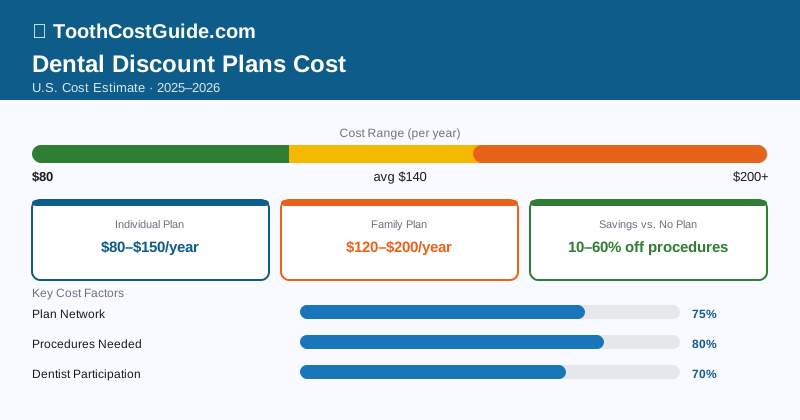
Let’s bust a myth first: dental discount plans aren’t some sketchy workaround. They’re straightforward membership programs — you pay an annual fee, you get access to negotiated pricing at participating dentists, you pay that discounted rate directly. No insurance company in the middle. No annual limits. No waiting.
At $80–$200 per year, these plans offer 10–60% discounts on dental procedures. For a significant slice of the population — particularly uninsured adults who mainly need routine care — they deliver better financial value than buying actual dental insurance.
| Plan | Annual Cost | Network Size | Average Discount | Best For |
|---|---|---|---|---|
| Careington Care 500 Series | $80–$120/year | 100,000+ dentists | 20–60% | Wide variety of procedures |
| DentalPlans.com network | $80–$200/year | 140,000+ dentists | 20–50% | Nationwide access |
| Aetna Dental Access | $100–$150/year | 230,000+ dentists | 15–50% | Large network |
| Cigna Dental Savings | $100–$180/year | 65,000+ dentists | 20–40% | Existing Cigna customers |
| Spirit Dental | $100–$200/year | 100,000+ dentists | 20–50% | Cosmetic procedures included |
| In-office practice memberships | $99–$400/year | 1 office | Varies | Single loyal practice patient |
The Mechanics Are Refreshingly Simple
Most dental coverage products come with layers of complexity — deductibles, coinsurance percentages, annual maximums, claims processing. Discount plans cut through all of it.
Here’s the full process:
- Pay an annual membership fee ($80–$200 for individual; $150–$400 for family)
- Receive your member card and access to the plan’s provider directory
- Confirm a nearby participating dentist
- Present your card at the appointment — pay the pre-negotiated discounted fee directly
- That’s it. No claims, no reimbursement waiting, no phone calls to customer service
According to NADP (National Association of Dental Plans) research, roughly 1 in 4 Americans with any form of dental coverage uses a discount plan rather than traditional insurance. That’s not fringe — it’s a mainstream choice that works for millions of people.
A concrete example: Careington Care 500 at $119/year. Routine cleaning at a participating dentist: normally $150, discounted to $75. Two cleanings per year = $150 total. Plan cost: $119. Net savings from cleanings alone: $31. Any restorative work on top of that at 20–50% off makes the membership economics increasingly favorable.
Dental discount plans have no waiting periods — you can use your discounts from the day you enroll. This makes them the fastest way to access dental care for uninsured patients who need immediate treatment. Most discount plans activate within 24–72 hours of enrollment.
Procedure-by-Procedure Savings
Discount amounts vary by plan and dentist, but here’s what members typically see:
Preventive:
- Routine cleaning: 20–50% off ($75–$150 vs. $120–$200 without discount)
- Periodic exam: 20–40% off
- Bitewing X-rays: 20–40% off
- Child cleaning + fluoride: 20–50% off
Restorative:
- Composite filling (1 surface): 20–40% off ($90–$160 vs. $150–$250 without discount)
- Porcelain crown: 20–40% off ($720–$1,100 vs. $1,000–$1,800 without discount)
Major Procedures:
- Molar root canal: 20–30% off ($800–$1,400 vs. $1,000–$1,800 without discount)
- Dental implant: 10–25% off ($2,250–$4,500 vs. $3,000–$6,000 without discount)
- Deep cleaning per quadrant: 20–40% off ($120–$250 vs. $150–$350 without discount)
Cosmetic:
- In-office teeth whitening: 20–50% off
- Dental bonding: 20–30% off
- Veneers: Often 10–20% discount — notable because insurance never covers cosmetic work at all
That last point matters more than it might seem. For anyone considering implants, Invisalign, bonding, or whitening, dental insurance offers nothing. A discount plan is the only price reduction available.
Discount Plans vs. Insurance: Head-to-Head
| Factor | Dental Discount Plan | Dental Insurance (Individual) |
|---|---|---|
| Annual cost | $80–$200 | $300–$720 |
| Waiting periods | None | 6–12 months for major work |
| Annual maximum | None | $1,000–$2,000 |
| Deductible | None | $50–$100 |
| Cosmetic coverage | Yes (discounts apply) | No |
| Claim forms | None | Yes |
| How savings are received | Point of service discount | Reimbursement to provider |
| Covers orthodontics | Yes (discounts) | Optional (limited) |
When the discount plan wins: A single healthy adult needing two cleanings and a filling per year will almost certainly come out ahead on a $99/year discount plan versus $480/year in individual insurance premiums. The math just doesn’t favor insurance at low utilization levels.
When insurance wins: When you’re facing a crown, bridge, or other major procedure that costs $1,000+. Insurance paying 50% of a $1,500 crown ($750 patient share) beats a 30% discount plan reduction ($1,050 patient share) by $300 on a single procedure. Insurance also wins when your employer heavily subsidizes the premium.
In-Office Practice Memberships: The Overlooked Option
Many dental practices now run their own membership programs — typically $99–$400/year — that bundle services:
- Two routine cleanings included
- Annual X-rays included
- Periodic exam included
- 10–20% discount on all other treatment at that practice
For patients who have a dentist they trust and visit consistently, these in-house plans are often the best financial arrangement available. No insurance company overhead, no network restrictions, no paperwork.
Typical value breakdown:
- Plan cost: $199/year
- Included cleanings (2): $120–$200 market value
- Included X-rays: $75–$150 market value
- Included exam: $60–$100 market value
- Total included value: $255–$450
- Net gain over plan cost: $56–$250
That’s before any discounts on restorative work. These in-office plans are one of the most underrated strategies for uninsured dental patients.
How to Pick the Right Discount Plan
Provider network is everything. A discount plan with 230,000 dentists nationally means nothing if none of them are within 20 miles of you. Before you buy any plan, pull up the provider directory, enter your zip code, and confirm there are 5–10 options within reasonable distance — preferably including a dentist you’d actually choose to see.
Look at the fee schedule for your specific procedures. Plans publish their negotiated pricing online. Don’t guess at “20–40% off” — look up the actual discounted fee for the procedures you need at dentists in your area. A plan might have a 40% cleaning discount but only 15% off crowns; compare the mix based on your situation.
Check specialty coverage carefully. Plans vary in how they handle specialists like periodontists, endodontists, and orthodontists. Some include robust specialty discounts; others only cover general dentists. If you expect to need specialist care, verify before enrolling.
Use DentalPlans.com to compare multiple discount plans side by side for your specific zip code. The tool shows you exactly how much each plan would cost for your anticipated procedures based on local fee data. This takes the guesswork out of comparing plans.
Managing Remaining Costs on Big Procedures
Even a 30–40% discount on a $4,500 dental implant still leaves you with $2,700–$3,150 to pay. A few strategies for that remaining balance:
CareCredit: Widely accepted at dental offices. Pair a discount plan’s reduced fee with CareCredit’s 0% financing over 6–12 months, and you’re spreading a large number into manageable monthly payments without interest. The two strategies are fully compatible — use them together.
In-office installment plans: Practices running their own membership programs often extend payment flexibility to members since they have a direct relationship with you. Ask about installment options for larger treatment plans.
HSA funds: If you have a Health Savings Account through a high-deductible health plan, dental expenses are qualified HSA withdrawals. Paying discounted dental fees with pre-tax HSA money reduces the effective cost further — typically another 20–37% depending on your tax bracket.
Bottom Line
Dental discount plans cost $80–$200/year and cut your dental bills by 10–60% with no waiting periods, no annual limits, and zero claims paperwork. For uninsured adults whose dental needs run toward cleanings and occasional fillings, a $99/year discount plan typically outperforms a $480/year insurance policy that comes loaded with waiting periods and low annual maximums.
The sweet spot for many patients: an in-office practice membership plan at a trusted local dentist. For $150–$300/year you get cleanings covered, discounts on restorative work, and a direct relationship with your dentist that sidesteps insurance complexity entirely.
Always get a written treatment plan before agreeing to any dental work. When using a dental discount plan, ask the dental office to confirm the discounted fee schedule prices for your planned procedures before your appointment — not all staff members are equally familiar with discount plan schedules, and confirming in advance prevents billing confusion.
Frequently Asked Questions
Dental discount plans cost between $80 and $200 per year as a flat membership fee. Once enrolled, you pay this annual fee upfront and then receive 10–60% discounts on all dental services at participating dentists, with no additional insurance premiums or monthly charges.
Yes, dental discount plans cover preventive care including cleanings, exams, and X-rays with negotiated discounts typically ranging from 10–25% off. Unlike dental insurance, these plans have no waiting periods, annual limits, or exclusions for pre-existing conditions, so you can use your benefits immediately.
Dental discount plans have no waiting periods — you can use your discounts on your first visit immediately after enrollment. This makes them ideal for patients who need dental work done quickly and cannot afford to wait 6–12 months like traditional dental insurance requires.