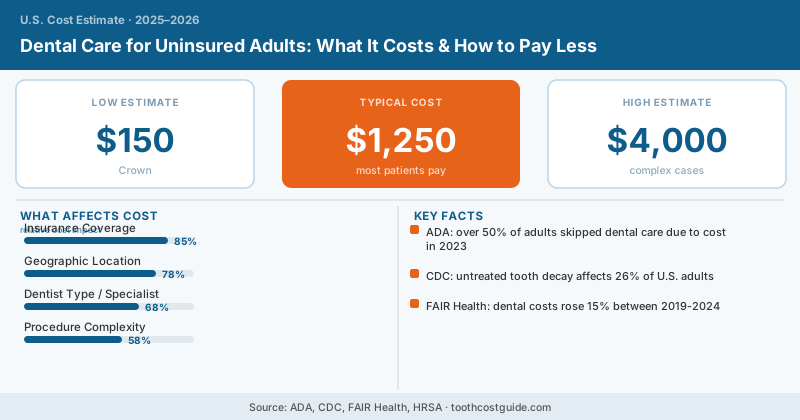
About 68.5 million American adults had no dental coverage in 2023, according to the National Association of Dental Plans. That’s roughly one in four working-age adults walking into the dentist’s office paying every dollar themselves. If you’re one of them, this is your playbook.
The first thing to understand: uninsured doesn’t mean you pay sticker price. It means you pay whatever you don’t negotiate, plan for, or shop around to avoid. Big difference.
What uninsured care actually costs
Cash prices vary wildly by region, but here’s a realistic national range.
| Service | Uninsured Cash Price | Discount-Plan Price |
|---|---|---|
| Cleaning + exam + X-rays | $150–$350 | $75–$180 |
| Single cavity filling | $150–$450 | $90–$280 |
| Root canal (molar) | $1,000–$1,800 | $600–$1,200 |
| Crown | $1,000–$1,500 | $600–$1,000 |
| Tooth extraction (simple) | $150–$400 | $90–$250 |
| Full set of dentures | $1,500–$4,000 | $1,000–$2,800 |
Notice that second column. That’s not a fantasy. That’s what the same dentist charges members of a dental discount plan, which typically costs $80–$200 a year and starts working immediately with no waiting period.
The math on buying insurance vs. staying uninsured
Should you just buy a dental plan? Run the numbers. Individual dental insurance averages $20–$50 a month, and most plans cap annual benefits around $1,000–$1,500. If you only need cleanings, our breakdown of dental insurance cost per month shows you’ll often spend more in premiums than you’d save.
But if you know a root canal or crown is coming, insurance can pay off, just watch the waiting periods (often 6–12 months for major work). Our guide on how dental insurance works walks through the annual maximum and coverage tiers so you can decide.
A dental discount plan beats insurance for most uninsured people who just need routine care plus the occasional filling. No annual max, no waiting period, no claim forms. You pay a flat membership fee and get a pre-negotiated rate at participating dentists. For deeper strategies, see our guide on dental savings without insurance.
Where uninsured adults get cheaper care
You’ve got more options than the dentist down the street.
- Dental school clinics — supervised students do the work at 40–70% off. Slower, but high quality and the cheapest legit care around.
- Community health centers (FQHCs) — sliding-scale fees based on income, funded by HRSA. Even at full sliding-scale rate, often cheaper than private practice.
- In-office membership plans — many dentists now sell their own plans, around $300–$400 a year, covering two cleanings plus discounts on everything else.
For the full rundown, our cheap dental care options guide compares all of these side by side.
Financing the big stuff
Sometimes you can’t avoid a large bill. If you need $3,000 of work now, CareCredit for dental offers promotional 0% financing for 6–24 months, just pay it off before the promo ends or the deferred interest hits hard.
Before financing anything, though, ask for the cash discount. Many practices knock 5–20% off when you pay upfront rather than billing insurance, and our guide on negotiating dental bills shows exactly how to ask.
Don’t let small problems become big ones. The CDC reports that 1 in 5 adults aged 20–64 has untreated tooth decay, and uninsured adults are the most likely to delay care until a $200 filling becomes a $1,500 root canal. A cheap cleaning twice a year is the best money you’ll spend.
The uninsured don’t have to overpay. Between discount plans, dental schools, community centers, and a little negotiating, most uninsured adults can cut their dental spending by 40–60% without ever buying a traditional insurance policy.
Frequently Asked Questions
A routine dental cleaning for uninsured adults typically costs $100–$200 per visit. However, many dental offices offer discounted rates of $50–$150 if you negotiate, join a dental discount plan, or visit a community health center instead of a private practice.
Yes, most dental insurance plans cover two routine cleanings per year at 100% after you meet your deductible, which is usually $0–$50. Uninsured adults have no coverage and pay the full cost, but membership discount plans (like Carefington or HousePlans) often reduce cleaning costs to $40–$80 per visit.
A crown typically costs $1,000–$1,500 uninsured, but you can cut that nearly in half by using a dental discount plan ($500–$750), visiting a dental school clinic ($400–$700), or traveling to a dental-friendly state with lower overhead costs. Get quotes from at least three providers before committing.