Your family earns $72,000 a year. You don’t qualify for Medicaid, but private dental insurance for two kids runs $120–$180 a month. There’s a program designed exactly for this situation — and most families who qualify have never applied.
CHIP (Children’s Health Insurance Program) provides comprehensive dental coverage for children at low or no cost, covering cleanings, fillings, orthodontics, and emergency dental for families earning too much for Medicaid but not enough to comfortably afford private insurance. In most states, a family of four earning up to $60,000–$70,000 qualifies — and in New York, the limit stretches to nearly $125,000. The cost to you: $0–$100 per year per child.
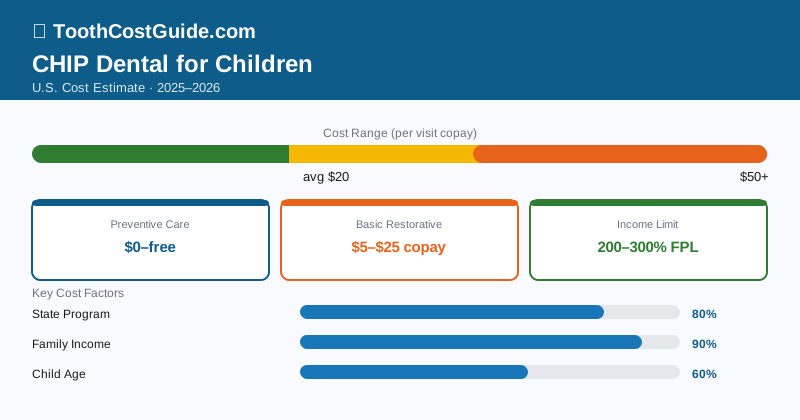
| CHIP Dental Component | What’s Covered | Patient Cost |
|---|---|---|
| Preventive (exams, cleanings, X-rays) | 100% covered | $0–$5 copay |
| Basic restorative (fillings, extractions) | 80–100% | $5–$25 copay |
| Orthodontics (medically necessary) | 50–100% in some states | Varies |
| Emergency dental | Covered | $0–$5 copay |
| Dental sealants | Covered (age varies) | $0–$5 copay |
| Fluoride treatments | Covered | $0 |
| Annual premium (by income) | — | $0–$50/year per child |
How CHIP Dental Works
CHIP is a joint federal-state program created in 1997 for children in families with incomes too high for Medicaid but unable to afford private insurance. Every state runs a CHIP program — either as a Medicaid expansion, a separate program, or both.
The ACA requires all CHIP programs to cover dental benefits as a benchmark benefit. Every state does. What varies is the details. Most states include:
- Comprehensive preventive dental (exams, cleanings, fluoride, sealants, X-rays)
- Restorative care (fillings, extractions)
- Emergency dental services
- Orthodontic care when medically necessary (criteria vary by state)
In most states, CHIP dental comes through managed care dental plans or the Medicaid dental network. You choose or get assigned a dental plan, then find an in-network dentist. Some states — California and Texas among them — run a separate standalone CHIP dental program. Others fold dental into the main CHIP health plan. Your state’s CHIP agency can clarify which model applies.
The Real Savings: Run the Numbers
Two kids. A year of dental care. Here’s what it looks like with and without CHIP:
With CHIP dental:
- 4 cleanings (2 per child): $0–$20
- 4 exams + X-rays: $0–$20
- 2 fillings (one per child): $0–$50
- Sealants for one child: $0–$20
- Annual premium: $0–$100
- Total: $0–$210
Without coverage:
- Same services paid out of pocket: $1,220–$2,040
- Annual savings: $1,000–$1,830
And if your child needs braces? Some states — New York, California, and others — cover medically necessary orthodontic care under CHIP with minimal copays. That’s a potential savings of $3,000–$6,000 on treatment that typically costs $4,000–$7,000.
Who Qualifies
Age: Under 19 (up to the 19th birthday in most states; some extend to 21)
2025 income limits by state (family of four):
- Alabama: Up to 312% FPL (~$97,000)
- California: Up to 266% FPL (~$82,900)
- New York: Up to 400% FPL (~$124,800)
- Texas: Up to 201% FPL (~$62,700)
- Florida: Up to 210% FPL (~$65,500)
The federal poverty level for a family of four in 2025 is ~$31,200/year. So 200% FPL equals roughly $62,400.
Other requirements: US citizens or qualifying immigrants. Proof of state residency. Children already on Medicaid receive similar dental benefits through that program.
Quick eligibility check: Use the screener at healthcare.gov or your state’s CHIP portal. Takes about 5 minutes.
The Downsides to Know
CHIP dental isn’t perfect. Provider networks in some states are thin — not every private dentist accepts CHIP, and finding one who does can take some calls. Orthodontic coverage is not universal; some states cover braces only under strict medical criteria. And annual renewal is required, which catches families off guard when renewal notices get lost in the mail.
CHIP enrollment must be renewed annually. Missing a renewal notice can result in a gap in coverage. Sign up for electronic notices through your state’s CHIP portal and add a calendar reminder 30–60 days before your renewal date.
How to Enroll: Step by Step
Screen your children for eligibility. Visit healthcare.gov or your state’s CHIP portal. Enter your state, household size, and income.
Gather required documents. Photo ID for the parent or guardian, Social Security numbers for all children, proof of income (pay stubs, tax return), proof of residency (utility bill or lease), and proof of citizenship or immigration status.
Apply online, by phone, or in person.
- Online: Most states have online applications at their Medicaid/CHIP portal (covered.ca for California, YourTexasBenefits.com for Texas, etc.)
- Phone: Call 1-800-KIDS-NOW (1-800-543-7669) — the national CHIP helpline
- In person: Visit your local Department of Social Services or Medicaid office
Choose a dental plan if required. In states with multiple CHIP dental plan options, review each plan’s provider directory to confirm your preferred dentist is in-network.
Find a CHIP-accepting dentist. Use your dental plan’s directory, then call the office directly to confirm they’re taking new CHIP patients. Directories go stale fast.
Schedule preventive appointments right away. Preventive care is fully covered from day one. Book cleanings and exams for every enrolled child as soon as your ID cards arrive.
Set an annual renewal reminder. Note your renewal date. Add a calendar alert 60 days out. Renewal requires updated income documentation.
Children enrolled in CHIP can use their dental benefits at federally qualified health centers (FQHCs), which typically accept CHIP and are required to serve all patients. If your local private dentists have limited CHIP openings, FQHCs are a reliable fallback — they cannot turn children away for inability to pay.
Bottom Line
CHIP dental coverage is one of the most underutilized benefits available to American families. With income eligibility reaching 200–400% of the federal poverty level depending on the state, many working families with household incomes of $60,000–$90,000+ qualify. The annual cost to you: $0–$100 per child. The value: comprehensive dental care worth $1,000–$3,000 annually, with potential orthodontic coverage on top of that. If your children don’t have dental coverage right now, checking CHIP eligibility is the most important step you can take today.
Frequently Asked Questions
Private dental insurance for children typically costs $120–$180 per month, while uninsured dental care runs $75–$200 for cleanings, $150–$300 for fillings, and $3,000–$6,000 for orthodontics. CHIP eliminates or drastically reduces these out-of-pocket costs for eligible families earning between Medicaid and private insurance thresholds.
CHIP covers comprehensive dental benefits including preventive care (cleanings and exams), fillings, extractions, emergency dental treatment, and orthodontics in many states. Coverage is free or requires minimal copayments (typically $0–$5 per visit), with most families paying nothing for preventive services.
CHIP enrollment typically takes 7–30 days from application submission, though some states offer expedited processing within 24–48 hours. Once approved, dental coverage becomes effective immediately or within a few days, allowing you to schedule your child's first appointment right away without waiting periods.