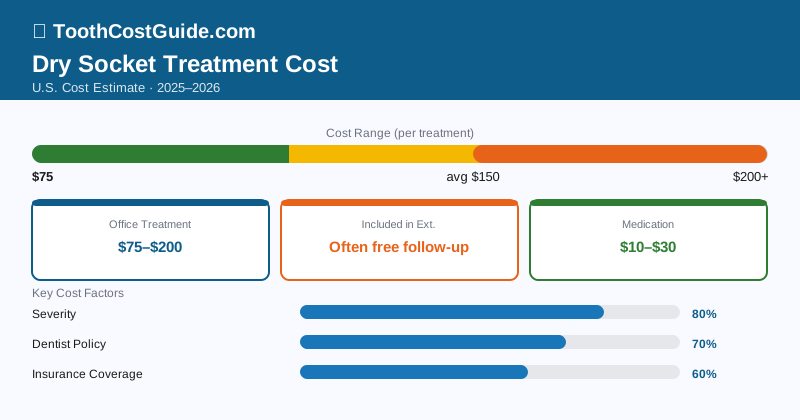
Dry socket treatment costs $75–$200 per visit at a dental office. Most cases require 1–3 follow-up packing appointments. Dry socket (alveolar osteitis) is a painful but not dangerous complication that occurs in 2–5% of routine tooth extractions and up to 30% of wisdom tooth removals. The treatment is straightforward and highly effective — pain typically resolves within hours of treatment.
| Service | Cost (No Insurance) |
|---|---|
| Office follow-up visit (established patient) | $0–$75 |
| Dry socket evaluation + packing | $75–$150 |
| Repeat packing visit | $50–$100 |
| Prescription pain medication | $10–$40 |
| OTC clove oil (temporary relief) | $8–$15 |
| OTC dry socket paste (Dent’s) | $10–$15 |
| Total (most cases, 1–2 visits) | $75–$200 |
What Affects the Cost
Whether your dentist charges for follow-up. Many dentists include dry socket treatment in the original extraction fee — especially if you’re an established patient and the complication occurs within the first week. Ask before your extraction: “If I develop dry socket, is follow-up treatment included?” Many dentists say yes. If so, your dry socket treatment may be completely free.
Number of packing changes needed. Most dry sockets require 1–2 medicated packing changes to heal fully. Some severe cases need 3–5 visits over 1–2 weeks. At $50–$100 per visit, this adds up — though most cases resolve with 1–2 treatments.
Type of packing material used. The gold standard treatment is medicated gauze (Alvogyl, iodoform gauze soaked in clove oil/eugenol mixture) packed into the empty socket. The material is inexpensive (the packing itself costs a few dollars), so most of what you’re paying for is the dentist’s time and office overhead.
After-hours care. Dry socket pain typically peaks at days 3–5 post-extraction and is worst at night. If you need care outside office hours, add emergency surcharges of $100–$200 to the visit cost.
What Is Dry Socket?
Normally after a tooth extraction, a blood clot forms in the socket and protects the underlying bone and nerves while healing occurs. Dry socket happens when this clot either fails to form, dissolves prematurely, or is dislodged — exposing the raw bone.
Risk factors:
- Smoking (highest risk — nicotine restricts blood supply and tobacco suction can dislodge the clot)
- Oral contraceptives (elevated estrogen increases clot breakdown)
- Lower jaw extractions (more common in mandibular teeth)
- Wisdom tooth removal (most common site)
- Poor post-extraction care (rinsing too vigorously, using straws)
- Existing infection at the extraction site
Symptoms: Severe, throbbing pain starting 3–5 days after extraction (distinct from normal post-extraction soreness). The pain may radiate to the ear, eye, or neck on the affected side. A bad taste or odor from the socket. Visible empty-looking socket without a blood clot.
Treatment Options & Costs
Professional dry socket packing ($75–$150): The dentist gently irrigates the socket with saline to remove debris, then places medicated gauze (typically Alvogyl — a paste of butamben, eugenol, and iodoform) into the socket. Pain relief is usually dramatic within 30–60 minutes of treatment. The gauze is usually changed every 1–3 days until the socket begins to granulate (fill with healing tissue). This is the definitive treatment.
Prescription pain medication ($10–$40): Ibuprofen 800 mg is typically the primary pain management. Some dentists prescribe short-course opioids for severe dry socket pain. The medication doesn’t cure dry socket but manages pain between packing changes.
OTC temporary relief ($8–$25): Clove oil (eugenol) applied carefully to the socket with a cotton pellet provides 30–60 minutes of relief due to its topical anesthetic properties. OTC dry socket kits (Dent’s Toothache Gum, Red Cross Toothache Kit) contain eugenol-based products. These provide temporary relief but are not substitutes for professional packing treatment.
Home irrigation ($0–$10): After the first professional treatment, some dentists provide an irrigation syringe and instructions to gently rinse the socket with saline at home. This helps keep debris out and speeds healing without additional visits.
With vs. Without Insurance
Follow-up visits: Most dental plans cover post-extraction follow-up visits at 100% as part of the aftercare associated with the extraction procedure. Dry socket packing is typically billed under ADA code D9930 (treatment of complications — post-surgical) or included as part of the global post-operative care for the extraction.
Ask before assuming: Confirm with your dental office that dry socket treatment is covered under your plan. Some plans specifically cover it; others treat each packing visit as a separate chargeable encounter.
Without insurance: If your dentist charges for dry socket follow-up without insurance, negotiate. Explain that you were an existing patient who had the extraction there and that dry socket is a complication — not elective follow-up care. Many dentists waive or significantly reduce the fee.
What To Do
- Contact your dentist the same day you develop classic dry socket symptoms (severe pain 3–5 days post-extraction, bad taste, empty-looking socket). Don’t wait.
- Manage pain in the meantime: Ibuprofen 400–600 mg every 6 hours (if medically appropriate). Apply a small amount of clove oil on a tiny cotton pellet gently placed in the socket opening for temporary relief.
- Don’t smoke — this is the primary cause of dry socket and will prevent healing even after treatment.
- Don’t use straws — the suction can repeatedly dislodge the packing.
- Follow post-packing care instructions precisely — gentle saline rinses, soft foods, no vigorous rinsing.
- Expect pain to subside within 1–3 days of proper packing — if it doesn’t, return for a repacking.
How to Save Money
Ask if follow-up is included. Before your extraction, ask: “Is dry socket treatment included if it develops?” Many dentists include it. This one question could save you $150–$300.
Use OTC temporary relief while waiting for your appointment. Clove oil costs $8–$12 and provides real temporary relief between packing changes.
Don’t go to the ER for dry socket. ERs cannot pack a socket with medicated gauze — they’ll provide pain medication and refer you to a dentist. You’ll pay $500–$2,000 for the ER visit and still need dental follow-up.
Prevent it in the first place. If you’re having an extraction, stop smoking for at least 72 hours before and 48–72 hours after (ideally longer). Don’t use straws. Don’t rinse vigorously for the first 24 hours. These steps dramatically reduce dry socket risk.
Dry socket is painful but not infected or life-threatening — do not take it to the emergency room. However, if you develop fever, swelling, or pus in addition to dry socket symptoms, call your dentist promptly as these suggest a secondary infection requiring antibiotics and possibly a different treatment approach.
Bottom Line
Dry socket treatment costs $75–$200 for most patients, often with the first treatment included in the original extraction fee. Medicated packing provides dramatic pain relief within an hour. The condition resolves fully in 1–2 weeks with proper care. Prevention is the best cost-saver: don’t smoke, don’t use straws, and avoid vigorous rinsing for the first 24 hours after extraction.