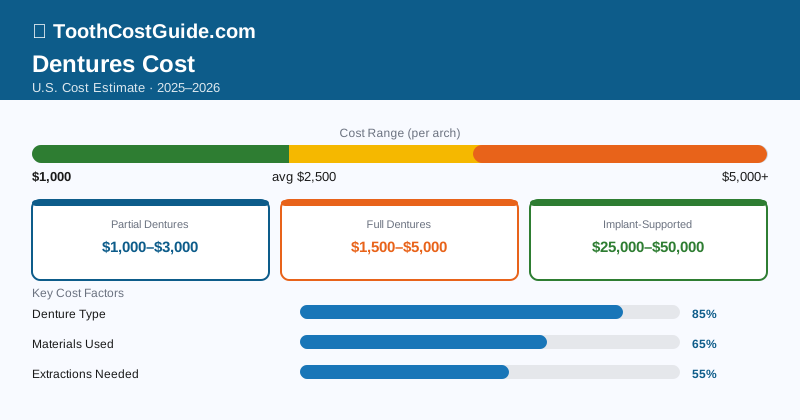
Partial dentures cost $1,000–$3,000 and full dentures (complete dentures) run $1,500–$5,000 per arch without dental insurance. For a complete upper and lower set of full dentures, expect to pay $3,000–$10,000 at a private dental office. Budget dentures available at dental chains start around $300–$600 per arch, while premium custom dentures with precise fit and natural aesthetics run $2,500–$5,000 per arch.
| Denture Type | Cost Without Insurance |
|---|---|
| Full/complete denture – economy | $300–$800 per arch |
| Full/complete denture – mid-range | $1,000–$2,500 per arch |
| Full/complete denture – premium custom | $2,500–$5,000 per arch |
| Complete upper + lower set (mid-range) | $2,000–$5,000 |
| Partial denture – acrylic (flipper) | $300–$700 |
| Partial denture – cast metal framework | $1,000–$2,500 |
| Partial denture – flexible (Valplast) | $1,000–$2,000 |
| Immediate denture (placed day of extraction) | $1,500–$3,000 |
| Implant-supported overdenture (per arch) | $10,000–$22,000 |
| Denture reline | $250–$500 |
What Affects the Cost of Dentures
Full vs. partial denture. A full (complete) denture replaces all teeth in an arch when all teeth have been lost. A partial denture replaces several missing teeth when some natural teeth remain and anchors to them with metal clasps or precision attachments.
Material and construction quality. Economy dentures use standardized acrylic teeth in prefabricated bases with minimal customization. Mid-range dentures involve custom impressions, wax try-ins for fit adjustment, and better tooth selection. Premium dentures use high-grade acrylic, carefully matched tooth shading, and multiple appointments for precise fit verification. The quality difference is visible and tangible — premium dentures look more natural, fit better, and last longer.
Immediate vs. conventional dentures. Conventional dentures are fabricated after the gums heal from extractions (typically 8–12 weeks). Immediate dentures are made in advance and inserted the day teeth are removed — convenient but require relining as gums heal and shrink. Immediate dentures typically cost $1,500–$3,000 extra or are included in comprehensive treatment plans.
Associated extractions. If remaining teeth need to be extracted before denture placement, those costs are separate ($75–$250 per simple extraction, $180–$550 surgical). A full-mouth extraction for denture preparation can cost $500–$2,500 depending on how many teeth remain and their condition.
The “cheap denture” trap is real. Economy dentures at $300–$600 per arch often fit poorly, look artificial, and require frequent relines or replacements. A denture that doesn’t fit well causes sore spots, difficulty eating, and bone loss. Investing in a well-made mid-range or premium denture costs more upfront but lasts 5–10 years with proper care.
Cost by Denture Type
Acrylic flipper partial ($300–$700): A temporary or economy partial used to fill a gap immediately after tooth loss. Made of acrylic with plastic teeth. Bulky, less durable, and not meant for permanent long-term use. Often used while waiting for implants or a permanent partial denture.
Cast metal partial ($1,000–$2,500): The most durable type of partial denture. A precisely fitted metal framework (cobalt-chrome or titanium) supports acrylic teeth and clasps that grip adjacent natural teeth. Well-made cast partials last 10–15 years and feel much more stable than acrylic partials.
Flexible partial (Valplast, $1,000–$2,000): Made from nylon-like material that’s lightweight and cosmetically appealing (no visible metal clasps). Good for certain clinical situations, but harder to adjust and reline than cast partials. Less durable long-term.
Full conventional dentures ($1,000–$5,000 per arch): Custom-fabricated after gum healing. Multiple appointments: impressions, bite registration, wax try-in, and final delivery. Quality varies significantly by price tier. Most patients function well with mid-range ($1,000–$2,000/arch) dentures.
Implant-supported overdentures ($10,000–$22,000 per arch): Dentures that snap onto 2–4 dental implants per arch. Dramatically more stable than conventional dentures — no adhesive needed, far better chewing ability, and implants prevent jawbone resorption. The gold standard for edentulous patients who can afford the investment.
With vs. Without Dental Insurance
Dentures fall under “major restorative” or “prosthetics” in dental insurance plans, typically covered at 50% after deductible.
Typical coverage:
- Full denture: 50% covered after deductible
- Partial denture: 50% covered
- Annual maximum: $1,000–$2,000, which rarely covers more than one arch
Coverage gaps:
- Most plans limit denture replacement to once every 5 years
- Implant-supported overdentures: The implants are usually not covered; the prosthetic attachment may be covered at 50%
- Premium denture upgrades over the “least expensive alternative” may not be covered above the basic tier
Example for full upper denture at $2,000:
- Insurance pays 50% = $1,000
- Patient deductible: $100
- Patient out-of-pocket: $1,100
- Note: If your annual max is $1,000, insurance won’t pay more than $1,000 regardless of the 50% calculation
How to Save Money on Dentures
Dental school prosthodontic clinics. Dentures fabricated by dental school students under faculty supervision cost 50–65% less than private practice. A full-mouth set of conventional dentures might run $1,200–$2,500 at a dental school vs. $4,000–$8,000 at a private office. The process takes longer — multiple appointments over 6–12 weeks — but the quality is faculty-supervised.
Corporate dental chains for economy needs. Chains like Affordable Dentures & Implants operate on a volume model and offer economy dentures at $350–$800 per arch. Quality is serviceable for budget-conscious patients. Fitting appointments may be more limited than at private offices. Check reviews carefully for the specific location you’d use.
Avoid immediate dentures when possible. Immediate dentures are convenient but require relining as gums heal (which costs $250–$500 extra) and may not fit as well as conventional dentures made after full healing. If your situation allows it, conventional dentures made after 8–10 weeks of healing provide a better fit.
Plan extractions in stages if appropriate. For patients with some remaining teeth, strategic extractions over time (removing the worst teeth first, eventually transitioning to a full denture) can allow continued chewing on natural teeth while the denture is being fabricated.
Ask your dentist to explain the denture fabrication process: How many try-in appointments are included? Will you see wax dentures before the final acrylic? A reputable denture process includes at least one wax try-in where you can approve the appearance and bite before the final denture is processed. Skipping this step increases the risk of getting a denture that looks or fits wrong.
Financing Options
Dentures — especially full sets with extractions — often represent $3,000–$10,000 in total treatment costs. Financing is common and practical.
CareCredit: Accepted at most dental offices providing denture services. For amounts over $2,500, 18–24 month 0% promotional periods are often available. Standard warning: retroactive deferred interest if not paid in full by period’s end.
Affordable Dentures & Implants in-house plans: Many corporate dental chains offer their own financing arrangements with monthly payment options.
Dental schools: Lower total costs mean less financing needed. A $2,500 full-mouth denture at a dental school may be manageable without any financing at all.
State assistance programs: Medicaid covers dentures in approximately 30 states for qualifying low-income adults. Coverage varies by state — call your state Medicaid office or check the state-specific dental benefit information from the National Academy for State Health Policy.
Bottom Line
Dentures cost $1,000–$3,000 for partial dentures and $1,500–$5,000 per arch for full dentures. Economy options exist at $300–$800 per arch, but quality matters significantly for your daily function and long-term bone health. With insurance paying 50% up to annual maximums, most patients pay $750–$3,000 out of pocket for full dentures.
The best long-term investment for fully edentulous patients — if financially feasible — is implant-supported overdentures, which preserve bone and function far better than conventional dentures. If that’s not possible now, a well-made mid-range conventional denture is far preferable to the cheapest available option.
Always get a written treatment plan before agreeing to any dental work. For dentures, ask your dentist how many appointments are included, whether the fee covers any required relines during healing, what the warranty or guarantee period is, and whether the quoted price includes associated extractions or lists them separately.