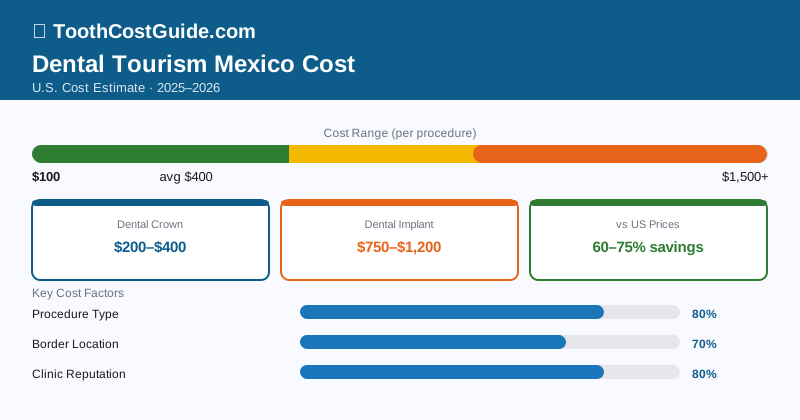
Americans who cross into Mexico for dental work routinely save 40–70% on procedures — a single implant that costs $4,500 in California often runs $1,200–$1,800 in Los Algodones, just a short walk across the US-Mexico border. Hundreds of thousands of Americans make this trip each year, and with proper research, the quality of care at top clinics rivals that found in US offices.
| Procedure | US Average Cost | Los Algodones | Tijuana | Savings |
|---|---|---|---|---|
| Dental implant (single) | $4,000–$5,000 | $1,100–$1,800 | $1,200–$2,000 | 55–70% |
| Dental crown (porcelain) | $1,200–$1,800 | $300–$500 | $350–$600 | 60–75% |
| Root canal (molar) | $1,400–$2,000 | $300–$500 | $350–$550 | 65–75% |
| Full arch dentures | $2,500–$4,000 | $600–$1,200 | $700–$1,400 | 55–70% |
| All-on-4 implants (arch) | $25,000–$35,000 | $8,000–$14,000 | $9,000–$16,000 | 50–65% |
| Composite filling | $150–$300 | $40–$80 | $50–$100 | 65–75% |
| Teeth cleaning & exam | $150–$300 | $35–$60 | $40–$70 | 70–80% |
| Porcelain veneers (per tooth) | $1,200–$2,500 | $350–$600 | $400–$700 | 60–75% |
How It Works
Los Algodones, known as “Molar City,” is a small Mexican border town in Baja California, adjacent to Yuma, Arizona. It has more dentists per capita than anywhere else in the world — over 300 dental offices crammed into a 4-block area. The town exists almost entirely to serve American and Canadian dental tourists, and most dentists speak fluent English.
Tijuana is a larger border city adjacent to San Diego, California. Its dental clinics range from low-cost walk-in offices to modern facilities with US-trained dentists, cone beam CT scanners, and digital workflow matching top US practices.
Most patients cross the border on foot at the port of entry, walk to their clinic appointment, and return the same day for simple procedures. For implants and complex work, multiple visits over 2–5 days (sometimes spread over months) are common.
Costs & Savings Details
Los Algodones pricing is among the lowest in Mexico because of intense local competition. Clinics compete aggressively for tourist patients. This also means the range in quality is wider — from excellent to very basic.
Tijuana pricing runs 10–20% higher than Los Algodones but you have access to more high-end clinics with specialized equipment and credentials (US dental school training, JCI accreditation, etc.).
Real savings example: An American needing two implants, three crowns, and a root canal facing a US bill of $15,000+ could have the same work done in Los Algodones for $4,000–$6,000, with airfare and hotel from Phoenix or San Diego running $200–$500 total. Net savings: $9,000–$10,500.
All-on-4 and full mouth reconstruction represent the biggest absolute savings — patients commonly save $15,000–$20,000 on full arch implant work.
Eligibility / Who Qualifies
Any US citizen can cross into Mexico for dental tourism with no special eligibility requirements. You need:
- A valid US passport (required to re-enter the US)
- No special visa required for short visits to the Mexican border zone
- The ability to travel to the border region (fly into Yuma, AZ or San Diego, CA)
Travelers with complex medical conditions should discuss their health history with the treating dentist in advance. IV sedation is available at select clinics.
Pros and Cons
Pros
- Dramatic cost savings (40–70%) on virtually all dental procedures
- High-quality care available at reputable clinics — US-trained dentists are common
- Los Algodones is extremely accessible from the Southwest
- No language barrier at tourist-oriented clinics — staff are English-speaking
- Same-day appointments often available for basic procedures
- Quality materials: most top clinics use US or German dental materials (3M, Ivoclar, Nobel Biocare)
Cons
- Follow-up care for complications requires another trip or paying US prices
- Wide quality variation — researching the right clinic is critical
- Not all procedures can be completed in a single visit (implants take months)
- Travel cost and time must be factored in
- US dental insurance typically does not cover out-of-country care
- Some procedures (like implant warranties) may be harder to enforce from the US
Avoid clinics that approach tourists on the street or promise same-day implants. Reputable clinics have online reviews, documented credentials, and proper consultation processes. Dental implants require bone healing time — any clinic promising to place and restore an implant in one day is cutting corners.
Step-by-Step Guide
Research clinics thoroughly: Read Google Reviews, Yelp, and forums like Dental Town and Reddit’s r/DentalTourism. Look for clinics with 4.5+ stars across 50+ reviews. Ask for the treating dentist’s credentials — US dental school training or membership in the American Dental Association or AGD is a positive sign.
Request a virtual consultation: Most established clinics offer free video consultations. Share your X-rays (ask your US dentist for a copy — you’re entitled to them) and get a written treatment plan with itemized pricing.
Compare multiple quotes: Get quotes from at least 3 clinics. Price variation within Los Algodones or Tijuana can be 20–40% for the same work.
Plan your logistics: From Phoenix or Yuma, drive to the San Luis port of entry for Los Algodones. From San Diego, take the trolley to the San Ysidro port of entry for Tijuana. For multi-day stays, budget motels are available on the US side of the border.
Bring your records: Bring any recent X-rays, your medical history, and a list of medications. Your clinic will likely take new X-rays, but having your history speeds up consultation.
Cross the border and attend your appointment: US citizens can cross on foot with a passport. Border wait times back into the US can be 30–90 minutes; budget for this.
Get all work in writing: Receive a written treatment summary, the names of materials used (implant brand, crown lab name), and any warranty terms before you leave.
Plan for follow-up: Establish a relationship with a US dentist who can handle any complications between Mexico visits. Some US dentists will accommodate dental tourists for follow-up care.
Ask your chosen clinic which dental implant brand they use. Tier-1 brands (Nobel Biocare, Straumann, Zimmer Biomet) cost more but have better long-term success rates and worldwide service. A clinic in Los Algodones using Nobel Biocare implants at $1,500 is often a better value than one using an unknown brand at $900.
Bottom Line
Dental tourism in Mexico is a legitimate, well-established option for Americans facing large dental bills. Los Algodones and Tijuana together serve over 1 million dental tourists per year. For major work — implants, crowns, all-on-4, or full mouth reconstruction — the savings can be $5,000–$20,000+. The key is doing thorough research to choose a quality clinic, understanding that complex work requires multiple visits, and going in with realistic expectations about follow-up logistics.