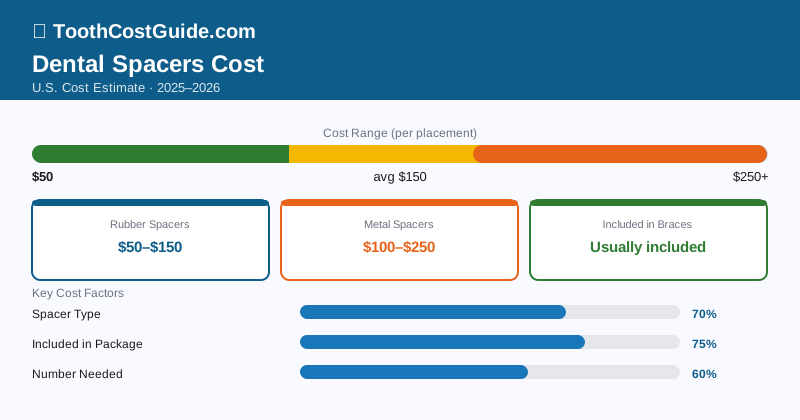
Orthodontic spacers (separators) cost $50–$250 total for placement and usually take a single brief appointment. They are small rubber rings or metal springs placed between the back molars 1–2 weeks before the banding appointment for braces — creating just enough space for metal bands to slide around the molars. Spacers are almost always included in the overall braces treatment fee when used as part of comprehensive orthodontic treatment. You’re most likely to see a separate charge only if spacers are placed at a separate pre-treatment visit billed independently.
| Spacer Service | Cost |
|---|---|
| Orthodontic spacers (included in braces fee) | $0 additional |
| Spacers billed separately (stand-alone visit) | $50–$250 |
| Rubber (elastic) spacers — per placement | $50–$150 |
| Metal (spring) spacers — per placement | $75–$250 |
| Spacer replacement (fell out before banding) | $25–$100 |
| Emergency appointment if spacer causes severe pain | $50–$150 |
What Are Orthodontic Spacers?
Orthodontic spacers — also called separators — are tiny devices placed between the back molar teeth approximately 1–2 weeks before the banding appointment for traditional braces. Metal bands (rings that encircle the back molars) are used as anchors for the archwire. Molars sit very tightly together with no natural space, so spacers create just enough gap — about 2mm — to allow the bands to slide comfortably into position at the banding appointment.
Without spacers, fitting metal bands would be difficult, painful, and potentially damaging to the adjacent teeth. Spacers are a preparatory step, not a treatment appliance.
Types of Spacers
Rubber (elastic) spacers: Small donut-shaped rings made from elastic material. Placed between teeth using a dental floss threading technique. Most commonly used because they’re easy to place and cost-effective. Patients feel pressure for 2–5 days while teeth gently shift apart. Cost: $50–$150.
Metal (spring) spacers: Small coiled metal springs placed between molars when more rigid separation is needed or when rubber spacers don’t stay in place. Less common than rubber spacers. Cost: $75–$250.
Spacers are not a treatment themselves — they’re a preparatory step for placing molar bands. Their cost is almost always included in the comprehensive braces fee. If your orthodontist is billing spacers separately, ask whether this is standard practice for their office or whether it should be included in your quoted treatment cost.
The Spacer Placement Process
Placement appointment (5–10 minutes):
- The orthodontist or orthodontic assistant threads a rubber spacer between two molars using dental floss and a loop technique
- The spacer is snapped into the tight contact point between the teeth
- Typically 1–4 spacers are placed — one between each molar where a band will be positioned
- No anesthetic is used; the placement is momentarily uncomfortable but not painful
After placement (days 1–5): Expect a feeling of pressure and soreness similar to having something stuck between your teeth. The discomfort typically peaks around day 2–3 and resolves by day 5–7 as the teeth move slightly apart. Over-the-counter pain relievers (ibuprofen, acetaminophen) manage the discomfort effectively.
What to eat: Stick to soft foods for the first 2–3 days. Avoid sticky, chewy, or hard foods that could dislodge spacers (gummy candy, sticky caramel, thick bagels).
Do not floss between the spacer teeth. Normal flossing will pull out the spacers. Brush normally around the spacers.
What Happens If a Spacer Falls Out
Spacers sometimes fall out on their own — usually because the teeth have moved apart enough that the spacer no longer has contact to grip. If a spacer falls out:
- Call your orthodontist. They’ll evaluate whether replacement is needed.
- If your banding appointment is within 1–2 days: Usually no replacement needed — enough space has likely been created.
- If your banding appointment is more than 1 week away: A replacement spacer may be needed. Replacement is quick and inexpensive ($25–$100).
- If multiple spacers fall out repeatedly: May indicate an underlying bite issue that requires the orthodontist to re-evaluate the approach.
Do not try to replace a fallen spacer yourself. The rubber rings are not sterile off-the-shelf products, and improper placement can cause tooth damage or get pushed below the gum line. Call your orthodontist to assess whether professional replacement is needed before your banding appointment.
Are Spacers Included in Braces Treatment?
In most cases, yes. Comprehensive braces fees at most orthodontic practices include all necessary appliances and preparatory procedures, including spacers. Your treatment fee quote should include spacers — ask your orthodontist explicitly at the consultation: “Is the spacer placement appointment and any spacer replacements included in the total fee?”
When you might be billed separately: If the spacer placement occurs at a preparatory appointment that’s scheduled as a separate clinical visit (separate from the banding appointment, consultation, and records), some practices bill this visit separately as an office call plus the spacer fee. This is practice-dependent.
Insurance Coverage
When spacers are included in the comprehensive braces fee, they’re covered under the orthodontic benefit along with the rest of treatment. If billed separately, spacers are a dental procedure covered under the orthodontic benefit or the basic services benefit of your dental plan. A $100 spacer visit is a small enough amount that it likely applies to your deductible more than your coverage benefit.
FSA/HSA: Orthodontic spacers are FSA/HSA eligible if billed separately.
How to Minimize Spacer Discomfort
- Take ibuprofen 1 hour before the placement appointment to reduce initial inflammation
- Eat before the appointment — soft foods post-placement are easier
- Apply orthodontic wax over any spacer that causes cheek or gum irritation
- Rinse with warm salt water to reduce gum soreness
- Avoid hard, sticky, or crunchy foods for the first week
Bottom Line
Dental spacers cost $50–$250 when billed separately, but are almost always included in the comprehensive braces treatment fee. They’re a simple preparatory step to create space for molar bands and are placed 1–2 weeks before braces are bonded. Discomfort lasts 3–5 days and is managed with over-the-counter pain relievers. If spacers fall out, contact your orthodontist before trying to replace them yourself. The main thing to verify is whether spacers are included in your braces fee or billed additionally — ask explicitly at your consultation.
Spacers are a routine preparatory step for braces, not a significant separate cost. Their discomfort (typically 2–5 days of soreness) is the most notable aspect, not their price. Confirm with your orthodontist that spacer placement is included in your comprehensive treatment fee, and take ibuprofen before the appointment to stay ahead of the discomfort.