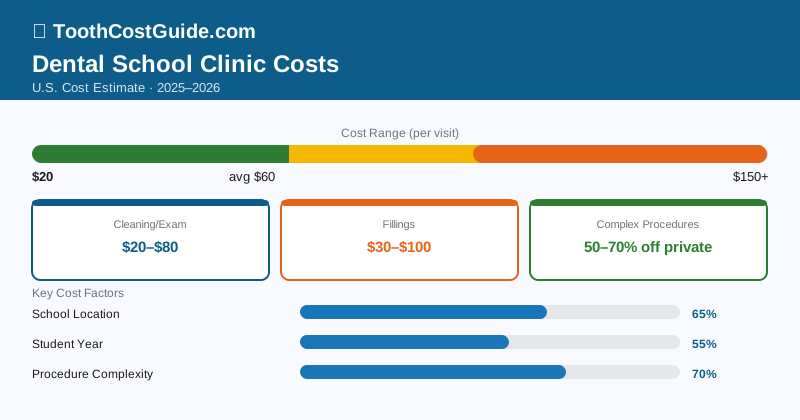
Dental school clinics charge 50–70% less than private dental practices for the same procedures. A root canal that costs $1,400 privately runs $500–$800 at a dental school clinic. A crown at $1,200 privately costs $400–$700 at a dental school. The work is performed by dental students in their final 1–2 years of training, under direct supervision of licensed faculty dentists — which means every procedure is reviewed and approved by an experienced clinician before you leave the chair.
| Procedure | Private Practice Average | Dental School Average | Savings |
|---|---|---|---|
| Routine cleaning + exam | $150–$250 | $50–$100 | 50–65% |
| Full-mouth X-rays | $150–$300 | $60–$120 | 50–60% |
| Composite filling (1 surface) | $150–$250 | $60–$120 | 50–60% |
| Root canal (molar) | $1,000–$1,800 | $500–$900 | 45–55% |
| Dental crown (porcelain) | $900–$1,800 | $400–$750 | 45–60% |
| Dental implant (all-in) | $3,000–$6,000 | $1,500–$3,000 | 40–55% |
| Full dentures (per arch) | $1,500–$4,000 | $700–$1,500 | 45–60% |
| Deep cleaning (4 quadrants) | $800–$1,400 | $350–$650 | 40–55% |
How Dental School Clinics Work
The core structure is straightforward: dental students in their clinical training years (typically years 3 and 4 of a 4-year DDS or DMD program) see patients in the school’s teaching clinic. These students are licensed dental professionals in training — they’ve completed 2 years of intensive science and pre-clinical coursework before treating patients.
Faculty oversight is constant and rigorous. Before any procedure begins, the student’s diagnosis and treatment plan are reviewed by a faculty dentist. During the procedure, faculty members circulate the clinic floor and are called over at defined checkpoints to examine and approve the student’s work. Before you’re dismissed, the faculty reviews the completed work.
What happens if something is done incorrectly? The faculty dentist corrects it or has the student redo the step. This oversight system is why dental school work, while slower, is often more carefully executed than private practice — every step has a checkpoint.
Payment: You pay directly to the dental school at the time of service. Most schools accept cash, check, credit cards, and CareCredit. Financial arrangements vary by school.
Dental schools are not a compromise — they’re an opportunity. Faculty dentists at major university dental programs include some of the most accomplished and academically accomplished clinicians in the field. You’re getting their expertise in supervision while paying student-level fees.
What to Expect: The Patient Experience
Initial appointment: New patients typically receive a comprehensive new patient exam including full-mouth X-rays (panoramic + bitewings or FMX), periodontal charting, and a treatment plan. This first appointment can take 2–4 hours.
Appointment length: Procedures take longer at dental schools. A routine cleaning that takes 45 minutes at a private office may take 90–120 minutes at a dental school (the student works more methodically; faculty review adds time). A crown appointment that takes 60–90 minutes privately may take 2–3 hours.
Multiple appointments: Some procedures that a private dentist does in one or two appointments may be spread across 3–4 appointments at a dental school. Students have limited appointment slots and must complete each step before faculty sign-off.
Student assignment: You’ll generally work with the same assigned student throughout your care, though this isn’t guaranteed. Students have specific procedure requirements to complete for graduation — your needs should align with what the school has students available to provide.
Communication: Dental students are typically motivated and thorough communicators because they’re learning. Many patients report feeling more informed about their treatment at dental school clinics than at private practices.
Best Procedures to Get at a Dental School
Some procedures are ideal for dental school settings; others are better handled privately depending on urgency.
Excellent choices for dental school:
- Routine cleanings and checkups (ongoing)
- Fillings and basic restorations
- Full-mouth X-rays and comprehensive exams (new patient workup)
- Crowns on back teeth (aesthetics less critical; lower pressure)
- Root canals on posterior teeth
- Denture fabrication (multiple-appointment process is standard anyway)
- Dental implants (planning and placement — adequate time for precision)
- Deep cleaning (scaling and root planing)
Consider private practice for:
- True dental emergencies requiring same-day treatment (dental schools may not accommodate walk-ins)
- Complex root canals with calcified canals or unusual anatomy (though endodontic residency programs handle these)
- Anterior (front tooth) crowns requiring precise aesthetics under time pressure
- Anything requiring a specialist same-day
How to Find a Dental School Clinic Near You
Directory resources:
- ADEA (American Dental Education Association): adea.org — complete list of accredited U.S. dental school programs
- ADA Dental School Directory: ada.org — searchable by state
- Direct search: “dental school clinic [your city/state]” typically surfaces the school’s patient care program page
What to look for: Schools with graduate specialty programs (endodontics, periodontics, prosthodontics, orthodontics, oral surgery) offer additional savings on specialty care. A dental school with a periodontics residency, for example, can provide deep cleanings supervised by periodontists-in-training at 50–60% less than a private periodontist.
Contacting the school: Call the school’s patient care coordinator or patient services line. Ask: “Do you accept new patients?” “What procedures are currently available?” and “What is the approximate wait time for a new patient appointment?” Wait times vary from a few days to several weeks depending on student availability and procedure needs.
Dental School Specialty Clinics
Beyond the general dentistry student clinic, most large dental schools have graduate specialty programs with separate clinics:
Periodontics clinic: Graduate periodontics residents supervised by periodontal faculty. Gum disease treatment, deep cleanings, soft tissue grafts, and periodontal surgery at 40–60% off specialist fees.
Endodontics clinic: Graduate endodontics residents. Root canals — including complex cases — supervised by endodontic faculty. Often better equipped (dental microscopes, CBCT imaging) than many private offices.
Orthodontics clinic: Orthodontic residents provide comprehensive orthodontic treatment (braces, Invisalign) at 30–50% off private orthodontist fees. Ideal for patients with time flexibility since treatment takes the same duration regardless of provider.
Prosthodontics clinic: Crowns, bridges, implants, and dentures under prosthodontic faculty supervision. For complex restorative cases, this is excellent value.
Oral surgery clinic: Extractions including complex surgical cases, wisdom teeth, and in some schools, implant placement.
When contacting a dental school, mention your specific dental needs. Schools may prioritize certain patient types for their clinical training program requirements. A patient needing multiple crowns and a root canal is often highly sought by prosthodontics and endodontics programs.
Financing at Dental Schools
Most dental school clinics accept:
- Cash, check, credit cards
- CareCredit (most schools accept it)
- FSA/HSA payments
Some schools offer their own payment plan arrangements. Because fees are already 50–70% reduced, many patients find they don’t need financing for procedures they would have financed at a private practice.
Tax considerations: All dental school treatment qualifies for FSA and HSA payment since it’s licensed dental care at an accredited institution.
Bottom Line
Dental school clinics provide genuine, supervised, high-quality dental care at 50–70% below private practice fees. The tradeoffs — longer appointments and multiple visits — are real but manageable for most patients. For complex, expensive procedures like implants, crowns, root canals, and full dentures, the cost difference is often thousands of dollars.
Find your nearest dental school using the ADEA directory and call them. For planned, non-emergency dental work, dental school clinics represent the single best source of legitimate, high-quality, affordable dental care in the United States.
Always get a written treatment plan before agreeing to any dental work. At dental school clinics, you’ll receive a detailed treatment plan as part of the initial comprehensive exam. Review it carefully and feel free to ask the supervising faculty member to explain any recommended treatment and its priority.