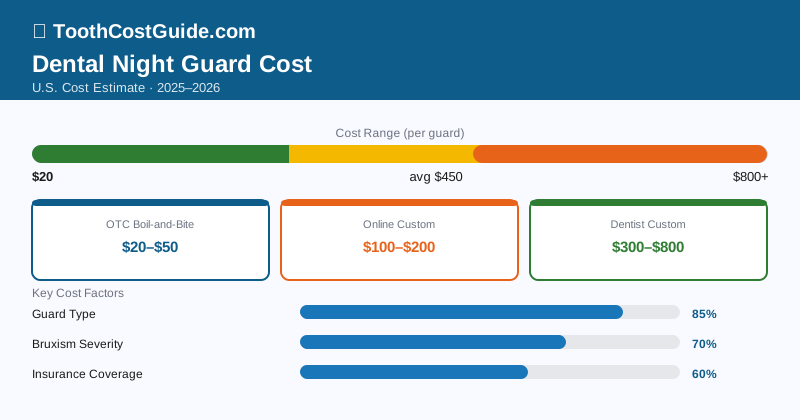
A custom dental night guard from your dentist costs $300–$800, while over-the-counter options from a pharmacy or online retailer run $20–$50. The custom guard is fabricated from a precise impression of your teeth by a dental lab, ensuring accurate fit and long-term durability. OTC guards use a boil-and-bite or one-size-fits-all design that works for many patients but lacks the precision of a lab-fabricated appliance. For patients who grind severely, the custom guard is almost always the better long-term investment.
Night Guard Types and Their Costs
| Night Guard Type | Cost |
|---|---|
| OTC boil-and-bite (pharmacy/online) | $20–$50 |
| Custom soft night guard (dentist) | $300–$500 |
| Custom hard acrylic night guard (dentist) | $400–$700 |
| Custom dual-laminate night guard (dentist) | $400–$800 |
| Online direct custom guard (mail-in impression) | $100–$200 |
| TMJ/NTI occlusal splint | $400–$800 |
| Replacement custom guard (same dentist) | $200–$400 |
What Affects the Cost of a Night Guard
Custom vs. over-the-counter. The biggest cost variable is whether you go to a dentist or buy retail. Dentist-made custom guards require an office visit, an impression (or digital scan), lab fabrication, and a fitting appointment. The lab alone charges the dentist $75–$200 for fabrication. OTC guards require none of this and cost under $50 at any pharmacy. The trade-off is fit, durability, and effectiveness for severe grinders.
Material and design type. Custom night guards come in three main types. Soft guards (similar to a sports mouthguard material) are comfortable and inexpensive to fabricate but wear down quickly under heavy grinding — typically lasting 1–3 years. Hard acrylic guards are rigid, more durable (5–10 years), and better for severe bruxism but take some adjustment to sleep with. Dual-laminate guards are hard on the outside and soft on the inside — a popular middle ground. The material significantly affects cost and longevity.
Dentist type and geographic location. General dentists charge $300–$600 for a custom night guard. TMJ specialists (prosthodontists or oral surgeons with TMJ focus) may charge $600–$900 or more for a more precisely calibrated occlusal splint. Urban practices in high-cost cities charge more than rural or suburban offices. Geographic variation of $100–$200 for the same appliance is common.
Upper or lower arch. Lower arch night guards are typically slightly cheaper to fabricate and easier to tolerate. Many dentists have a preference; ask whether upper or lower is being recommended and why. Both work effectively for bruxism protection.
The cost of a custom night guard — $300–$800 — is significantly less than the cost of repairing damage from unchecked bruxism. A single cracked tooth requiring a crown costs $800–$1,800. Patients who grind through multiple OTC guards without resolving their bruxism often spend more on replacements than a custom guard would have cost initially.
Cost by Type and Use Case
OTC boil-and-bite guards. Widely available at pharmacies (Walgreens, CVS, Amazon). Heated in hot water and molded to your teeth — a rough custom fit. Examples: DenTek Professional-Fit, Plackers, SleepRight. Cost: $20–$50. Durability: weeks to a few months for heavy grinders, longer for light clenchers. These are a reasonable starting point to confirm you can tolerate wearing a guard before investing in a custom version.
Online direct custom guards. Companies like Chomper Labs, ProTeeth Guard, and Remi send a mail-in impression kit, fabricate a lab-quality guard at home, and ship it back for $100–$200. Quality is legitimately good — these use the same dental lab materials as dentist offices, just cutting out the dentist overhead. For mild-to-moderate bruxism, this is a compelling cost-saving option.
Custom soft guard from dentist. Comfortable and frequently recommended for mild-to-moderate bruxism and clenching. Worn on the upper or lower arch. Lasts 1–3 years before wearing through. Cost at dentist: $300–$500.
Custom hard acrylic guard. The clinical standard for moderate-to-severe bruxism. Rigid material resists wear, allows the jaw to seat properly, and can be adjusted by the dentist over time. Lasts 5–10 years with proper care. Cost: $400–$700.
NTI / anterior bite stop device. A small device that covers only the front teeth, preventing back-tooth contact and thus reducing muscle activity. Used specifically for TMJ pain and severe grinding. Requires dental fitting and periodic adjustment. Cost: $400–$800. Note: the FDA has issued guidance about long-term NTI use in some patients; discuss with your dentist.
With vs. Without Dental Insurance
Insurance coverage for night guards is inconsistent and frequently requires a bruxism or TMJ diagnosis documented in the patient chart.
With dental insurance: Night guards are most commonly covered under “other services” or “appliances” at 50–80% of allowed cost, subject to the plan’s annual maximum. Some plans cover them at preventive benefit rates (80–100%). Importantly, many insurers require pre-authorization and may deny claims for night guards they classify as “cosmetic” rather than medically necessary.
Medical insurance angle: If your night guard is prescribed specifically for temporomandibular joint disorder (TMD) with documented symptoms — jaw pain, headaches, restricted opening — some medical insurance plans cover the appliance under durable medical equipment (DME) benefits. This is worth pursuing if you have significant TMJ symptoms and a diagnosis from your dentist or physician.
Without insurance: At $300–$800 for a custom guard, the out-of-pocket cost is real but manageable. Compare to dental repair costs if bruxism goes unchecked: worn enamel requiring crowns, cracked teeth, and failed restorations add up to thousands of dollars.
For insurance to approve a night guard, your dentist needs to document clinical evidence of bruxism: wear facets on teeth, muscle tenderness, cracked tooth lines, or patient-reported symptoms. Make sure your chart notes support the claim before submission — an undocumented claim is almost always denied.
How to Save Money on a Dental Night Guard
Try an online direct-mail custom guard first. If your bruxism is mild to moderate, companies like Chomper Labs, ProTeeth Guard, or Remi offer lab-quality custom guards for $100–$200 — significantly less than the dentist route. You’ll still get a precisely fitted, lab-fabricated appliance. These are best for straightforward cases without TMJ complication.
Ask your dentist to submit pre-authorization. Before paying out of pocket, have your dentist submit the night guard to insurance with proper bruxism documentation. Even if the initial claim is denied, an appeal with clinical notes and X-rays showing tooth wear often succeeds.
Use HSA/FSA funds. Night guards are eligible for Health Savings Account and Flexible Spending Account payments. Pre-tax payment reduces effective cost by 22–37% depending on your tax bracket.
Dental schools. Dental school clinics fabricate custom night guards at 40–60% below private practice rates — typically $120–$250. For an appliance you’ll wear for 5–10 years, the quality is the same (fabricated by the same dental labs) and the savings are substantial.
Care for your guard properly. A custom night guard should last 5–10 years with proper care: rinse under cool (not hot) water each morning, store in the provided case when not in use, and clean weekly with a soft brush and mild soap. Avoid soaking in mouthwash, which degrades the acrylic. Extending the guard’s lifespan from 3 years to 7 years is effectively the same as cutting your per-year cost in half.
Financing Options
At $300–$800, a custom night guard is affordable enough that many patients pay upfront. For those who prefer to spread the cost:
HSA/FSA. The most advantageous payment method. Night guards are qualified medical expenses. Using pre-tax dollars effectively makes a $500 guard cost $320–$390 after tax savings.
In-office payment plans. Many dental practices offer 0% financing for 3–6 months for appliance costs. This is the simplest option if you already have a trusted relationship with your dentist’s office and they offer it.
CareCredit. Overkill for a $300–$500 guard for most patients, but available at most dental offices. The 0% promotional period for amounts under $500 is typically 6 months — manageable if you spread payments over that window.
Dental membership plans. If you’re uninsured, a dentist’s in-house membership plan ($99–$199/year) often includes a 15–20% discount on all procedures including appliances, bringing a $500 guard down to $400–$425.
Bottom Line
A custom dental night guard from your dentist costs $300–$800 and is the most effective long-term protection against bruxism-related damage. OTC guards at $20–$50 are a reasonable starting point or short-term solution, while online direct mail custom guards ($100–$200) offer lab-quality fit at a fraction of dentist prices for mild-to-moderate grinders.
Dental insurance may cover part of the cost with proper documentation. For anyone with documented tooth wear, recurring cracked fillings, morning jaw pain, or a bed partner who reports grinding sounds, a custom night guard is one of the better dental investments available — especially when weighed against the $800–$1,800 cost of a single crown to repair grinding damage.
Dental cost estimates in this guide reflect U.S. national averages for 2024–2025 and may vary significantly by geographic region, provider type, and individual treatment needs. Always request a written treatment plan with itemized costs before agreeing to any dental work. Confirm coverage details directly with your insurance provider before treatment begins.