Unlike health insurance under the ACA, dental insurance can — and routinely does — limit or exclude coverage for pre-existing dental conditions through waiting periods, missing tooth clauses, and other exclusions. If you enroll in dental insurance after a problem already exists or after teeth are already missing, you may find the very coverage you need is delayed or denied entirely. Understanding these rules before you buy a dental plan is critical.
| Pre-Existing Condition | Typical Coverage Rule | Common Workaround |
|---|---|---|
| Untreated cavities (known) | Covered after waiting period (6–12 months) | No-waiting-period plan |
| Missing teeth (already gone) | Often excluded via missing tooth clause | Plans without missing tooth clause |
| Active gum disease | Some plans delay coverage; others cover | Periodontal maintenance covered on most plans |
| Broken tooth (existing) | Covered after major service waiting period | Prior coverage waiver if switching plans |
| Needed crown (already diagnosed) | Covered after 6–12 month wait | No-waiting-period plan or prior coverage waiver |
| Existing dentures | Replacement dentures often have wait | Plans with 5-year replacement window |
How Dental Insurance Handles Pre-Existing Conditions
The Affordable Care Act (ACA) eliminated pre-existing condition exclusions for health insurance — but dental insurance is treated differently. As a supplement rather than a core health benefit, dental insurance is largely exempt from the ACA’s pre-existing condition rules. Dental insurers can (and do) use several mechanisms to limit coverage for conditions that exist at the time you enroll.
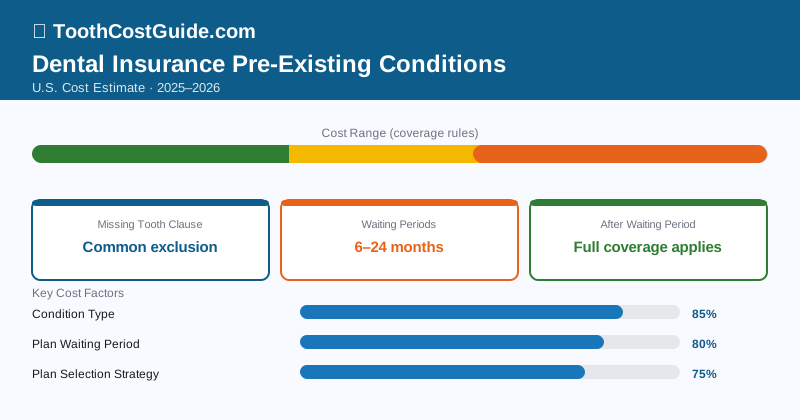
Waiting periods as a de facto pre-existing exclusion: The most common approach is the waiting period — a required period of time (usually 6–12 months for basic/major services) before the insurance pays for those services. While technically applied to all policyholders (not just those with known issues), waiting periods primarily affect people who already need dental work when they enroll. If you sign up knowing you need a crown, the waiting period means you wait 12 months before the plan contributes anything to that crown.
Missing tooth clause (MTC): This is perhaps the most significant pre-existing condition exclusion in dental insurance. A missing tooth clause states that the plan will not cover replacement of teeth that were already missing when coverage began. This means if you enroll in dental insurance and plan to get a bridge or implant for a tooth you lost years ago, many plans will not cover that replacement. Missing tooth clauses are extremely common — present in a majority of individual market dental plans.
Condition documentation: Some plans have underwriting that asks about current dental conditions. If you disclose active dental problems, the insurer may add specific exclusions to your policy.
Prior course of treatment exclusions: Some plans exclude coverage for work that is “a continuation” of treatment begun before coverage started. If your dentist started preparing a tooth for a crown before you enrolled, the completion of that crown may be excluded.
The missing tooth clause is the single most important pre-existing condition exclusion to check for before buying dental insurance. If you have missing teeth you want to replace with implants or a bridge, specifically look for plans that do NOT contain a missing tooth clause — they exist, but you have to search for them.
Costs & Coverage Details
Missing tooth clause — impact on costs: A dental implant costs $3,000–$5,000 per tooth. A bridge covering a missing tooth costs $2,500–$6,000 for the full span. If your plan has a missing tooth clause, 100% of these costs fall on you. Without the clause, a plan covering major work at 50% could save you $1,500–$2,500 per tooth.
Plans without missing tooth clauses:
- Spirit Dental: Known for policies without MTCs in most states; $33–$57/month
- Ameritas: Offers plans without MTCs on certain tiers
- Some Delta Dental preferred plans: Check plan documents — not all Delta plans have MTCs
- AARP/Delta Dental Premier: No MTC on some plans
- Group employer plans: Often have no MTC or more lenient terms than individual plans
Waiting periods and their real cost: A 12-month waiting period for a needed crown effectively costs you $500–$900 (the 50% of the crown cost the insurance would have paid) if you can’t wait and need the crown now. Alternatively, paying $10–$30/month more for a no-waiting-period plan eliminates this exposure.
Gum disease and periodontal coverage:
- Active gum disease (periodontitis) requiring deep cleaning: Most plans cover deep cleaning (scaling and root planing) as a “basic” or “major” service after the applicable waiting period
- Ongoing periodontal maintenance (3-month cleanings): Many plans cover periodontal maintenance as a preventive or basic service with minimal cost-sharing
- Plans rarely exclude gum disease treatment outright — it’s the timing (waiting periods) that creates the barrier
Existing dentures and replacement coverage:
- If you already have dentures when you enroll, replacement is typically covered only after 5 years of plan membership on most PPO plans
- Some plans have a 7-year or longer replacement window
- “Missing tooth clause” typically applies only to the replacement prosthetic, not repairs — repairs to existing dentures are often covered sooner
Pros and Cons
Standard dental plans (with waiting periods/MTC) — Pros:
- Lower premiums ($25–$50/month)
- Excellent for people in good dental health with no pre-existing needs
- Standard industry terms that are well understood
Standard plans — Cons:
- Waiting periods delay coverage for conditions you may already have
- Missing tooth clause can permanently exclude the most needed (and expensive) coverage
- Switching plans can restart waiting period clocks
No-waiting-period plans (Spirit, Ameritas no-wait, etc.) — Pros:
- Immediate coverage for all services including major work
- No exclusion for pre-existing conditions via waiting periods
- Better for people who need care soon after enrolling
No-waiting-period plans — Cons:
- Higher monthly premium ($35–$60/month)
- Annual maximums still apply — you won’t get unlimited coverage for pre-existing work immediately
- Some plans set a first-year annual cap lower than subsequent years
Who This Affects Most
People with missing teeth who plan to get implants or bridges face the biggest risk from missing tooth clauses. Always read the exclusions section of any plan before purchasing — specifically look for “missing tooth” in the exclusions list.
People newly purchasing individual dental insurance after a gap in coverage need to be aware that any dental condition that developed during the gap is effectively pre-existing. If you haven’t had dental care in 3 years, you may have cavities or gum disease that will face waiting periods when you first enroll.
People switching jobs who lose employer dental coverage need to either continue COBRA dental coverage (to maintain continuity and avoid waiting period resets) or find a plan with a prior coverage waiver to avoid re-triggering waiting periods.
People needing extensive restorative work — multiple crowns, bridge work, or implants — should model out the full cost impact of waiting periods and MTCs versus the premium savings from plans with these restrictions.
How to Save Money Despite Pre-Existing Conditions
Present proof of prior continuous coverage. Most dental insurers will waive waiting periods (but NOT the missing tooth clause) if you had continuous dental coverage with no gap greater than 30–63 days. When switching plans, request your certificate of prior coverage from your old insurer and submit it with your new application.
Look for specific plans without missing tooth clauses. Use dental insurance comparison sites (eHealth, GoHealth, NetQuote) and specifically filter or call to confirm which plans in your area don’t have missing tooth clauses. This research can save you thousands of dollars.
Use dental schools for pre-existing work during waiting periods. If you have a needed crown or extraction and face a 12-month waiting period, dental schools provide the same care at 40–70% discounts. This bridges the gap until your insurance coverage matures.
Get a pre-treatment estimate before starting work. Ask your dental office to submit a pre-treatment estimate (also called a predetermination or pre-authorization) to your insurance company before major work begins. The insurer will notify you in writing what it will and won’t cover, and whether any exclusions apply. This prevents surprises.
Ask your dentist about phasing treatment. For conditions that can wait, phasing treatment to begin after your waiting period ends maximizes insurance benefits. Your dentist can help identify which procedures are urgent versus deferrable.
The missing tooth clause doesn’t expire — it’s a permanent exclusion for teeth missing at enrollment, not just a waiting period. Even after 10 years on the same plan, a tooth that was missing when you enrolled may still be excluded from bridge or implant coverage. The only cure is to enroll in a plan without this clause from the start.
Dental insurance pre-existing condition rules — especially the missing tooth clause and waiting periods — are the most common source of coverage disappointment. Check for missing tooth clauses before buying any plan, present prior coverage proof to waive waiting periods, and choose no-waiting-period plans when you have known upcoming dental needs. Don’t assume dental insurance works like health insurance — the ACA’s pre-existing condition protections largely don’t apply.
Bottom Line
Dental insurance can limit coverage for pre-existing conditions in ways that health insurance legally cannot. Waiting periods (6–12 months for major work), missing tooth clauses (permanent exclusion of already-missing teeth), and prior treatment exclusions are the three main mechanisms. Before buying any dental plan, verify whether a missing tooth clause applies and whether your prior coverage qualifies for a waiting period waiver. No-waiting-period plans from carriers like Spirit Dental cost $10–$20/month more but eliminate the most common pre-existing condition barriers.