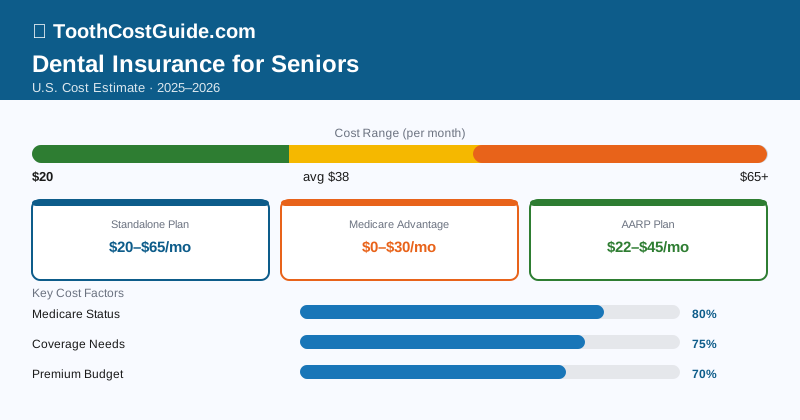
Seniors spend an average of $685 per year on dental care out of pocket — and those with major needs like dentures, crowns, or implants can face bills of $3,000–$8,000 in a single year. Since Original Medicare covers almost nothing dental, choosing the right dental insurance for your 60s and beyond is one of the most important financial health decisions you’ll make. Plans range from $20/month basic preventive coverage to $80/month comprehensive plans that include dentures and implants.
| Plan Type | Monthly Premium | Annual Max | Major Work Covered? | Best For |
|---|---|---|---|---|
| Medicare Advantage (dental included) | $0–$80 above Part B | $1,000–$3,000 | Sometimes | Seniors wanting one plan |
| AARP/Delta Dental (via UnitedHealthcare) | $26–$52 | $1,000–$2,500 | Yes (after wait) | AARP members |
| Humana Dental Premier | $30–$58 | $1,000–$2,000 | Yes | Broad network users |
| Cigna Dental 1500 | $35–$50 | $1,500 | Yes | Those needing high max |
| Spirit Dental & Vision | $33–$57 | $3,000–$5,000 | Yes, no wait | People needing immediate major care |
| Dental discount plan (Careington, etc.) | $8–$15 | N/A (discounts) | Yes (discounts only) | Budget-only option |
How Dental Insurance for Seniors Works
Dental insurance for seniors operates the same way as standard dental insurance, but with some key differences in what matters most to the 65+ demographic. Seniors tend to need more major restorative work — crowns to restore worn teeth, partial or complete dentures, periodontal treatment for gum disease, and increasingly dental implants.
Key metrics that matter more for seniors:
- Annual maximum: Seniors are more likely to hit the annual cap. A $1,000 maximum is often inadequate for someone needing multiple crowns or dentures. Look for plans with $2,000–$5,000 maximums.
- Denture coverage: Many seniors will eventually need partial or complete dentures (cost: $1,000–$3,500 per arch without insurance). Not all plans cover them; those that do often have waiting periods.
- Implant coverage: Increasingly important as implants replace dentures for many seniors. Implants cost $3,000–$5,000 per tooth; only a minority of dental plans cover them.
- No waiting period options: Seniors often can’t wait 12 months for major-work coverage when they have an active dental problem.
- Network size: Seniors who travel or winter in another state need a large national network.
Medicare Advantage vs. standalone dental: Medicare Advantage plans (Part C) with dental benefits cover both your medical and dental needs. The advantage is simplicity and often no added premium for the dental component. The disadvantage is that dental coverage can change year-to-year as the plan adjusts, and you must stay in-network for most services.
For seniors, annual maximum benefit is often more important than premium price. A plan with a $2,500 annual max and $50/month premium is usually worth far more than a plan with $1,000 max and $30/month premium when you’re likely to need crowns, dentures, or periodontal treatment.
Costs & Coverage Details
AARP Dental Insurance Plans (underwritten by Delta Dental): Available to AARP members (AARP membership ~$16/year). Two plan tiers — Value and Premier. Value plan: ~$26–$38/month, $1,000 annual max, 6-month wait for basic, 12-month wait for major. Premier plan: ~$40–$52/month, $2,500 annual max, no wait for preventive, shorter waits for other services. Strong Delta Dental network with 155,000+ dentists.
Humana Dental: Multiple plan tiers for seniors. Preventive Plus ($20–$30/month) covers cleanings and X-rays only. Complete Dental ($38–$58/month) covers preventive, basic, and major with $1,000–$2,000 annual max after 12-month waiting period for major work. Humana Loyalty Plus plans waive waiting periods in some states.
Cigna Dental 1500: ~$35–$50/month depending on location. $1,500 annual maximum. Standard waiting periods (6 months basic, 12 months major). Large network of 90,000+ dentists. Good choice for seniors with existing in-network dentists.
Spirit Dental & Vision: One of the few plans with no waiting periods on any covered service. Premiums range from $33–$57/month depending on plan tier. Annual maximums of $3,000–$5,000 — significantly higher than typical plans. Covers dentures, crowns, and often implants without waiting. Best for seniors who need immediate major work.
Medicare Advantage dental benefit value: The dental benefit on MA plans effectively adds $1,000–$3,000/year in value. In 2025, the average MA plan with dental covers about $1,500 in annual dental expenses. Some top-rated plans (certain Blue Cross Blue Shield, Humana, Aetna MA plans) cover up to $3,000 with no added premium. Compare plan dental benefits carefully on medicare.gov.
Pros and Cons
Medicare Advantage dental — Pros:
- Often included at $0 added premium
- One ID card and one plan to manage
- Preventive care covered at 100%
- Some plans cover dentures and implants
Medicare Advantage dental — Cons:
- Benefit can change or disappear at annual plan renewal
- Network restrictions (must use plan’s dental network)
- Many plans offer only preventive dental
- Medical and dental trade-offs when comparing plans
Standalone dental for seniors — Pros:
- Independent of medical insurance choices
- Can keep current dentist (PPO plans)
- More predictable year-to-year
- Plans like Spirit have no waiting periods and high maximums
Standalone dental for seniors — Cons:
- Additional monthly premium expense
- Waiting periods on many plans
- Annual maximums may not cover large expenses
- More to manage administratively
Who Dental Insurance Is Best For in Retirement
Seniors with significant upcoming dental needs — those told by their dentist they’ll need a crown, bridge, or dentures in the next few years — should prioritize high-annual-maximum plans (at least $2,000) or no-waiting-period plans like Spirit Dental.
Relatively healthy seniors who mainly need cleanings and occasional fillings can get by with lower-premium plans ($20–$30/month) since preventive care is the primary use case.
Snowbirds or frequent travelers should choose PPO-based plans with large national networks so they can access in-network dentists in multiple states.
Low-income seniors who qualify for both Medicare and Medicaid (dual eligibles) may receive dental benefits through both programs — check whether your state’s Medicaid program covers adult dental benefits in addition to your Medicare coverage.
How to Save Money on Senior Dental Costs
Compare Medicare Advantage plans each fall (Oct. 15 – Dec. 7). Use medicare.gov’s Plan Finder to filter for plans with comprehensive dental benefits. In many counties, you can find MA plans that include $1,500–$2,000 in annual dental benefits at $0 extra premium. This is often the highest-value option available to seniors.
Enroll in a standalone plan before you need it. If you’re currently in good dental health, lock in a comprehensive plan now while waiting periods won’t affect you. Buying insurance after you know you need a crown means waiting 12 months or paying the full cost.
Use dental schools for expensive procedures. For seniors facing $5,000+ in implant or denture costs, dental school clinics provide the same care at 40–60% below market prices. The trade-off is longer appointment times.
Bundle dental with vision. Many carriers offer dental + vision packages for $35–$60/month that cost less than purchasing each separately. Spirit Dental & Vision and Humana both offer bundled senior plans.
Ask about senior discounts. Some practices offer 10–20% discounts for seniors on fixed incomes. It’s worth asking, especially for major procedures not fully covered by insurance.
Watch out for “first-year maximums” on some senior dental plans. A plan might advertise a $2,000 annual maximum but only allow $500 in benefits during the first year, $1,000 in year two, and the full $2,000 from year three onward. Read the fine print before enrolling.
Seniors have more dental insurance options than many realize — from Medicare Advantage plans with embedded dental benefits to standalone plans with no waiting periods and $5,000 annual maximums. The best strategy is to compare Medicare Advantage plans every fall for embedded dental value, and supplement with a standalone plan if the MA dental benefit is insufficient for your needs.
Bottom Line
Dental insurance for seniors is essential given that Original Medicare doesn’t cover routine care. Monthly premiums range from $20 for basic preventive coverage to $80 for comprehensive plans. The best options for most seniors are: (1) Medicare Advantage plans with comprehensive dental benefits, often at $0 added premium, and (2) standalone plans like Spirit Dental for those needing immediate major work or higher annual maximums. Always compare annual maximums, waiting periods, and denture/implant coverage when shopping — these factors matter far more for seniors than for younger enrollees.