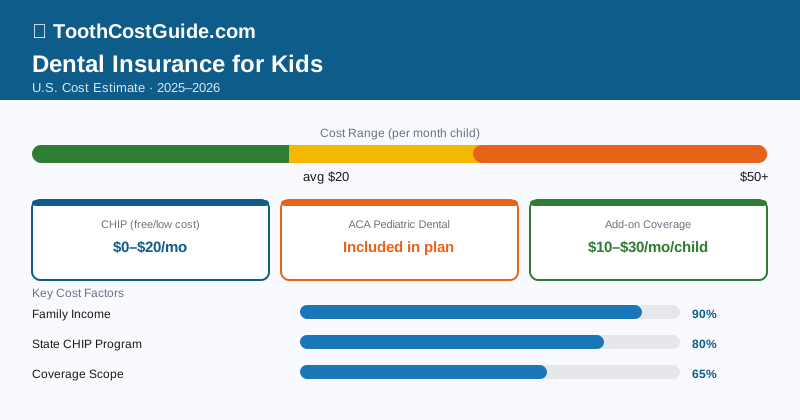
Children’s dental coverage is available through CHIP and Medicaid at $0–$10/month for most qualifying families, and the ACA requires all individual and small-group health plans to cover pediatric dental as an essential health benefit. The challenge isn’t whether coverage exists — it’s knowing which programs your children qualify for and how to access them without paying for duplicate or unnecessary coverage. Here’s a complete guide to dental insurance for kids in 2025.
| Coverage Option | Monthly Cost | What’s Covered | Age Limit |
|---|---|---|---|
| Medicaid dental | $0 | Full preventive + restorative | Under 21 (EPSDT) |
| CHIP dental | $0–$10 | Full preventive + restorative + ortho | Under 19 (varies by state) |
| ACA health plan (embedded pediatric dental) | Part of health plan premium | Varies; often preventive + basic | Under 10 (varies by plan) |
| ACA standalone pediatric dental | $20–$40/month | Preventive 100%, basic 80%, major 50% | Under 19 |
| Family PPO plan (per child share) | $15–$30/child added to family plan | Full plan benefits | Varies (26 in many plans) |
| Family HMO plan (per child share) | $8–$15/child | Copay model | Varies |
How Children’s Dental Coverage Works
Children have more avenues for dental coverage than adults — and federal law provides stronger protections. Here’s how each option works:
Medicaid and CHIP: These programs provide comprehensive dental coverage for eligible children at little to no cost. Medicaid covers children in families below approximately 138% of the federal poverty level (FPL) with no premiums. CHIP covers children in families earning 138–400% FPL (the exact threshold varies by state) with nominal premiums of $0–$50/month depending on income.
Under the federal EPSDT (Early and Periodic Screening, Diagnostic, and Treatment) requirement, Medicaid must cover any medically necessary dental service for enrolled children under 21. This is broader than adult Medicaid dental benefits and is federally mandated.
CHIP-specific benefits typically include:
- Two preventive cleanings per year ($0 copay)
- Dental X-rays ($0 copay)
- Fluoride treatments ($0 copay)
- Sealants on back teeth ($0 copay)
- Fillings, extractions, and restorative care ($0–$5 copay)
- Orthodontics when medically necessary ($0 copay, with documented malocclusion)
ACA pediatric dental — the “essential health benefit”: The Affordable Care Act requires that all non-grandfathered individual and small-group health insurance plans cover pediatric dental care as one of ten essential health benefits. This means if you buy a health plan on or off the ACA marketplace, pediatric dental should be included for children covered by the plan.
However, there’s an important catch: “pediatric dental” under ACA is a minimum standard that varies by state benchmark plan. Some states have strong pediatric dental EHB coverage; others have thin coverage that may not include major restorative work. Additionally, ACA health plans with embedded pediatric dental don’t require a separate premium for the dental component, but the coverage level may be basic.
ACA standalone pediatric dental plans: You can purchase a separate dental insurance plan for your child(ren) on the ACA marketplace. These standalone plans must be offered at all tiers (low/high) and cost $20–$40/month for one child. They typically cover preventive at 100%, basic at 70–80%, and major at 50% with a deductible of $50–$100.
Before purchasing any dental plan for your children, check CHIP eligibility first. A family of four earning up to approximately $63,500 in 2025 may qualify for free or very low-cost comprehensive CHIP dental coverage for the children, even if the parents don’t qualify for Medicaid. Use insurekidsnow.gov to check eligibility.
Costs & Coverage Details
CHIP eligibility and premiums by income tier (approximate 2025 figures for a family of 4):
- Under ~$32,150 (138% FPL): Medicaid — $0 premium, $0 copays
- $32,150–$48,000 (200% FPL): CHIP — $0 premium in most states, $0–$3 copays
- $48,000–$63,500 (300% FPL): CHIP — $0–$15/month premium, $1–$5 copays in most states
- $63,500–$80,000 (350% FPL): CHIP in some states; otherwise ACA marketplace
- Above these thresholds: ACA marketplace or private family plan
Key state variation: CHIP dental coverage and income thresholds vary significantly by state. Some states (like California, New York, Illinois) have very generous CHIP dental coverage with high income thresholds. Others have more restrictive eligibility. Always check your state’s specific CHIP program via insurekidsnow.gov.
What’s typically included in CHIP dental:
- 2 routine cleanings/year: $0
- Dental X-rays: $0
- Fluoride varnish (under 6): $0
- Sealants (molars): $0
- Fillings: $0–$5 copay
- Extractions: $0–$5 copay
- Root canal: $0–$10 copay (if medically necessary)
- Dentures/space maintainers: $0–$10 copay
- Orthodontics (medically necessary): $0 after documentation
ACA standalone pediatric dental plans (individual market):
- Low-tier plan: ~$22–$30/month per child; preventive 100%, basic limited
- High-tier plan: ~$30–$40/month per child; preventive 100%, basic 70–80%, major 50%
- Orthodontic coverage: Sometimes included with lifetime max of $1,000
Adding children to a family plan (employer or individual):
- Employer family plans: Employee typically pays $15–$40/month more in premium for each child added; comprehensive benefits match the adult coverage
- Individual market family plans: Adding a child adds $15–$30/month to the family premium; benefits identical to adult plan
The importance of preventive dental care for children: Starting preventive dental care by age 1 (as recommended by the American Academy of Pediatric Dentistry) and maintaining regular cleanings is the most effective way to avoid expensive restorative procedures later. Dental sealants reduce cavity risk on back teeth by 80% and cost $30–$60 per tooth without insurance — covered free by CHIP and most private plans.
Pros and Cons
CHIP/Medicaid dental — Pros:
- Near-zero or zero cost
- Comprehensive coverage including orthodontics when medically necessary
- No waiting periods
- Coverage from infancy through age 19 (Medicaid through 21)
CHIP/Medicaid dental — Cons:
- Limited provider networks (fewer dentists accept Medicaid/CHIP)
- May require prior authorization for some procedures
- Medicaid dental is managed at state level — coverage varies by state
- Some practices have long wait times for Medicaid/CHIP patients
Private family dental plan — Pros:
- Broader provider network
- Same dentist for whole family — convenient scheduling
- Better specialist access (orthodontist, oral surgeon)
Private family plan — Cons:
- Cost: $15–$30/child added to family premium
- Waiting periods for major work
- Annual maximum limits coverage for high-need children
Who This Affects Most
Low-to-middle-income families should strongly investigate CHIP before buying private dental for their children. The comprehensiveness of CHIP dental benefits (including free orthodontics for medically necessary cases) often exceeds what a $30/month private plan offers — at a fraction of the cost.
Families with orthodontic-age children should check whether CHIP covers orthodontics in their state. If it does for medically necessary cases, the savings can be $3,000–$5,000 per child compared to private orthodontic insurance.
Families above CHIP income limits need either ACA marketplace standalone pediatric dental or to add children to a private family plan. Compare both options — in some states, marketplace standalone pediatric dental is surprisingly affordable.
How to Save Money on Kids’ Dental
Check CHIP eligibility every year. Family income fluctuates. If your family income drops — job change, new baby, etc. — recheck CHIP eligibility. Income thresholds are higher than many people expect.
Use dental school pediatric clinics. Dental schools have pediatric residency programs that provide children’s dental care at 40–60% below market rates. Faculty supervise all treatment. Wait times can be longer, but the cost savings are significant for families without insurance.
Schedule sealants and fluoride treatments proactively. Prevention is far cheaper than treatment. Sealants on the first permanent molars (usually around age 6–7) can prevent cavities for years. Covered at 100% on virtually all children’s dental plans.
Don’t miss CHIP enrollment windows. CHIP can be enrolled year-round (no open enrollment restriction), but families sometimes forget to re-enroll when annual renewal comes up. Set a calendar reminder for your state’s renewal period.
Use FQHC (Federally Qualified Health Centers) for uninsured children. These community health centers see patients regardless of ability to pay, with fees on a sliding scale. Many have dedicated pediatric dental services.
If your child has an ACA health plan with embedded pediatric dental but you also purchase a standalone pediatric dental plan, you may be paying for duplicate coverage. Check what your health plan’s pediatric dental benefit actually covers before adding a standalone plan. Duplicate coverage rarely provides double benefits.
Children’s dental coverage is more accessible and affordable than most parents realize. CHIP and Medicaid provide near-comprehensive dental coverage for free or near-free to most American children. Check CHIP eligibility before spending money on private pediatric dental plans — in most cases, CHIP is the better deal by a wide margin.
Bottom Line
Children’s dental coverage options are excellent in the US: Medicaid and CHIP provide comprehensive dental care including orthodontics for children at $0–$10/month for most qualifying families, and the ACA mandates pediatric dental as an essential health benefit for health plans. The most important step for any family is to check CHIP eligibility at insurekidsnow.gov before paying for private dental insurance for their children. For families above CHIP thresholds, adding children to a family PPO plan or purchasing an ACA standalone pediatric dental plan both provide solid coverage at reasonable cost.