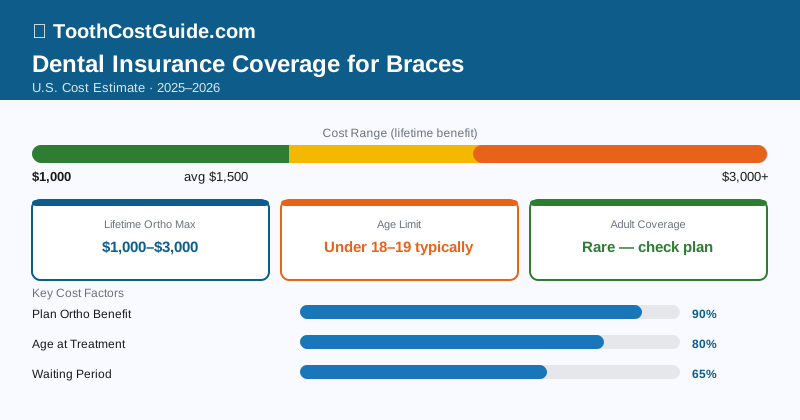
Braces and Invisalign cost $3,000–$8,000, and the dental insurance orthodontic benefit — when included — typically covers $1,000–$2,000 lifetime per person after a waiting period of 12–24 months. While this doesn’t cover the full cost of orthodontic treatment, $1,000–$2,000 in insurance reimbursement is still a meaningful reduction. Not all dental plans include ortho benefits; those that do usually restrict coverage to children under 19. Here’s how to navigate dental insurance for braces to maximize your benefit.
| Orthodontic Treatment | Average Cost | Insurance Covers (typical) | Your Out-of-Pocket |
|---|---|---|---|
| Traditional metal braces | $3,000–$5,000 | $1,000–$2,000 lifetime | $1,000–$4,000 |
| Ceramic braces | $4,000–$6,000 | $1,000–$2,000 lifetime | $2,000–$5,000 |
| Invisalign (full) | $4,000–$8,000 | $1,000–$2,000 lifetime | $2,000–$7,000 |
| Lingual braces | $8,000–$12,000 | $1,000–$2,000 lifetime | $6,000–$11,000 |
| Minor/limited orthodontics | $1,500–$3,000 | $500–$1,000 | $500–$2,000 |
| Retainers (post-treatment) | $150–$600 | Sometimes included | Varies |
How Orthodontic Coverage Works
Orthodontic dental insurance is different from regular dental coverage in almost every way. The lifetime maximum, the waiting periods, and the payment structure are all unique to ortho benefits.
Lifetime maximum (not annual): Unlike regular dental benefits that renew every year, orthodontic benefits have a lifetime maximum per covered person — typically $1,000–$2,000. Once that lifetime max is paid, no further orthodontic benefits are available regardless of future treatment needs. This means if you use your $1,500 ortho benefit for braces at age 14, there’s no benefit left if you need a touch-up treatment at age 35.
How orthodontic benefits are paid out: Most plans pay orthodontic benefits in installments over the treatment period, rather than all at once. The plan may pay an initial benefit when treatment starts, then monthly payments as treatment continues. Example: a $1,500 lifetime max paid over 24 months of treatment would be ~$62.50/month from insurance. You still pay the orthodontist monthly, but the insurance pays you (or the orthodontist directly) as treatment progresses.
Waiting periods for orthodontic benefits: Most plans with orthodontic coverage require 12–24 months of continuous plan enrollment before ortho benefits activate. This is the longest waiting period in dental insurance. For a child starting treatment at 13 with a 24-month waiting period, the family must have enrolled when the child was 11 to avoid the wait.
Age restrictions: The majority of employer and individual dental plans limit orthodontic benefits to dependent children under age 19 (some plans say under 18 or under 26). Adult orthodontic coverage exists but is far less common. If you’re an adult seeking Invisalign, carefully verify whether the plan’s ortho benefit extends to adults.
Orthodontic benefits use lifetime maximums, not annual ones. Once used, they’re gone — even if you switch plans or your employer changes carriers. Enroll in a plan with orthodontic benefits well before treatment starts (12–24 months ahead), and confirm whether the benefit covers adults or only children.
Costs & Coverage Details
Typical orthodontic benefit structures:
- Employer PPO with ortho: $1,000–$2,000 lifetime max per dependent child; 50% coverage after waiting period; 12–24 month waiting period common
- Individual market PPO with ortho: $1,000–$2,000 lifetime max; usually 12-month waiting period
- Delta Dental PPO with orthodontic rider: $1,500 lifetime max per child; 24-month waiting period on most individual plans; shorter waits on some employer plans
- Cigna Total Dental Plan: $1,000–$2,000 ortho lifetime max; 12-month wait; covers children and some adults
- Humana DentalCopay Plans: Some include orthodontic copay schedules rather than traditional percentage coverage
Plans with no waiting period for orthodontics:
- Spirit Dental: Some plans include orthodontic coverage with no waiting period
- Some employer group plans (check your Summary of Benefits)
- United Concordia: Certain group plans have no ortho wait for new employees
Invisalign and insurance coverage: Invisalign is treated identically to traditional braces by most insurance plans — the ortho benefit applies regardless of the appliance type. The fact that treatment is clear aligners versus metal brackets doesn’t change your insurance reimbursement. Where problems arise: some plans specify “fixed orthodontic appliances” in the coverage language, which may exclude Invisalign. Confirm Invisalign eligibility with your insurer before starting treatment.
Orthodontic coverage for adults: Only a minority of dental plans cover adult orthodontics. Plans that do include it often have the same $1,000–$2,000 lifetime cap. Given that Invisalign for adults costs $4,000–$8,000, even $1,500 in insurance benefit significantly reduces the financial barrier.
Orthodontic insurance vs. payment plans: Major orthodontic practices typically offer in-house payment plans that spread costs over the treatment period with 0% interest. These payment plans are independent of insurance. You can use both: insurance pays its $1,500 lifetime benefit while you pay the remaining balance in monthly installments to the orthodontist.
Pros and Cons
Dental plans with orthodontic coverage — Pros:
- $1,000–$2,000 lifetime savings per child — meaningful reduction on a $5,000 treatment
- Covers both braces and Invisalign on most plans
- Monthly benefit disbursement aligns with orthodontist payment schedule
- Peace of mind knowing insurance contributes to a major expense
Dental plans with ortho coverage — Cons:
- Higher premiums than plans without ortho benefits
- Waiting periods of 12–24 months require advance planning
- Lifetime maximums don’t renew — once used, the benefit is gone
- Age restrictions leave adult orthodontic patients without benefits on most plans
- Lifetime maximum often covers only 25–50% of total orthodontic cost
Plans without orthodontic coverage — Pros:
- Lower premiums ($10–$20/month less)
- Simpler structure
- Makes sense for adults past prime orthodontic age with no children needing braces
Plans without ortho — Cons:
- Full orthodontic cost falls on you ($3,000–$8,000)
- Missing the opportunity to offset a predictable major expense
Who Orthodontic Coverage Is Best For
Parents with children ages 8–14 should strongly consider plans with orthodontic benefits. This age range is when orthodontic evaluations typically begin and treatment decisions are made. Enrolling in an ortho-covering plan when children are 8–9 ensures the waiting period is well passed by age 10–11 when treatment might start.
Adults considering Invisalign should seek out dental plans that explicitly cover adult orthodontics. Costs $1,000–$2,000 in insurance benefit versus plans that exclude adults. Check Cigna, Aetna, and some Delta Dental plans for adult ortho coverage.
Families with multiple children needing braces at different times can maximize cumulative lifetime benefits if each child has their own per-person lifetime maximum. A family of four each with $1,500 max means up to $6,000 in total lifetime orthodontic benefits available.
How to Save Money on Braces with Insurance
Start the waiting period clock immediately. If you have children and haven’t enrolled in a dental plan with orthodontic benefits, do it today. Even if braces are three years away, the 24-month waiting period needs to start now. Every month you delay adds to your out-of-pocket cost.
Negotiate the treatment start date strategically. Orthodontists typically date the treatment start to when the first appliance is placed or the first aligner is delivered. If your waiting period ends in February but treatment could start in December, delay the formal start to February so insurance benefits apply from day one.
Use an FSA or HSA for remaining costs. After insurance pays its lifetime maximum, pay the remaining orthodontic costs with a Flexible Spending Account or Health Savings Account. Pre-tax dollars reduce your effective cost by 20–37% depending on your tax bracket.
Orthodontic discount programs: Many orthodontists offer sibling discounts (10–15% off for second and subsequent children), in-house payment plans, and occasional promotional pricing for Invisalign. Always negotiate — orthodontic pricing is more flexible than general dentistry.
Compare orthodontists by price. Orthodontic fees vary significantly even within the same city. Call three or four practices in your area for new patient Invisalign or braces consultations (usually free). A $1,000 difference in treatment fee changes your net cost by more than the difference between most insurance plans.
Choose Invisalign over lingual braces. Lingual braces (placed on the tongue side of teeth) cost $8,000–$12,000 — 50–100% more than Invisalign or traditional braces — while providing the same insurance benefit. The extra cost comes entirely out of your pocket.
Using your lifetime orthodontic benefit means it’s gone forever. If your child wears retainers and later needs a touch-up treatment as an adult, there will be no insurance benefit left. Consider this when deciding whether to use the full benefit or preserve some for future adult treatment — though most plans pay the full lifetime max during the treatment period automatically.
Dental insurance orthodontic benefits provide $1,000–$2,000 in lifetime coverage per person — a meaningful but partial offset to the $3,000–$8,000 cost of braces or Invisalign. The most important action is to start the waiting period clock well before treatment begins. Combine insurance benefits with FSA/HSA payments and orthodontist payment plans to minimize out-of-pocket costs.
Bottom Line
Orthodontic benefits in dental insurance offer a lifetime maximum of $1,000–$2,000 per covered person after waiting periods of 12–24 months. This doesn’t cover the full cost of braces or Invisalign ($3,000–$8,000) but meaningfully reduces it. The most critical steps: enroll in a plan with orthodontic benefits well before treatment starts, confirm the plan covers both Invisalign and adult orthodontics if applicable, and use FSA/HSA funds for remaining out-of-pocket costs. For children whose orthodontic treatment is in the foreseeable future, the ortho benefit more than justifies the premium for a plan that includes it.