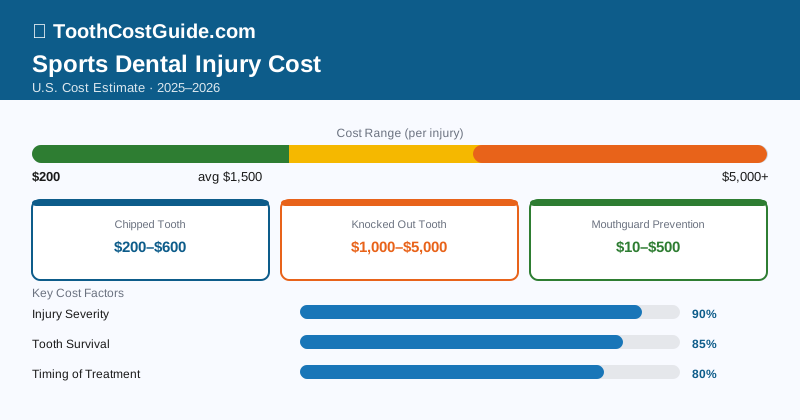
Sports dental injuries cost $200–$600 for a minor chip treated with bonding, and $1,500–$5,000+ for severe injuries like knocked-out teeth requiring implants or extensive fractures requiring surgery. An estimated 5 million teeth are knocked out each year in sports activities in the U.S. — and most of these injuries are preventable with a mouthguard that costs $300–$500. Understanding costs and coverage options helps athletes and parents make informed decisions after an injury.
| Injury Type | Treatment | Cost (No Insurance) |
|---|---|---|
| Chipped tooth (enamel) | Bonding or smoothing | $100–$600 |
| Broken tooth (into dentin) | Crown | $1,000–$1,800 |
| Broken tooth (into pulp) | Root canal + crown | $1,700–$3,300 |
| Knocked-out tooth (1–2 hrs from injury) | Re-implantation | $800–$2,500 |
| Knocked-out tooth (implant replacement) | Implant + crown | $3,500–$6,000 |
| Displaced/luxated tooth | Splinting ± root canal | $500–$1,800 |
| Multiple tooth trauma | Complex treatment | $5,000–$20,000+ |
| Custom mouthguard (prevention) | Fabrication | $300–$500 |
What Affects the Cost
Type and severity of injury. The same continuum as all dental trauma: enamel chips are cheap to fix; full avulsion (tooth completely knocked out) is expensive to address. The severity of force involved in a sports injury often correlates with injury severity — an elbow to the mouth at soccer practice likely causes less damage than a full-speed collision in hockey.
Contact vs. non-contact sport. High-contact sports (football, hockey, basketball, lacrosse, martial arts) produce the most dental injuries. Baseball/softball (batted ball or pitch impacts), cycling (falls), and gymnastics also generate significant dental trauma. Interestingly, basketball causes more dental injuries in the U.S. than any other sport due to its high participation rate.
Age of the athlete. Children and teens have active tooth development that changes treatment decisions. Baby tooth trauma may affect permanent teeth underneath. Young adult permanent teeth are generally stronger candidates for re-implantation. Older adults may have pre-existing conditions affecting healing.
Mouthguard use. Athletes wearing properly fitted mouthguards have 60× lower rates of dental injury than those without. A $300–$500 custom mouthguard preventing a $5,000 dental injury is one of the best investments in sports.
Insurance coverage. Multiple policies may apply: dental insurance, medical insurance (for hospital/ER care), and potentially sports accident insurance through the school, league, or athletic association.
Treatment Options & Costs
Bonding ($200–$600): For minor enamel chips common in contact sports — an elbow contact that chips a front tooth. Composite resin restores shape and appearance in one appointment without anesthesia. Most durable for smaller chips. Re-injury can chip bonded restorations again.
Crown ($1,000–$1,800): For larger fractures compromising tooth structure. Provides full protection for athletes who continue to participate in contact sports. All-ceramic zirconia crowns are extremely strong and appropriate for restored teeth in high-impact sport contexts.
Root canal + crown ($1,700–$3,300): When fracture reaches the pulp (nerve). Required before placing a crown when the pulp is exposed. Endodontist performs root canal; dentist places crown.
Tooth re-implantation ($800–$2,500 initial + follow-up): For knocked-out teeth brought to treatment within 30–60 minutes, stored in milk. The team trainer or sideline staff should know to immediately put a knocked-out tooth in milk. Re-implantation success requires fast action — see the knocked-out tooth article for full protocol.
Dental implant ($3,500–$6,000): If re-implantation fails or isn’t possible, an implant is the gold standard for permanent tooth replacement. Can be planned 3–6 months post-injury once the socket heals.
Splinting for luxated teeth ($500–$1,500): Teeth displaced from their sockets but still attached are repositioned and splinted to neighboring teeth for 2–6 weeks. Follow-up monitoring for up to 1 year is standard — nerve damage may develop weeks or months after injury.
With vs. Without Insurance
Dental insurance covers sports injuries the same way as any dental trauma:
- Bonding: 40–80%
- Root canal: 40–60%
- Crown: 40–60%
- Re-implantation: 50–75% under oral surgery
Medical insurance applies if ER or hospital treatment is needed:
- ER visit for assessment: Subject to copay and deductible
- Imaging (X-ray, CT): Covered under major medical
Sports accident insurance:
- Many school athletic programs provide supplemental accident insurance for $10–$30/year per athlete
- Coverage typically pays $1,000–$25,000 per injury, often acting as secondary coverage after primary medical and dental insurance
- Ask your school’s athletic department or league coordinator about available coverage
- Private athletic accident policies are available through companies like K&K Insurance or Bollinger Sports & Leisure
Auto insurance: If injury occurred during travel to/from a sports event in a vehicle, auto insurance PIP/med pay may apply.
What To Do After a Sports Dental Injury
- Stop play immediately. Any tooth injury during sports warrants immediate sideline assessment.
- Locate any knocked-out tooth or fragment within 30 seconds if possible. Handle by the crown, not the root.
- Store properly: place in milk immediately (not water, not dry). If no milk is available, the athlete can hold the tooth inside the cheek.
- Call a dentist immediately or go to the nearest ER/dental office. For knocked-out teeth, every minute counts.
- Control bleeding with direct gauze pressure for 15–20 minutes.
- Apply ice pack to the outside of the face to reduce swelling.
- Document thoroughly for insurance purposes — photos of injuries, incident report from coach, witness information.
How to Save Money
Invest in a custom mouthguard. At $300–$500 from your dentist versus $15–$25 for a boil-and-bite store model, the custom guard provides far better protection and fits more comfortably (athletes are more likely to actually wear it). The cost of one prevented dental injury repays dozens of mouthguards.
Enroll in supplemental sports accident insurance. School-provided policies cost $10–$30/year per athlete with significant benefits. Private policies are available for club sports. This is the most affordable risk management tool for sports families.
Re-implantation training for coaches and trainers. Many dental injury costs could be reduced if more coaches knew the proper protocol: tooth in milk, get to a dentist within 30 minutes. Consider requesting a brief training from a local dentist for your athletic staff.
Dental schools for non-emergency follow-up. After emergency stabilization, follow-up crowns, implants, and root canals at dental schools cost 40–60% less than private practice.
A custom-fitted mouthguard ($300–$500) prevents dental injuries that cost $1,500–$5,000+ to treat. For any athlete in a contact sport, a custom mouthguard is among the best investments available. Ask your dentist about sport-specific guards.
Head and facial injuries from sports should be evaluated for concussion before focusing on dental injuries. If there is any loss of consciousness, confusion, headache, neck pain, or neurological symptoms, prioritize medical evaluation at an emergency room. Concussion protocols must be followed before dental treatment is initiated.
Bottom Line
Sports dental injuries cost $200–$600 for minor chips to $5,000+ for severe avulsions or multiple-tooth trauma. Multiple insurance sources — dental, medical, and sports accident — may contribute to costs. The most cost-effective intervention is prevention: a custom mouthguard at $300–$500 prevents injuries that average thousands of dollars to treat. Act fast after any knocked-out tooth — time is the most important factor in re-implantation success.