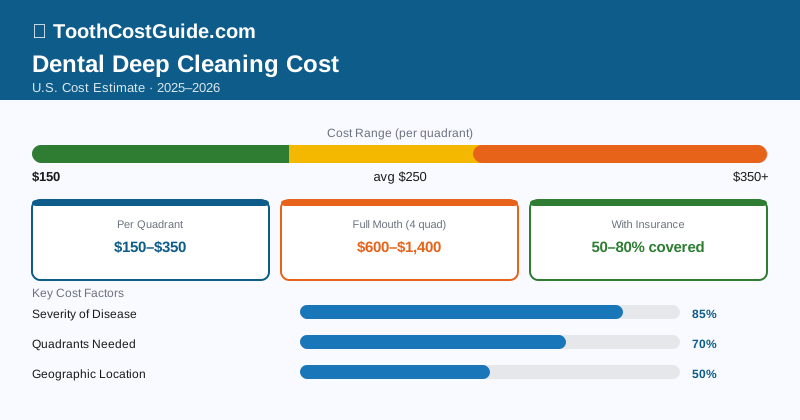
A dental deep cleaning (scaling and root planing, or SRP) costs $150–$350 per quadrant without insurance. For all four quadrants — a full-mouth deep clean — expect to pay $600–$1,400 out of pocket. With dental insurance that covers periodontal treatment, the patient share typically drops to $150–$600 total after the plan pays 50–80%.
A deep cleaning is not an upgrade or upsell on a regular cleaning. It is a specific medical treatment for gum disease (periodontitis) and is distinct from a routine prophylaxis in every meaningful way.
| Procedure | Cost Without Insurance |
|---|---|
| Scaling & root planing – 1 quadrant | $150–$350 |
| Scaling & root planing – 2 quadrants | $300–$700 |
| Scaling & root planing – full mouth (4 quadrants) | $600–$1,400 |
| Periodontal maintenance visit (after SRP) | $115–$250 |
| Localized antibiotic therapy (Arestin, add-on) | $75–$150 per site |
| Gross debridement (before diagnosis) | $75–$150 |
What Affects the Cost of a Deep Cleaning
Number of quadrants treated. The mouth is divided into four quadrants: upper left, upper right, lower left, lower right. Dentists bill SRP per quadrant. If only one or two quadrants show disease, you’ll pay for only those. However, periodontitis frequently affects the full mouth, making 4-quadrant treatment common.
Severity of gum disease. Patients with deep pockets (6mm+), heavy calculus buildup below the gumline, and bone loss require more clinical time per quadrant — translating to higher fees. Mild periodontal disease with 4–5mm pockets may take 30 minutes per quadrant; severe disease with 7mm+ pockets may take 60–90 minutes.
Whether a periodontist is involved. General dentists perform SRP routinely. Periodontists — specialists in gum disease — see the most severe cases and typically charge 20–35% more per quadrant. For advanced disease, complex anatomy, or when surgical treatment may follow, the periodontist’s expertise is appropriate and worthwhile.
Adjunctive treatments. Local antibiotic therapy (brand name Arestin, or generic minocycline) is sometimes placed in deep pockets after SRP to kill remaining bacteria. Cost: $75–$150 per site. Dentists may recommend multiple sites. This can add $300–$600 to the total SRP bill. Ask about the clinical evidence for its use in your specific situation.
If your dentist recommends a deep cleaning, ask to see your periodontal chart — the written record of pocket depth measurements at 6 points around each tooth. Pockets of 4mm or deeper with bleeding or bone loss on X-rays justify the diagnosis. You have a right to review this data.
What to Expect During a Deep Cleaning
A deep cleaning appointment is very different from a routine cleaning. Here’s what typically happens:
Appointment structure: Most dentists split SRP into two appointments — two quadrants per visit — to limit the amount of your mouth that’s numb at once. Some periodontists will do full-mouth SRP in one day under heavy anesthesia. Each 2-quadrant session takes 60–90 minutes.
Anesthesia: Local anesthetic (numbing injections) is standard. Your gums and the affected teeth will be thoroughly numb before the hygienist or dentist begins. The procedure involves ultrasonic instruments and hand scalers being used below the gumline — uncomfortable without anesthesia, painless with it.
After the procedure: Expect soreness for 2–5 days, some bleeding when brushing, and sensitivity to cold temperatures. Over-the-counter NSAIDs (ibuprofen) manage post-procedure discomfort well. Gum tissue will contract and tighten as it heals — teeth may look longer and spaces between teeth may become more visible.
Re-evaluation: 4–8 weeks after completing SRP, your dentist or periodontist will re-examine and re-probe your pockets. The goal is resolution — pockets shrinking to 3mm or less with no bleeding. Pockets that remain deep after SRP may require periodontal surgery.
With vs. Without Dental Insurance
Dental insurance classifies scaling and root planing as either “basic” or “major” periodontal treatment, typically covered at 50–80% after deductible.
Typical coverage:
- SRP per quadrant: 50–80% of the dentist’s fee (after deductible)
- Periodontal maintenance visits: 80% in many plans, 2–4 visits/year
- Annual maximum: $1,000–$2,000, which can constrain coverage for full-mouth SRP
Out-of-pocket example (4-quadrant SRP):
- Total fee: $1,000 (4 × $250/quadrant)
- Annual deductible: $100 (not yet met)
- Insurance pays 80% of remaining $900 = $720
- Patient pays: $380
With a $1,000 annual maximum:
- Same scenario: Insurance pays $720, but if annual max is $1,000, you’re close to exhausting it. If you need follow-up periodontal maintenance, those visits may come out of pocket.
Periodontal maintenance vs. prophylaxis coverage: After SRP, you transition from twice-yearly prophylaxis cleanings (100% covered) to periodontal maintenance cleanings every 3–4 months (typically covered at 80%). Some patients are surprised their cleaning copay increases.
How to Save Money on a Deep Cleaning
Get the periodontal chart. If your hygienist recommends a deep cleaning, request your charting numbers. Confirm that you have pockets of 4mm or deeper with clinical signs of disease. A second opinion from a periodontist for borderline cases (4mm pocket readings without other signs) can confirm whether SRP is truly indicated or whether improved home care and a focused prophylaxis is the right first step.
Dental school periodontics clinics. Dental schools with periodontics programs offer SRP at 50–65% off private practice fees. A full-mouth deep cleaning that runs $900 privately might cost $350–$500 at a dental school periodontics clinic.
Skip adjunctive antibiotics unless clearly indicated. Arestin and similar local antibiotic therapies add $75–$150 per site and are recommended for specific deep, stubborn pockets. Ask your provider to justify each site where they propose placing it. Clinical evidence supports their use in moderate-to-severe cases, but placing antibiotics in every quadrant as a default adds significant cost without clear universal benefit.
Use FSA/HSA funds. SRP is 100% FSA/HSA eligible. A $1,000 deep cleaning paid from a pre-tax account effectively costs $700–$780 depending on your tax bracket.
Once you’ve had a deep cleaning, commit to your periodontal maintenance schedule — typically every 3–4 months. Patients who follow through reliably maintain their gum health. Those who skip maintenance appointments allow disease to redevelop, often requiring another round of SRP within 1–2 years.
Financing Options
Full-mouth SRP at $600–$1,400 is a meaningful expense. Options for managing the cost:
CareCredit: Available at most dental and periodontics offices. Offers 0% promotional periods for 6–18 months on qualifying amounts. Pay the balance in full before the promotional period ends or retroactive interest applies.
In-office payment plans: Many practices split the cost of full-mouth SRP across 2–3 installments, especially for established patients. Ask the treatment coordinator about this option.
Staged treatment with insurance: If your insurance annual maximum is $1,000 and your full-mouth SRP will cost $800–$1,400, ask whether it makes clinical sense to treat two quadrants this year and two quadrants in January of the following year. For stable (non-progressive) periodontal disease, this timing strategy can double the insurance coverage available.
Bottom Line
A dental deep cleaning (SRP) costs $150–$350 per quadrant and $600–$1,400 for a full-mouth treatment without insurance. With insurance covering 50–80%, most patients pay $150–$600. The procedure treats active gum disease — it’s not elective. Untreated periodontitis leads to progressive bone loss, eventual tooth loss, and links to systemic health issues including cardiovascular disease and diabetes complications.
If cost is a concern, dental school periodontics clinics offer the same evidence-based treatment at dramatically lower prices.
Always get a written treatment plan before agreeing to any dental work. Before a deep cleaning, ask to see your periodontal chart with pocket depth measurements and ask your dentist to explain which readings and clinical signs indicate that SRP — rather than an improved prophylaxis — is the appropriate treatment.