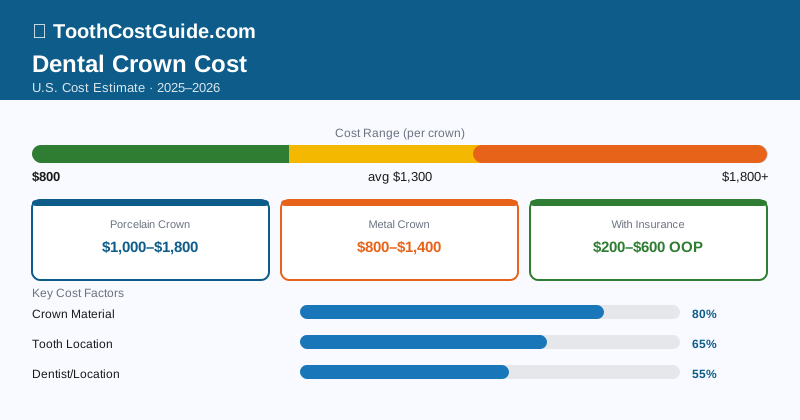
A dental crown costs $800–$1,800 per tooth without dental insurance in the United States. The material you choose — porcelain-fused-to-metal, all-ceramic, zirconia, or gold — is the single biggest cost variable. With dental insurance that covers major restorative work, your out-of-pocket cost typically drops to $400–$900 after the plan pays its 50% share.
Crown Types and Their Costs
| Crown Type | Cost Per Tooth (No Insurance) |
|---|---|
| Porcelain-fused-to-metal (PFM) | $800–$1,400 |
| All-ceramic / all-porcelain | $900–$1,600 |
| Zirconia (most durable) | $1,000–$1,800 |
| Gold / metal alloy | $800–$1,600 |
| Stainless steel (temporary or pediatric) | $300–$500 |
| Same-day CEREC crown | $1,000–$1,800 |
What Affects the Cost of a Dental Crown
Crown material. Zirconia and all-ceramic crowns require more sophisticated lab fabrication and typically cost $200–$400 more than PFM crowns. Gold crowns involve precious metal and fluctuate with commodity prices. Stainless steel is used for temporary placement or pediatric teeth.
Which tooth is being crowned. Back molars endure heavier chewing forces and may require more durable (and pricier) materials like zirconia. Dentists also charge slightly more for molars because they’re harder to access. A front tooth crown is often priced $100–$200 less than a molar crown.
Additional procedures needed. A crown by itself is rarely the only expense. If there’s decay, a buildup (core buildup) may be needed first ($150–$300). If the tooth pulp is infected, a root canal is required before crowning ($700–$1,800). These add-ons can double the total cost.
Lab fees vs. same-day crowns. Traditional crowns are fabricated by an off-site dental lab, which adds 2 weeks and a temporary crown appointment. Same-day CEREC crowns are milled in-office in about 2 hours — often priced similarly or slightly higher, but you save time and skip the temporary.
The crown fee listed by your dentist is often just the start. Ask explicitly whether the quoted price includes the crown preparation, any buildup needed, and the final cementation appointment — or whether those are billed separately.
Cost by Crown Type
Porcelain-fused-to-metal (PFM): The most common crown type for decades. A metal substructure is covered by porcelain for aesthetics. Durable, affordable, but the metal margin can show as a dark line at the gumline over time. Cost: $800–$1,400.
All-ceramic / lithium disilicate (e.max): No metal, excellent aesthetics, good for front teeth. More technique-sensitive. Cost: $900–$1,600. Often the preferred choice for visible front teeth.
Zirconia: Extremely strong, biocompatible, and increasingly aesthetic with newer monolithic zirconia. Best for back teeth needing maximum durability. Cost: $1,000–$1,800. Gaining popularity as the premium standard.
Gold/metal: The gold standard for longevity — gold crowns routinely last 20–30 years. Not cosmetically preferred but technically superior. Cost: $800–$1,600 depending on gold content and current metal prices.
Same-day CEREC or in-office milled: Convenient single-appointment crowns. Quality has improved significantly. Cost: $1,000–$1,800. Check that your dentist’s milling machine is well-maintained — older machines produce less precise crowns.
With vs. Without Dental Insurance
Dental insurance typically categorizes crowns as “major restorative” — covered at 50% after you meet your deductible, which is usually $50–$100.
Example with a $1,200 zirconia crown:
- Annual deductible: $50 (if not yet met)
- Insurance pays 50% of $1,200 = $600
- Your out-of-pocket: $650 ($50 deductible + $550 patient share)
- Annual maximum concern: If your plan has a $1,000/year cap and you’ve used $400 already, insurance may only cover $600 total — meaning you pay more
Annual maximum problem: Most dental insurance plans cap coverage at $1,000–$2,000 per year. A single crown can consume your entire annual benefit. If you need multiple crowns, consider spacing them across calendar years when possible.
Waiting periods: Many dental insurance plans have a 6–12 month waiting period before major services like crowns are covered. If you sign up for insurance specifically because you need a crown, check the waiting period first.
How to Save Money on a Dental Crown
Get a second opinion. Dentists sometimes recommend crowns when a large filling would suffice, or vice versa. A second opinion from another dentist costs $50–$100 (often free) and can save you $800+ if the crown recommendation was premature.
Ask about materials. If a crown is on a back molar that won’t show, a PFM or zirconia crown works well without paying a premium for all-ceramic aesthetics. Let your dentist know cost is a factor.
Use a dental school. Dental school clinics perform crown procedures under faculty supervision at 40–70% off. A crown that costs $1,200 at a private office may run $400–$700 at a dental school clinic. The process takes longer but the work is supervised.
Time your treatment with your insurance year. If you need two crowns and your annual maximum is $1,500, getting one crown in December and one in January of the following year effectively doubles your annual coverage.
Before your crown appointment, ask your dentist to submit a pre-authorization (also called a predetermination) to your insurance company. This gives you a written estimate of exactly what the insurer will cover before any work is done — no billing surprises.
Financing Options
At $800–$1,800 per crown, financing is often worthwhile, especially for patients without insurance or those hitting their annual maximum.
CareCredit: Widely accepted at dental offices. Offers 0% promotional financing for 6–24 months depending on amount charged. Balances paid in full before the promotional period end = no interest. The risk: if you carry a balance past the promo period, you’re charged retroactive interest from day one at ~26–29% APR.
Dental office payment plans: Many practices offer in-house financing, often 0% interest for 3–6 months. Always ask — it’s not always advertised. Some offices work with Lending Club Patient Solutions or Sunbit as alternatives to CareCredit.
HSA/FSA: Dental crowns are fully eligible for Health Savings Account and Flexible Spending Account funds. These are pre-tax dollars, giving you an effective 22–37% discount depending on your tax bracket.
Dental schools: As mentioned above, dental schools are the most significant cost-reduction option — not technically financing, but reducing the bill by $400–$900 is better than borrowing.
Bottom Line
A dental crown is a significant dental expense at $800–$1,800 without insurance, but it’s often necessary to save a tooth from extraction. With insurance, your share typically falls to $400–$900. Material choice, tooth location, and whether additional work like a core buildup or root canal is needed all affect the final number.
Always get a written treatment plan itemizing every code and cost before you begin. Ask about the material being used, confirm whether same-day or lab-fabricated, and check your insurance predetermination before committing.
Always get a written treatment plan before agreeing to any dental work. Ask your dentist to specify the crown material, whether a core buildup is included, and to submit a pre-authorization to your insurance so you know your exact out-of-pocket cost before treatment begins.