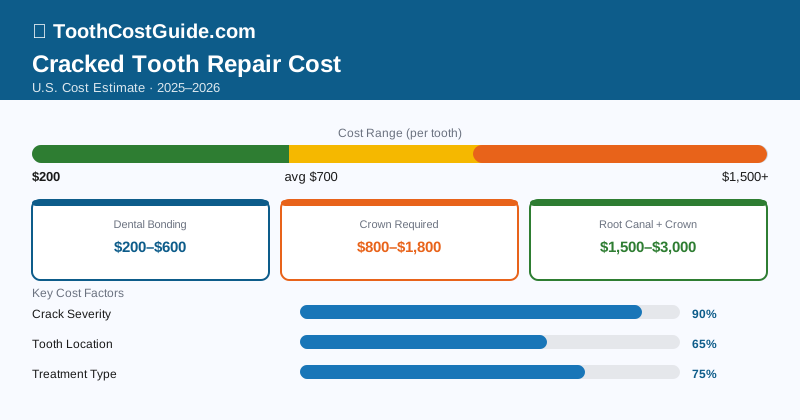
Cracked tooth repair costs $200–$1,500 depending on the depth and location of the crack. A minor chip on a front tooth might need only $200–$400 in bonding. A crack that extends to the pulp requires a root canal and crown at $1,700–$3,600 total. A crack below the gumline may mean extraction ($75–$550) — the least expensive option but the worst outcome.
| Crack Type / Treatment | Cost Without Insurance |
|---|---|
| Minor chip – dental bonding | $200–$600 |
| Craze lines (surface only) – no treatment needed | $0 |
| Crown fracture – dental crown | $800–$1,800 |
| Cusp fracture – onlay or crown | $800–$1,800 |
| Cracked tooth with pulp involvement – root canal + crown | $1,700–$3,600 |
| Vertical root fracture – extraction | $75–$550 |
| Extraction + implant (replacement) | $3,500–$6,000 |
What Affects the Cost of Cracked Tooth Repair
Crack depth and location. This is everything. Cracks are classified by how far they extend: craze lines (surface enamel only), fractured cusp (piece breaks off), cracked tooth (extends toward root but not yet through), split tooth (all the way through), and vertical root fracture (below gumline). Each type has a different treatment — and very different cost. A dentist cannot always determine crack depth from initial examination alone; sometimes diagnosis requires probing under a microscope or temporary treatment to monitor symptoms.
Whether the pulp (nerve) is involved. A crack that has reached the dental pulp causes severe pain and infection, requiring root canal treatment before the tooth can be restored with a crown. This adds $700–$1,800 to the crown cost. A crack that hasn’t reached the pulp may be treated with a crown alone.
Tooth location. Back molars under heavy chewing forces are the most common site for serious cracks. A cracked molar requires the most durable restoration materials. Front tooth cracks are often visible cosmetically and treated with bonding or porcelain-matched crowns.
Timing of treatment. A small crack caught early can be treated with a crown to prevent it from worsening. Waiting allows the crack to deepen — potentially reaching the pulp or extending below the gumline — converting a $1,200 crown case into a $3,000+ root canal + crown case, or an extraction.
Cracked tooth syndrome is notorious for intermittent symptoms — pain when biting on certain foods, sharp pain that releases quickly, or sensitivity to cold. If you experience these symptoms on a specific tooth, see a dentist promptly. Early treatment of a crack is always cheaper than treating a crack that has propagated to the pulp.
Treatment by Crack Type
Craze lines: Superficial cracks in outer enamel visible as fine lines. Extremely common; nearly every adult has them. Cause no pain, require no treatment, and have no cost. Mention them to your dentist but don’t agree to treatment for craze lines unless there’s clinical evidence of active problems.
Chipped or fractured cusp: A piece of the outer tooth breaks off. If it’s small and on a front tooth, bonding ($200–$600) repairs the appearance and function. If the chip is large or on a back tooth, a dental crown ($800–$1,800) may be needed to restore proper shape and prevent further fracture.
Cracked tooth (crack extends toward root): The defining feature is pain when biting — the crack flexes and causes sharp pain that quickly subsides. Treatment is a crown to hold the crack together and prevent it from worsening. Cost: $800–$1,800. If the crack has already reached the pulp at time of treatment, root canal is added: total $1,700–$3,600.
Split tooth: The crack has divided the tooth into two segments. The tooth usually cannot be saved in its entirety. Sometimes one segment can be saved and built up; often extraction is required. If extraction: $75–$550. If replacement implant: $3,000–$6,000 additional.
Vertical root fracture: A crack that begins in the root and extends up. Almost always requires extraction. These fractures are difficult to diagnose and are often discovered only when a previously root-canal-treated tooth develops an abscess. Extraction: $75–$550. Replacement with implant: $3,000–$6,000.
With vs. Without Dental Insurance
Coverage for cracked tooth treatment follows the same pattern as other restorative procedures.
Bonding (if classified as restorative): Covered at 70–80% under basic restorative benefits. If classified as cosmetic (purely elective shape change), not covered.
Dental crown: Covered at 50% under major restorative benefits after deductible.
Root canal: Covered at 50–80% under basic or major benefits depending on the plan.
Combined out-of-pocket example (root canal + crown, total $3,000):
- Insurance pays 50%: $1,500
- Annual deductible: $100
- Patient out-of-pocket: approximately $1,600
- Note: Annual maximum of $1,000–$2,000 may limit total insurance contribution
Trauma-specific benefits: Some plans have separate benefits for accidental dental injuries. If your tooth cracked due to an accident (biting a hard object, sports injury, etc.), check whether your plan has accident coverage that may apply.
How to Save Money on Cracked Tooth Repair
Act quickly. The most reliable way to keep cracked tooth repair costs down is treating the crack before it deepens. A crack visible on a routine checkup treated with a crown costs $800–$1,800. The same crack ignored for 12 months until pain begins may now involve the pulp — adding $700–$1,800 for a root canal.
Get an accurate diagnosis. Some cracked teeth are difficult to diagnose definitively. A bite test with a Tooth Sleuth (a plastic instrument the patient bites on) or transillumination can localize a crack before committing to treatment. Don’t agree to a root canal on a cracked tooth without clear evidence of pulpal involvement (irreversible pulpitis or necrosis).
Dental school clinics. Crown treatment for cracked teeth at dental school clinics costs 40–65% less than private offices. For a $1,500 crown case, dental school may mean $500–$800.
Insurance predetermination. Before treating a cracked tooth with a crown and possible root canal, ask your dentist to submit a predetermination to your insurance. Get the written estimate of what they’ll cover before treatment begins.
If your dentist diagnoses a cracked tooth but says it’s unclear whether the pulp is involved, ask about a diagnostic crown buildup — a crown placed to relieve symptoms and monitor whether the pulp recovers or continues to deteriorate. This approach can sometimes avoid a root canal if the pulp heals once pressure is removed from the crack.
Financing Options
Cracked tooth repair can be unexpected and range from affordable ($300 bonding) to substantial ($3,600 for root canal, buildup, and crown).
CareCredit: Ideal for unplanned cracked tooth emergencies. Apply at the dental office and receive a credit decision in minutes. Manage the $1,500–$3,000 cost over 12–18 months at 0% with a promotional period.
FSA/HSA: All dental restorations — bonding, crowns, root canals — are FSA and HSA eligible. If you have remaining FSA funds before year-end, this is the right time to address a cracked tooth.
In-house payment plans: For established patients, most dental offices will arrange installment payment for a multi-thousand dollar crown and root canal case. Ask before assuming financing isn’t available.
Bottom Line
Cracked tooth repair costs $200–$600 for minor chips requiring bonding, $800–$1,800 for a crown to stabilize a crack, and $1,700–$3,600 for root canal plus crown when the crack has reached the pulp. With insurance at 50% coverage, patients typically pay $500–$2,000 out of pocket depending on the treatment required.
The financial lesson is consistent: a small crack treated promptly with a crown costs $800–$1,800. The same crack treated after it becomes symptomatic often requires root canal treatment, doubling the cost. Regular dental checkups that catch cracks early are genuinely cost-saving.
Always get a written treatment plan before agreeing to any dental work. For a cracked tooth, ask your dentist to specify the type of crack, whether the pulp is definitely involved or potentially involved, and what the treatment plan looks like at each possible diagnosis — so you understand both the minimum and maximum potential cost before any work begins.