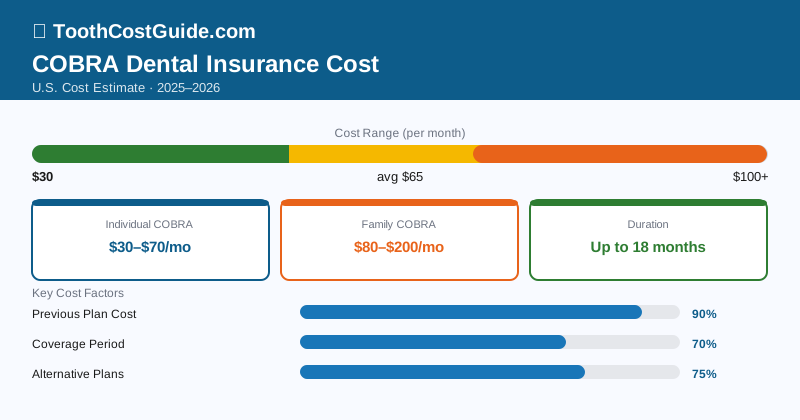
COBRA dental insurance typically costs $50–$150 per month for individuals — 2–5 times more than comparable individual market dental plans — because you pay both the employee and employer premium shares plus a 2% administrative fee. COBRA dental makes sense in a narrow set of situations (active treatment, waiting periods almost over), but for most people who’ve recently left a job, a standalone individual dental plan is far more cost-effective. Here’s how to decide.
| Coverage Option | Monthly Cost | Annual Max | Waiting Periods | Best For |
|---|---|---|---|---|
| COBRA dental (individual) | $50–$150 | Same as employer plan | None (waived) | Active treatment, near end of employer wait period |
| COBRA dental (family) | $150–$400 | Same as employer plan | None | Active treatment for multiple family members |
| Individual market PPO | $30–$60 | $1,000–$2,000 | 6–12 months major | Most people between jobs |
| No-wait individual plan (Spirit) | $33–$57 | $3,000–$5,000 | None | Those needing immediate coverage |
| Dental discount plan | $8–$20 | N/A | None | Budget-focused gap coverage |
| Do nothing (self-pay) | $0 | N/A | N/A | Very healthy with no upcoming needs |
How COBRA Dental Coverage Works
COBRA (Consolidated Omnibus Budget Reconciliation Act) allows employees who lose job-based health or dental coverage to continue that exact coverage for a limited period. You keep the same plan, same network, same benefits — but you now pay the full premium rather than just the employee’s share.
Eligibility: COBRA applies to employers with 20 or more employees. The qualifying events that allow you to elect COBRA dental include:
- Voluntary or involuntary job loss (except for gross misconduct)
- Reduction in work hours below the threshold for coverage
- Divorce from the covered employee (for spouses and dependents)
- A dependent child aging out of coverage
- Death of the covered employee (for dependents)
How long COBRA dental lasts: Up to 18 months for the employee (36 months for qualifying spouses and dependents in certain situations). The standard extension for disability is 29 months.
Enrollment timeline: You have 60 days from either the loss of coverage date or the COBRA notification date (whichever is later) to elect COBRA. Coverage is retroactive if you elect it after a gap — you pay back premiums for the months missed, but any dental care received during that gap will be covered retroactively. This is actually a powerful feature: if you have an expensive dental emergency in month two after leaving your job, you can retroactively elect COBRA and have it covered — even though you hadn’t paid premiums during that time.
COBRA dental vs. COBRA health: COBRA dental and medical are separate elections. You can elect COBRA dental without electing COBRA medical (or vice versa). Since individual dental insurance is often far cheaper than COBRA dental, many people elect COBRA medical (which has fewer individual alternatives) while buying a separate individual dental plan instead of COBRA dental.
COBRA dental costs 2–5x more than comparable individual dental plans. Most people are better served by buying a standalone individual dental plan (or a no-wait plan if needed immediately). The exception: if you’re actively in the middle of expensive dental treatment or your employer’s waiting period on major work is almost finished, COBRA preserves continuity and avoids restarting the clock.
Costs & Coverage Details
What you actually pay for COBRA dental: Most employees pay only 20–50% of the employer group dental premium as their employee share. The employer pays the other 50–80%. Under COBRA, you pay 100% plus a 2% admin fee.
Example:
- Employer group dental total premium: $75/month
- Employee share while employed: $15/month
- COBRA cost: $75 + 2% = $76.50/month
- Cost increase: 5x more than before
Family dental example:
- Total family dental premium: $200/month
- Employee share while employed: $40/month
- COBRA cost: $204/month
Average COBRA dental costs by coverage type:
- Single/individual: $50–$150/month
- Employee + spouse: $100–$250/month
- Family: $150–$400/month
COBRA dental benefits maintained: You get the exact same plan — same coverage percentages, same network, same annual maximum, same waiting periods (which are waived since you’re continuing existing coverage). If you had already completed the 12-month waiting period for major work, COBRA continues that benefit.
Alternative: Individual market dental plans:
- Standard PPO (individual): $30–$60/month; $1,000–$2,000 annual max; 6–12 month waiting periods
- No-wait individual plan: $33–$57/month; $3,000–$5,000 annual max; immediate coverage for all services
- Dental discount plan: $8–$20/month; no coverage, just discounts; immediate use
The waiting period gap risk of skipping COBRA: The biggest risk of dropping COBRA dental and buying an individual plan instead is triggering new waiting periods. If your employer’s 12-month major work waiting period was satisfied, skipping COBRA and buying a new individual plan restarts that 12-month clock. This matters if you’re planning major dental work.
However, many individual dental plans waive waiting periods if you provide proof of prior continuous coverage (your COBRA election or a Certificate of Prior Coverage). If you buy a new individual plan and immediately provide proof of your employer coverage continuity, waiting periods may be waived.
Pros and Cons
COBRA dental — Pros:
- Exact same plan, network, and benefits as your employer plan
- No waiting period restart (waiting periods already satisfied stay satisfied)
- Retroactive election allows emergency coverage up to 60 days after job loss
- Same provider network — keep your existing dentist
- Useful if you’re mid-treatment (orthodontics, ongoing crown work, etc.)
COBRA dental — Cons:
- Very expensive: 2–5x the employee’s previous share
- Annual maximum typically only $1,000–$2,000 (same as employer plan)
- You’re paying employer-tier prices for individual coverage
- Limited to 18 months; coverage ends and you need a new plan anyway
Individual dental plan — Pros:
- Much lower cost: $30–$60/month
- Available at any time — no waiting for a COBRA election window
- Higher annual maximums on some plans (Spirit Dental $3,000–$5,000)
- No-wait options available for immediate major work coverage
Individual dental plan — Cons:
- New waiting periods may apply (usually waivable with prior coverage proof)
- Different network — may not include your current dentist
- Different coverage percentages than your old plan
Who Should Choose COBRA Dental
People actively in dental treatment: If you’re in the middle of orthodontic treatment, a multiple-appointment crown procedure, periodontal treatment, or any other multi-visit dental work, COBRA preserves your coverage and ensures continuity. Starting a new individual plan mid-treatment risks coverage gaps.
People whose major-work waiting periods are nearly complete: If you’ve been on your employer’s plan for 10 months and the major-work waiting period is 12 months, two more months of COBRA satisfies the waiting period. Then you’re free to switch to a cheaper individual plan that — thanks to your prior coverage certificate — should also waive the waiting period.
People planning a specific major procedure within the next few months: If you know you need a crown or bridge in the next 3 months and your employer plan’s waiting period was already satisfied, COBRA continuity means you can get the work done with the same coverage rather than waiting for a new plan’s waiting period.
People with dental benefits significantly better than the individual market: Some employer plans have unusually high annual maximums ($3,000+), 100% coverage for basic work, or include benefits not common on individual plans. If your employer plan was exceptional, COBRA may be worth paying for.
How to Save Money When Transitioning Coverage
Request a Certificate of Prior Coverage immediately. When your employer dental coverage ends (not when you decide to elect or decline COBRA — when it ends), immediately request a Certificate of Prior Coverage from the insurer. This document proves continuous coverage and is used to waive waiting periods on new individual plans.
Use the 60-day retroactive window strategically. You have 60 days to elect COBRA retroactively. If no dental emergencies occur in the first 30–45 days, consider waiting. If something expensive comes up (emergency crown, injury), you can elect COBRA retroactively and have it covered.
Buy a no-wait individual plan instead of COBRA. Spirit Dental’s no-waiting-period plans cost $33–$57/month — typically half the cost of COBRA dental — and provide coverage from day one, including major work. For most people who’ve lost employer coverage, this is the better choice.
Consider the dental discount plan bridge. For a 2–3 month period while you’re deciding or waiting for a new individual plan’s enrollment to process, a dental discount plan ($8–$20/month) gives you immediate access to reduced-fee dental care with no claims or paperwork.
Time elective dental work before leaving a job. If you know you’re leaving an employer in 60–90 days, schedule any needed dental work now while you still have employer-subsidized coverage.
Failure to pay COBRA premiums on time results in immediate termination of coverage — and unlike the initial 60-day election window, there’s no retroactive reinstatement if you miss a monthly payment (after the initial grace period). Set up automatic payments if you elect COBRA dental to avoid an accidental lapse.
COBRA dental costs 2–5x more than individual market alternatives and makes financial sense only in specific situations: active treatment, nearly satisfied waiting periods, or when the retroactive election feature is needed for emergency coverage. Most people transitioning between jobs are better served by a no-waiting-period individual dental plan at $33–$57/month, especially when prior coverage documentation can waive new waiting periods.
Bottom Line
COBRA dental insurance at $50–$150/month individual or $150–$400/month family is expensive compared to individual market alternatives. For most people who’ve recently left a job, a standalone individual dental plan (especially a no-wait option) is cheaper and often provides equal or better annual maximums. COBRA dental makes sense only in three situations: active multi-appointment dental treatment, waiting periods nearly satisfied and major work is imminent, or using the 60-day retroactive election window for emergency coverage. For everyone else, buying individual dental insurance and using prior coverage documentation to waive waiting periods is the more cost-effective path.