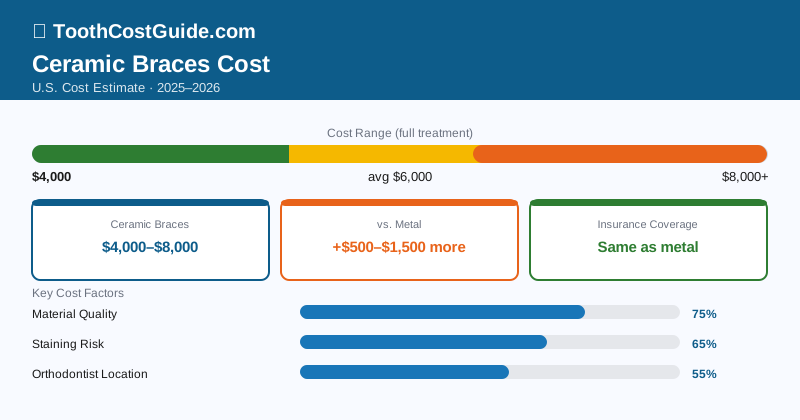
Ceramic braces cost $4,000–$8,000 for a full course of treatment, averaging $500–$1,500 more than traditional metal braces. They use the same mechanics as metal braces but feature tooth-colored or clear ceramic brackets that blend with natural tooth enamel — making them far less noticeable in conversation and photos. Most orthodontists who offer metal braces also offer ceramic, and the treatment timeline is nearly identical.
| Braces Option | Cost Without Insurance |
|---|---|
| Ceramic (clear/tooth-colored) braces, full | $4,000–$8,000 |
| Metal braces (for comparison) | $3,000–$7,500 |
| Ceramic braces, upper arch only | $2,500–$4,500 |
| Self-ligating ceramic braces (Clarity SL) | $4,500–$8,000 |
| Lingual braces (behind teeth) | $8,000–$13,000 |
| Invisalign Full (for comparison) | $3,000–$8,000 |
What Affects the Cost of Ceramic Braces
Case complexity. The dominant pricing factor. A mild 12-month crowding case will cost $3,500–$5,500. A complex case involving bite correction and 30 months of treatment can reach $7,000–$8,000. Orthodontists price cases based on the total clinical work involved, not just the bracket material.
Bracket material and brand. Ceramic brackets come in polycrystalline alumina (opaque, white) and monocrystalline sapphire (clear, more expensive). Standard polycrystalline brackets from major brands (3M Clarity, Dentsply Ormco Inspire ICE) cost less than monocrystalline sapphire alternatives. The difference in lab/material cost is $100–$300 per arch, reflected in the treatment fee.
Self-ligating vs. conventional ties. Self-ligating ceramic brackets like Clarity SL use an internal sliding mechanism instead of elastic ligatures. The brackets cost more and require additional orthodontist training, adding $200–$500 to the treatment fee. Some evidence suggests slightly shorter treatment times with self-ligating brackets.
Upper arch only vs. full treatment. Some patients request ceramic on the upper arch (most visible) and metal on the lower arch (rarely seen). This hybrid approach costs less than full ceramic and satisfies most patients’ aesthetic concerns.
Orthodontist experience and location. Experienced orthodontists in high-cost-of-living areas charge at the top of the range. Newer practices or those in competitive suburban markets may price ceramic braces closer to $4,000–$5,500 for standard cases.
Types of Ceramic Braces and Their Costs
Polycrystalline Alumina Brackets (standard ceramic) — $4,000–$7,500: The most common ceramic bracket material. White or slightly off-white in color. Strong, predictable, and more affordable than sapphire alternatives. Brands include 3M Clarity and American Orthodontics In-Ovation C. Small risk of staining from dark beverages and foods with elastic ligatures.
Monocrystalline Sapphire Brackets — $4,500–$8,000: Nearly completely clear due to the pure crystal structure. More expensive to manufacture, which adds to treatment costs. Harder than polycrystalline brackets — some evidence suggests a higher risk of enamel wear on opposing teeth. Extremely aesthetic for patients prioritizing minimal visibility.
Self-Ligating Ceramic (Clarity SL, In-Ovation C) — $4,500–$8,000: Self-ligating brackets have a built-in sliding door mechanism instead of colored elastic ties. Ceramic self-ligating brackets eliminate the staining problem with elastics since there are no ligatures. Slightly lower friction on archwires may reduce discomfort during some stages. Add $300–$500 to the base ceramic fee.
Ceramic on Upper Arch, Metal on Lower — $3,500–$6,500: The lower front teeth are rarely visible during normal conversation. Pairing ceramic uppers with metal lowers cuts the incremental cost difference between ceramic and metal in half, satisfying aesthetic needs at near-metal prices.
Ceramic braces are an excellent middle-ground option — significantly less visible than metal braces, much less expensive than lingual braces or Invisalign for complex cases. The main drawbacks are slight staining risk (ligature-based systems) and more fragility than metal — broken ceramic brackets are billed at $25–$75 per bracket replacement in many practices.
Ceramic Braces vs. Metal Braces vs. Invisalign
| Feature | Ceramic Braces | Metal Braces | Invisalign |
|---|---|---|---|
| Average cost | $4,000–$8,000 | $3,000–$7,500 | $3,000–$8,000 |
| Visibility | Low (tooth-colored) | High (silver) | Very low (clear trays) |
| Removable | No | No | Yes |
| Staining risk | Moderate | None | Low (trays replaced) |
| Best for complex cases | Yes | Yes (gold standard) | Moderate |
| Broken hardware risk | Higher | Lower | N/A |
Insurance Coverage
Insurance coverage for ceramic braces is identical to coverage for metal braces — the type of bracket material doesn’t change the benefit calculation.
- Lifetime orthodontic maximum: $1,000–$3,000 per patient
- Coverage rate: Typically 50% up to the lifetime maximum
- Age limits: Most plans cover patients under 18–19; adult coverage varies by plan
- Premium for ceramic: Insurance does not typically pay the extra cost for ceramic over metal. The patient pays the full incremental cost difference.
Example calculation:
- Ceramic braces cost: $6,000
- Insurance allowable (based on metal braces fee): $4,500
- Insurance pays 50%: $2,250 (to the lifetime max of $1,500 = $1,500 actual payment)
- Patient out-of-pocket: $4,500
Some insurance contracts define their benefit as the cost of “the least expensive clinically adequate treatment,” meaning they may only reimburse the metal braces equivalent. Ask your orthodontist’s billing office to submit a pre-treatment estimate to your insurer to understand exactly what will be covered before committing to ceramic braces.
Financing Options
In-house orthodontic payment plans: Most practices offer 0% interest installment plans spread over the treatment period (18–30 months). A $6,000 ceramic braces case over 24 months = $250/month.
CareCredit: Available at most orthodontic practices. Promotional 0% interest periods of 12–24 months for qualified patients. A bridge option for patients who want to pay over time but don’t want to use the orthodontic office’s in-house plan.
FSA and HSA funds: Ceramic braces are a fully qualified FSA/HSA expense. Maximizing FSA contributions before the treatment year saves 22–37% on the amount spent from the account.
Dental school clinics: Orthodontic residency programs treat standard cases at 30–50% discounts. Most offer ceramic braces for appropriate cases under faculty supervision.
How to Save Money
Choose ceramic on upper arch only. Lower front teeth are rarely visible. A hybrid upper ceramic/lower metal treatment reduces the ceramic premium by 50–60% while still addressing the most visible teeth.
Ask about bulk treatment discounts. If multiple family members need orthodontic treatment, some practices offer 10–15% family discounts on subsequent cases. Ask explicitly.
Get multiple quotes. Ceramic braces fees vary by $1,000–$2,000 for equivalent cases between orthodontists in the same market. Free consultations at 2–3 orthodontic offices allow comparison without commitment.
Time FSA enrollment. If you know ceramic braces are coming in the next 12 months, increase FSA contributions during the prior open enrollment. You can use the full annual FSA election amount on January 1, even before the contributions are fully funded.
Ask about broken bracket policy. Some practices include broken bracket repairs in the total fee. Others charge $25–$75 per incident. Understanding this upfront helps you budget for the higher fragility of ceramic vs. metal brackets.
Bottom Line
Ceramic braces offer a visually discreet alternative to metal braces for $500–$1,500 more, with treatment effectiveness identical to their metal counterparts. At $4,000–$8,000, they overlap in cost with Invisalign for moderate cases while offering the precision advantage of fixed appliances for complex movements. Insurance coverage applies up to the lifetime maximum — but the ceramic premium is typically not reimbursed separately. For most patients who want a less noticeable fixed-appliance option without the cost of lingual braces, ceramic braces represent a practical and cost-effective middle ground.
Ceramic braces cost $500–$1,500 more than metal for the same clinical result and are available from most orthodontists. For adults and teens with mild-to-moderate cases, they combine the reliability of fixed braces with acceptable aesthetics. Staining and bracket fragility are the primary trade-offs versus metal, and insurance rarely reimburses the incremental cost difference.