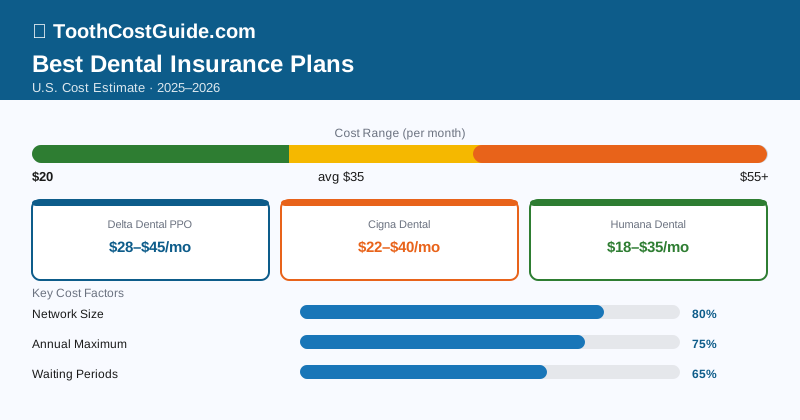
The best dental insurance plan depends on whether you need individual coverage, a family plan, or employer-sponsored benefits. The top carriers — Delta Dental, Cigna, Humana, and Guardian — each have different strengths in network size, annual maximums, and plan flexibility. Most individual dental plans range from $20–$60/month with $1,000–$2,000 annual maximums.
| Carrier | Network Size | Annual Max | Preventive | Basic | Major | Orthodontics |
|---|---|---|---|---|---|---|
| Delta Dental PPO | 156,000+ dentists | $1,000–$2,500 | 100% | 80% | 50% | Varies |
| Cigna Dental | 93,000+ dentists | $1,000–$2,000 | 100% | 80% | 50% | Optional |
| Humana Dental | 277,000+ dentists | $1,000–$2,000 | 100% | 70–80% | 50% | Optional |
| Guardian Dental | 100,000+ dentists | $1,000–$3,000 | 100% | 80% | 50% | Optional |
| Ameritas | 65,000+ dentists | $1,000–$5,000 | 100% | 80% | 50% | Optional |
Delta Dental: Largest Network, Most Widely Accepted
Delta Dental is the largest dental insurance carrier in the U.S. by network size, with over 156,000 participating dentists across 50 states through its network of independent member companies (Delta Dental of California, Delta Dental of Michigan, etc.).
Strengths:
- Largest dentist network — easy to find in-network providers anywhere in the country
- Widely accepted; most dentists participate in Delta Dental PPO or Premier networks
- Strong employer group plans; if your company offers Delta Dental, the employer’s group rates are typically excellent
- Delta Dental Premier network dentists accept fee schedule rates with no balance billing
Weaknesses:
- Individual market plans (not employer-sponsored) have $1,000–$1,500 annual maximums at most tiers
- Premiums on individual market plans can be $35–$55/month for basic coverage
- Network is split — PPO and Premier networks have different fee schedules; Premier dentists can be more expensive for patients
Best for: Employer-sponsored coverage, patients who travel or move frequently and need nationwide network reliability.
Cigna Dental: Strong Customer Service, Flexible Plans
Cigna Dental serves over 17 million members with a network of 93,000+ dentists nationwide. Cigna offers both PPO and DHMO (HMO-style) plans.
Strengths:
- Competitive preventive and basic benefits
- DHMO plans available at very low premiums ($8–$15/month in some markets) with $0 copays on many procedures — though DHMO requires selecting a primary dentist and staying in-network
- Strong digital tools: easy claims tracking and provider search online
- Cigna + Oscar plans available in some states combining medical and dental
Weaknesses:
- Smaller network than Delta Dental and Humana
- PPO plans typically max at $1,000–$1,500 annually on individual plans
- DHMO plans restrict provider choice significantly
Best for: Budget-conscious patients open to DHMO model; patients whose employer offers Cigna group plans.
Humana Dental: Largest Overall Network, Value-Priced Options
Humana operates the largest dental network by provider count — over 277,000 participating dentists — making it the most accessible option in rural and suburban markets.
Strengths:
- Largest network by number of dentists — finding in-network care is easiest with Humana
- Preventive Plus plan covers cleanings and X-rays with no waiting period at a low premium (~$17–$20/month in many markets)
- Loyalty Plus benefit: annual maximum increases over time as a reward for continuous coverage
- DHMO (Humana Complete) plans available at very low cost
Weaknesses:
- Higher-tier plans required for major work coverage; basic Humana plans exclude major services
- PPO maximum typically $1,000–$1,500 on base individual plans
- Major restorative waiting periods apply to most individual plans
Best for: Patients prioritizing network access, patients in rural areas, preventive-focused users who want low-premium plans.
Guardian Dental: Higher Annual Maximums, Strong Major Coverage
Guardian is known for its employer group plans with more generous annual maximums ($1,500–$3,000 in some employer-sponsored configurations) and reasonable individual market options.
Strengths:
- Some employer group plans offer $2,000–$3,000 annual maximums — above industry standard
- DentalGuard Preferred network offers strong fee schedule discounts
- Strong orthodontic coverage on higher-tier plans
- Plan benefits may increase over time (Gold Enhancement rider)
Weaknesses:
- Individual market plans are more limited than group plans
- Network of 100,000+ is solid but smaller than Humana or Delta Dental
- Some plans require a 12-month wait on major services
Best for: Employer-sponsored plans where Guardian is offered; patients who need strong major restorative coverage.
The “best” dental insurance plan is the one your employer subsidizes. Employer-sponsored plans typically offer better annual maximums, lower premiums, and no waiting periods compared to individual market plans from the same carriers. If your employer offers dental benefits, use them — even if you’re young and healthy.
How to Compare Dental Insurance Plans
When evaluating any dental plan, focus on these specific questions:
1. What is the annual maximum, and is it per-person or per-family? $1,000 annual maximum is the industry floor. Look for $1,500–$2,000 if possible. Per-person maximums are preferable to shared family maximums.
2. What are the waiting periods for major services? Plans with no waiting periods exist but are rare on the individual market. 6-month waits for basic and 12-month waits for major are standard. Check the Summary of Benefits.
3. What is the deductible, and does it apply to preventive care? Most plans have $50–$100 individual deductibles that apply to basic and major services but not preventive. Some premium plans have $0 deductibles.
4. What is the fee schedule for my specific dentist? If you have a preferred dentist, call them before buying insurance to confirm they’re in-network. Being out-of-network can significantly increase your costs even on a PPO plan.
5. Does the plan cover orthodontics, and at what lifetime maximum? Orthodontic coverage is often an add-on rider. Standard lifetime max is $1,000–$2,000 for children; adult ortho coverage is frequently excluded.
Individual vs. Employer vs. Marketplace Plans
Employer-sponsored plans: Best value. Employers typically pay 50–100% of premiums; group rates are lower; waiting periods are often waived or minimal; annual maximums are often higher.
ACA Marketplace plans: Adult dental is an optional add-on on most marketplace plans ($15–$40/month). Children’s dental (under 19) is an essential health benefit and more comprehensive. Standalone dental plans available on the marketplace may have limited networks.
Individual market direct purchase: Purchasing directly from carriers or through a broker. Premiums are highest, annual maximums lowest, and waiting periods most common. Reasonable for maintaining coverage between jobs but often not the best value.
Before buying individual dental insurance, calculate your actual expected dental costs for the next 12 months using a realistic assessment of what treatments you need. Compare total out-of-pocket (premiums + copays + anything exceeding the annual max) against the self-pay discounted rate from a dental school or discount plan. Sometimes the math strongly favors not buying insurance.
Financing Options When Insurance Falls Short
Even with good dental insurance, major work often leaves a significant patient balance. Common options:
CareCredit: Accepted at most dental offices. 0% promotional financing for 6–24 months. Useful for balances after insurance that still reach $500–$2,000+.
HSA/FSA: Dental copays, deductibles, and any out-of-pocket dental expenses are fully HSA and FSA eligible. If you have workplace HSA/FSA access, use these pre-tax dollars for all dental costs.
Bottom Line
Delta Dental leads in network size and breadth; Humana leads in total provider count; Guardian leads in annual maximums on group plans; Cigna offers the lowest-cost DHMO options. For employer-sponsored plans, accept whatever good carrier your employer offers — the subsidy makes the choice. For individual market plans, compare premium costs against your realistic dental needs before committing to a plan with limitations that may not serve your situation.
Always get a written treatment plan before agreeing to any dental work. When evaluating insurance plans, ask your dentist’s office to verify your specific coverage before treatment — particularly for major procedures where the difference between “covered” and “covered up to our annual maximum” can mean hundreds of dollars in unexpected bills.